- Chief Minister of Balochistan vowed that the newly formed BAP will protect the rights of the people of province
- He said the problems facing the region could not be resolved previously due to its lack of influence in lower house of Pakistan parliament
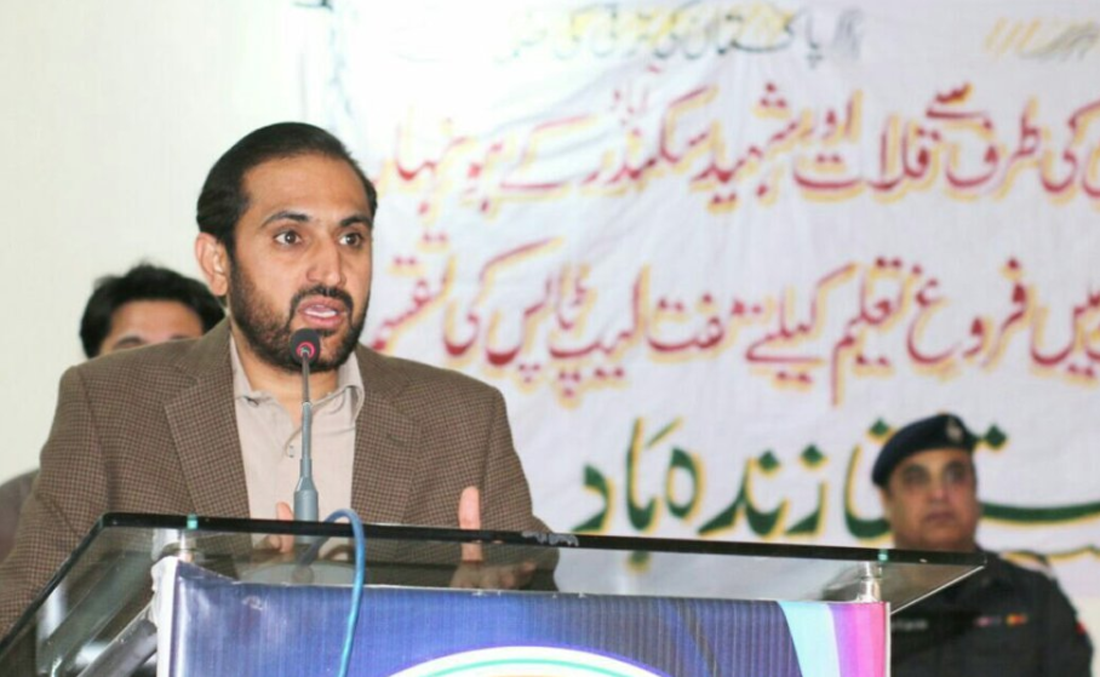
QUETTA: The apathy of the federal political parties toward Balochistan, and infighting among the nationalist parties, led to formation of Balochistan Awami Party (BAP), with the aim of championing the rights of people in the province, according to Mir Abdul Quddus Bizenjo, Chief Minister of the province.
“Since the National Assembly seats from Balochistan are few, the federal parties would hardly pay any heed to the issues of Balochistan,” he said in an exclusive interview with Arab News. “That was one of the reasons that recently we formed a group of like-minded people.”
The second reason, he added, was the infighting by nationalist parties in the strategically and economically important province, which created divisions in the name of Pashtun and Baloch.
“The student groups of these parties would fight just in order to gain street power,” said Bizenjo.
This prompted his colleagues to form a forum of like-minded politicians of all ethnicities, including Baloch, Pashtun, Punjabi and Hazara.
“The Baloch and Pashtun can’t be divided so why quarrel?” he said. “Why not play a role in the development of province, where we all live?”
Bizenjo predicted that the BAP will win a majority of seats in both the Baloch and Pashtun belts.
“We will form the next government and will carry on with our vision of the development and prosperity of the ‘most resourceful but backward’ province,” he said.
“We were bombarded with allegations. Some said we were going to join a political party, some said we were here to be reasons for the postponement of the upcoming general polls, some said we had other hidden agendas — but we proved all wrong”.
Bizenjo said he and his colleagues realized that if they unite to take their case to Islamabad with thorough planning, and in a better-organized way, success is more likely.
“We got the first Senate Chairman from Balochistan through planning,” he added. “This thing gave us confidence and we started to ponder that if we as a group can achieve this, why shouldn’t we form a political party?
“We realized we can play a role in securing rights of Balochistan. We can provide better forum to the province, which we will in the form of the Balochistan Awami Party.”
Three members of national assembly, including Jam Kamal Khan, Mir Dostain Khan Domki and Khalid Kamal Magsi, recently quit the Pakistan Muslim League-Nawaz, sparking speculation that they will join the BAP.
Bizenjo would not confirm this but said: “We will see many people joining the BAP in coming days. Many people would join us because we have an agenda; an agenda for the development of Balochistan.
“Balochistan has many issues but if when we compare these with our resources, we can change the destiny of the province”.
Bizenjo said that if the Reko Diq mine’s gold reserves, amounting to 41.5 million ounces, and other projects are considered, Balochistan would not need financial help from any other region.
“Instead we would be able to give money to other provinces,” he said. “There can be a huge change if we could utilize our resources in better ways.
“A case regarding Reko Diq is pending in the International Court of Justice. I visited the United States in a bit to remove the legal hitches so that a project that could change the destiny of Balochistan may be brought to life.”
Bizenjo pointed out that although Balochistan is the smallest province in term of population, in terms of area it covers half of Pakistan. The population is therefore scattered, as a result of which more resources are required to serve the people.
“But even if we could just use our available resources properly we can give relief to our people,” he added. “We are going to present fiscal budget for 2018-19. Education and health will be our top priorities.”