YouTube shooter warned of ‘injustice and disease’ in online screeds

1 / 2
This undated photo obtained April 4, 2018 courtesy of the San Bruno Police Department shows shooting suspect Nasim Najafi Aghdam. (AFP)
2 / 2
Police search a building at YouTube's corporate headquarters as an active shooter situation was underway in San Bruno, California on April 03, 2018. (AFP / JOSH EDELSON)
Updated 05 April 2018
Follow

YouTube shooter warned of ‘injustice and disease’ in online screeds

  • Shooter believed YouTube restricted views of her videos
  • Father warned police about his daughter — media

SAN BRUNO, California: An Iranian-born woman who blogged about veganism and warned that the planet was “full of injustice and disease” had accused YouTube of suppressing her videos before she opened fire at the company’s California headquarters, wounding three and killing herself.
In a series of Persian and English-language online postings, Nasim Najafi Aghdam, 39, railed against YouTube, the video-sharing site owned by Alphabet Inc’s Google. In some posts, she speaks about herself in heroic terms for surviving in a hostile world. Other pages are adorned with pictures of Aghdam scowling and wearing jewelry of her own design.
“I think I am doing a great job,” she wrote in Persian on her Instagram account. “I have never fallen in love and have never got married. I have no physical and psychological diseases. But I live on a planet that is full of injustice and diseases.”
In an English-language video posted to her YouTube account before the channel was deleted on Tuesday, Aghdam said, “I am being discriminated. I am being filtered on YouTube. I am not the only one.”
Police on Wednesday were focused on the San Diego resident’s anger at YouTube as a likely motive. The people she shot with a handgun seemed to have been chosen at random from the crowd at the company’s outdoor plaza in San Bruno, they said.
“Obviously she was upset with some of the practices or policies that the company had employed,” San Bruno Police Chief Ed Barberini told ABC’s “Good Morning America” on Wednesday.
A man was in critical condition and two women were seriously wounded in the attack.
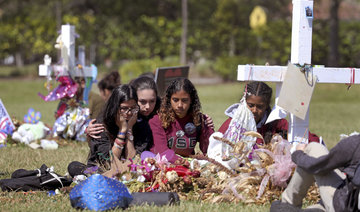
The shooting came in the midst of an intense phase of a long-running debate on gun rights in the United States, following the killing of 17 students and educators at a Florida high school. While mass shootings have become a regular occurrence in the United States, they are rarely carried out by women.

Warning from family
Californian media reported that Aghdam’s family had warned authorities that she could target YouTube prior to the shooting. The San Jose Mercury News quoted her father, Ismail Aghdam, as saying he had told police that she might go to YouTube’s headquarters because she “hated” the company.
Efforts to reach her relatives by phone were unsuccessful.
Her family in Southern California recently reported her missing because she had not been answering her phone for two days, police said.
At one point Tuesday, Mountain View, California, police found her sleeping in her car and called her family to say everything was under control, hours before she walked onto the company grounds and opened fire.
A survivor of the February shooting at Marjory Stoneman Douglas High School in the Parkland, Florida, weighed in on the YouTube incident on Wednesday.
“The YouTube HQ shooting is proof that this is NOT just schools,” Jaclyn Corin said on Twitter Wednesday. “Our country has a GUN problem. End of story.”
Gun rights advocates have argued that more armed guards and citizens could prevent mass shootings.
YouTube has long faced complaints about alleged censorship on its site, and says it attempts to balance its mission of fostering free speech while still providing an appropriate and lawful environment for users.
In some cases involving videos with sensitive content, YouTube has allowed the videos to stay online but cut off the ability for their publishers to share in advertising revenue.
Criticisms from video makers that YouTube is too restrictive about which users can participate in revenue sharing swelled last year as the company imposed new restrictions.

Afghanistan launches retaliatory attacks on Pakistan as tensions escalate

Updated 28 February 2026
Follow

Afghanistan launches retaliatory attacks on Pakistan as tensions escalate

  • At least 66 Afghans have been killed by Pakistan’s strikes, Afghan authorities say
  • Afghanistan has called for dialogue while Pakistan ruled out any talks with Kabul 

KABUL: Afghanistan has launched new attacks on Pakistan’s military bases, the Afghan defense ministry said on Saturday, as cross-border clashes escalated between the neighbors after months of tension. 

The latest flare-up erupted after Pakistan’s airstrikes on Afghan territory last weekend triggered a retaliatory offensive from Afghanistan along the border on Thursday. 

The two countries have engaged in tit-for-tat attacks since, marking the most serious development in ongoing tensions between the two countries, which agreed to a ceasefire last October following a week of deadly clashes. 

Afghanistan’s Air Force has “once again launched airstrikes on Pakistani military bases” in Miranshah and Spinwam, the Afghan Ministry of National Defense said on X on Saturday, claiming that the strikes caused “severe damage and heavy casualties.”

“These successful operations were conducted in response to repeated aerial aggressions by the Pakistani military regime,” the ministry said. 

Afghan forces also launched similar strikes against military targets in Islamabad and Abbottabad on Friday, which the ministry said was in retaliation of aerial attacks by Pakistani forces in Kabul, Kandahar and Paktia.

At least 66 Afghan civilians, mostly women and children, have been killed in Pakistani strikes, with another 59 others wounded, according to Hamdullah Fitrat, deputy spokesman for the Afghan government. 

Pakistan has maintained that it is targeting only military targets to avoid any civilian casualties, in compliance with international law. 

Pakistani officials said its forces have killed more than 330 Afghan fighters and targeted 37 military locations across Afghanistan.

Zabihullah Mujahid, chief spokesperson for the Afghan government, earlier called for talks to resolve the crisis. 

“We have always emphasized peaceful resolution, and now too we want the issue to be resolved through dialogue,” he said on Friday. 

However, Pakistan has ruled out any talks with Kabul. 

“There won’t be any talks, there is nothing to talk about. There’s no negotiation. Terrorism from Afghanistan has to end,” Mosharraf Zaidi, spokesperson for Pakistan’s prime minister, said on Friday. 

Pakistan is accusing the Afghan Taliban of sheltering fighters from the banned Tehreek-e-Taliban Pakistan and allowing them to stage cross-border attacks — a charge Afghanistan denies, saying it does not allow its territory to be used against other countries. 

As international calls for mediation grow amid the escalating hostility, Afghans across the country are growing fearful of the violence. 

“Everyone heard the jets. This is the first time since the withdrawal of US invaders that we have heard such a horrible noise and news of damage. It is not good for us,” said Kandahar resident Shahid Zamari. 

“We had forgotten the US war and its bad impact on us, on our families, on our children. And now this has come upon us again — by Pakistan, and in the holy month of Ramadan.” 

When the strikes hit Kabul at around 1:30 a.m. on Friday, Saleema Wardak moved quickly to wake up her six children and escape outside, assuming the strong jolt that shook her house was an earthquake. 

“While standing in the yard, my husband told me it was not an earthquake but an explosion. Then we heard the crazy sounds of planes, and shooting from the mountains against the planes,” she told Arab News. 

“We hid inside, worried another bomb would fall on us. People say Pakistan is targeting civilians on purpose to increase pressure on the Taliban. So we hid … The world is unjust … They do not value the blood of the poor.” 

For Sabawoon, a 23-year-old student from eastern Kunar province’s Asadabad city, the coming days are filled with uncertainties. 

“What to do? Where to go? We have to stay and find our way to survive,” he told Arab News. “God willing, nothing bad will happen to us. If they are bombing us, what can we do?”