ISLAMABAD: Women of Islamabad, Lahore and Karachi were on a roll, literally, when they took to two wheels for the third Girls on Bikes rally.
The rally was organized by Girls at Dhabas, an initiative started in Karachi a few years ago encouraging women to reclaim public spaces in Pakistan.
Although Pakistan’s bustling cities have no shortage of roadside chai shops, kabob houses or vendors selling paratha rolls, it is rare for women to take up seats laid by the side of the road.
There are no rules preventing women and girls from taking a seat, but a patriarchal culture that encourages women to stay at home has also led to harassment in public spaces. This has resulted in a general acceptance that female are patrons are not welcome in some places.
“The bike rally is a public intervention. It changes our streets and it changes reality,” said director Anam Abbas, who filmed the Karachi leg of the ride this year.
“However short term and symbolic it may be, at that moment there is a rupture in the constrictive male public space. It will embolden some riders to keep riding, and for the witnesses it is the vision of possibility.”
Girls on Bikes, like Girls at Dhaba, lets women know that the country’s roadside restaurants — and the roads, too — also belong to them.
“The rallies are primarily a symbolic gesture we do once a year to reach out to women who may have been inhibited in the past from cycling in public spaces,” says Meherbano Raja, an Islamabad-based member of the both groups.
After the first set of rallies organized in 2016, other independent Girls on Bikes groups were started in Karachi and Lahore, with female cycling enthusiasts getting together for monthly rides, she said.
In 2016, Lahore was the site of the first Girls on Bikes rally.
Group member Shmyla Khan said: “For several women, it was their first experience navigating the chaotic traffic from the vantage point of a cyclist. Some participants said they enjoyed chatting with pedestrians, motorcyclists and rickshaw-wallas as they drove along. Cars full of families waved enthusiastically, took pictures and one child even gave us a high-five.”
Zara Peerzada, who joined the Lahore leg, said: “It was amazing — everyone was positive, patient and helpful.
“Our route took us around the heart of the city. Cycling through so much traffic was a little unnerving, but it did not feel uncomfortable or unnatural — and that was empowering. Just seeing so many women having a good time together outside, in public spaces, felt great.”
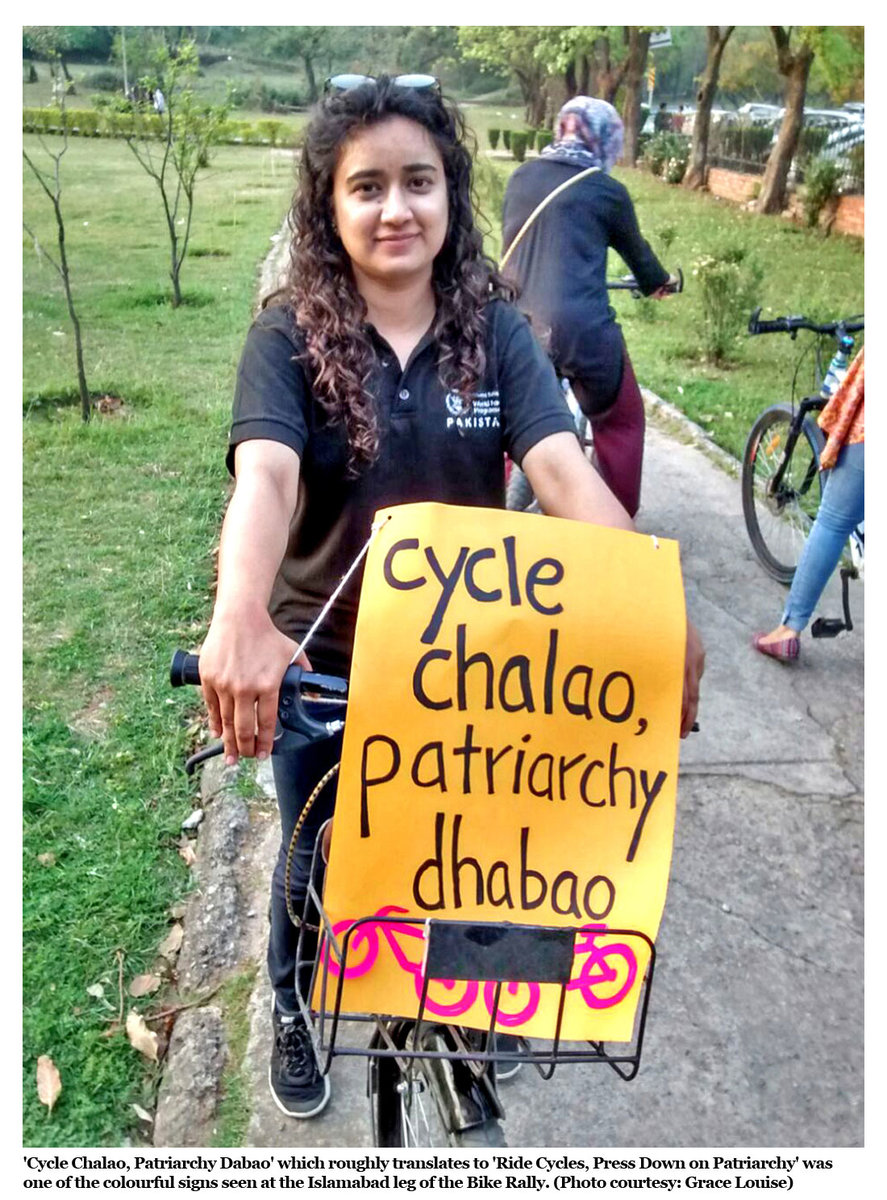
In Islamabad, more than 70 women joined the ride.

Grace Louise, an avid cyclist who has not biked since moving to Islamabad, found the ride heartening.
“It felt fun, supportive and inspiring, particularly the teenage girls who were so assertive and angry about sexual harassment and the importance of claiming space,” she said.
Another participant, Zara Zaman Khan Afridi, said: “People were surprised, but took an interest in what we were doing because we were screaming, ‘humari sarkeh, humara shehr, (our streets, our city).”
However, the cyclists also faced occasional catcalls and aggressive behavior from men.
“At times we felt like we were part of the rhythm of the city, but at other times we experienced the harassment that is part of the experience of women in public spaces — stares, catcalls and deliberate disruption,” said Shymla Khan.
Women shared stories and swapped strategies on dealing with everyday harassment.
The symbolism of the cycle rallies was not lost on the women who took part.
“I cycle and I walk normally in my life,” said Afridi. “I am all for taking back public spaces for women. We must do (these rallies) for others who don’t have the same accessibility as us.
“Poor women have to walk, you never see them on a bike, so if they can’t afford transport, unlike their male counterparts they have no choice but to walk. So this is for them,” she said.