GAZA CITY: Israeli troops fired warning shots towards Palestinian youths gathered at the Gaza-Israel border on Saturday, wounding 35 people, health officials said.
Tension remained high in the area a day after deadly violence broke out in one of the biggest Palestinian demonstrations there in years.
Gazans buried their dead on Saturday with calls for “revenge” a day after a major demonstration led to clashes that saw Israeli forces kill 16 Palestinians in the bloodiest day since a 2014 war.
But while anger seethed over Friday’s events, only several hundred protesters had returned to tents erected at different sites near the Gaza Strip’s border with Israel by mid-afternoon to resume demonstrations planned to last six weeks in the blockaded enclave.
Thousands attended funerals for 14 of those killed — two were buried on Friday -with mourners holding Palestinian flags and some chanting “revenge” and firing into the air.
A general strike was also being held in both the Gaza Strip and the occupied West Bank.
Minor clashes between Israeli forces and Palestinians broke out in Hebron, while a small protest was held in Nablus, both in the West Bank.
Israel defended its soldiers’ actions on Friday, when troops opened fire on Palestinians who strayed from the main tent city protest — attended by tens of thousands — and approached the heavily fortified fence cutting off the Gaza Strip.
The Israeli military says it opened fire only when necessary against those throwing stones and firebombs or rolling tires at soldiers.
It also said there were attempts to damage the fence and infiltrate Israel, while alleging there was an attempted shooting attack against soldiers along the border that caused no casualties.
Palestinians accused Israel of using disproportionate force, while human rights groups questioned Israel’s use of live fire.
Unverified videos were being shared online, including one appearing to show a protester being shot while running with a tyre.
In addition to the 16 killed, more than 1,400 were wounded, 758 of them by live fire, with the remainder hurt by rubber bullets and tear gas inhalation, according to the Gazan health ministry.
Palestinian president Mahmud Abbas declared Saturday a day of national mourning and in a speech said he held Israel fully responsible for the deaths.
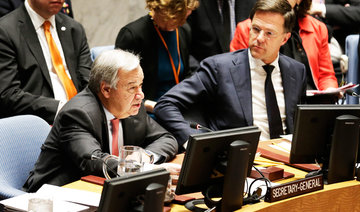
His spokesman on Saturday called on the United States at the UN Security Council to not provide “cover for Israel to continue its aggression against the Palestinian people.”


![]()
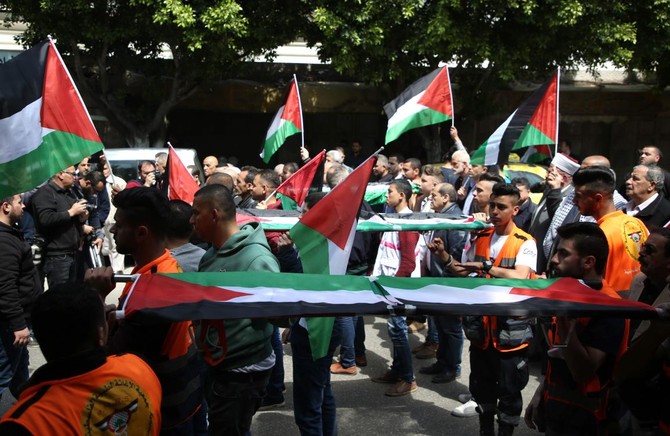
Gazans bury their dead after bloody clashes, West Bank closes to mourn
Gazans bury their dead after bloody clashes, West Bank closes to mourn

Latest updates




© 2026 SAUDI RESEARCH & PUBLISHING COMPANY, All Rights Reserved And subject to Terms of Use Agreement.