RIYADH: The Arab coalition led by Saudi Arabia on Monday said the debris of missiles fired by Houthi rebels in Yemen carried the features of weapons manufactured near Tehran.
The coalition lashed out at the Iranian regime for providing the Houthi militias with sophisticated arms and ballistic missiles, thus undermining regional security.
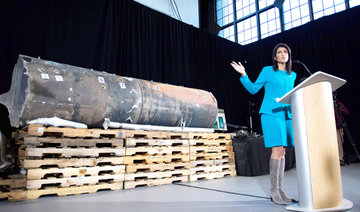
At a news conference on Monday night, which was attended by ambassadors of friendly nations and members of the Saudi-led military alliance, coalition spokesman Col. Turki Al-Maliki displayed the debris of the Houthi missiles that targeted Riyadh.
He said forensic analysis of the wreckage of the missiles showed they were supplied to the Houthi militias by Iran.
During his fact-finding presentation, the coalition spokesman shared a smuggled missile from Iran which was seized by the coalition forces before making its way to the Houthi militias in Yemen.
“These ballistic missile attacks on Saudi Arabia were a serious escalation and a threat to regional and international security,” he said.
“The hostile action by the Iranian regime in smuggling arms to Houthi militias ... only prove that the Iranian regime continues to support the armed militants with military capabilities ... allowing it to demonstrate its threat to regional as well as international security by disturbing peace and spreading chaos.”
Al-Maliki noted that 78 percent of 104 ballistic missiles that have been launched targeting the Kingdom came from Yemen’s Saadah and north of Amran areas.
The Houthi militants are also using Sanaa airport to launch missile attacks on Saudi territory, he told the audience.
Speaking to the media a day after the missile attacks, Al-Maliki shared the details of them. He said seven ballistic missiles with the fingerprint of the Iranian regime were fired by the Houthis toward various areas in the Kingdom. Three missiles were fired toward Riyadh, two targeted Jazan and one each were towards Najran and Khamis Mushayt.
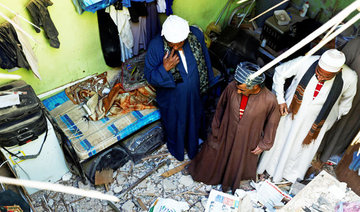
Missiles towards Riyadh were aimed at residential areas in which one Egyptian civilian worker was killed and two were injured.
These missile attacks were a clear violation of international law, he said, urging the international community to take note of the matter in finding an amicable solution for peace in Yemen as per the UN Security Council Resolution 2216.
He said that it is the international community’s role to confront Houthi attacks and hold Iran accountable for them.
However, unfazed by the missile attacks, he said, “coalition efforts to support legitimacy will continue till complete restoration of legitimacy in Yemen.”
He said the Kingdom is providing relief to all needy people in Yemen without discrimination, as its goal is to restore peace and stability.
King Salman recently directed the deposit of $2 billion in Yemen’s Central Bank to save the Yemeni economy and currency from collapse owing to the ongoing crisis and the disturbance by the Houthis.
The deposit has helped curb the continued deterioration of the Yemeni currency, which recovered part of its lost value against other foreign currencies. The banking sector predicted that the deposit would stabilize the Yemeni market, which is significant in restoring normalcy.
Al-Maliki, however, made it clear that the coalition countries have the right to defend and protect their territories as well as their interests.
“We reserve the right to respond against Iran at the right time and right place,” he said. “We will take necessary measures as per international law to deal with the barbaric attacks.”


![]()

Iran is behind missile attacks on Saudi Arabia: Coalition
Iran is behind missile attacks on Saudi Arabia: Coalition

Latest updates


© 2026 SAUDI RESEARCH & PUBLISHING COMPANY, All Rights Reserved And subject to Terms of Use Agreement.