JEDDAH: The Qatari news network Al Jazeera has prompted a Twitter storm over its coverage of a ballistic missile attack targeting civilians in Saudi Arabia that was launched by Houthi militias in Yemen.
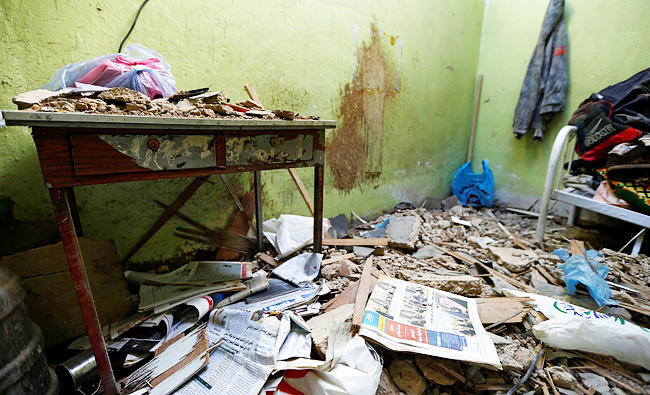
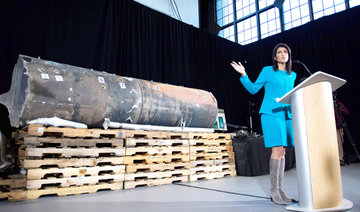
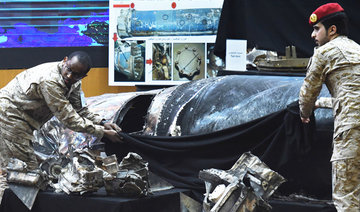
Seven ballistic missiles were fired targeting several cities in Saudi Arabia, three of which were intercepted by the Saudi Defense Patriot systems over the capital Riyadh. The rest were shot down in the skies of Jazan, Najran and Khamis Mushait. The missiles were fired by the Iran-backed Houthi militia in Yemen on Sunday night, the Arab coalition said, leaving one Egyptian civilian dead and two others injured.
The attack prompted widespread condemnation from the UN, UAE, Bahrain, Jordan, Pakistan and others.
Al Jazeera was, however, accused of providing a “platform” for the Houthi militias, having aired comments by the group just “minutes” after the attack.
The network’s breaking news service claimed that the missiles fired at Saudi Arabia hit their targets, despite statements by the Kingdom confirming that the missiles were destroyed by Saudi air defenses.
Al Jazeera also carried statements by Houthi leader Abdulmalik Al-Houthi, in footage shot before the attack, in which he threatened to use advanced missile systems and aircraft against Saudi Arabia.
Muhammad Al-Bukhaiti, a spokesman for the Houthis, told Al Jazeera that the attack was in “response to the bombing of Yemeni cities, and siege of the Yemeni people.”
Al-Bukhaiti called on the Yemeni people to mobilize against “the Saudi aggression.”
Many Twitter users were critical of Al Jazeera’s coverage of the attack, with an Arabic hashtag, translating as “Qatar media support Houthi,” trending.
“The coordination between the Houthis and Al Jazeera is clear and revealing, and the role of Qatar in funding the Houthis is known. So, their betrayal of the alliance in Yemen is remarkable and their days are numbered,” wrote one.
Another Twitter user said that Al Jazeera and the Qatari media in general “has become an integral part of the Iranian media, but this is not surprising, as they are known to provoke sedition and host terrorists on its channels."
It is not the first time that Al Jazeera Arabic has been accused of providing a platform for militant and terror groups.
Earlier this month it came under fire for “normalizing terrorism” in its coverage of an attack on the French Embassy in Burkina Faso.
Ghanem Nuseibeh, founder of Cornerstone Global, a management consultancy focused on the Middle East, claimed Al Jazeera reporting on the Burkina Faso terrorist attack was skewed.
“Al Jazeera Arabic . . . refuses to call Al-Qaeda ‘terrorists,’ instead says ‘whom authorities describe as terrorists,’” he tweeted. “Common with Al Jazeera normalizing terrorism in eyes of its readers.”
Al Jazeera declined to comment when contacted by Arab News.

Al Jazeera under fire for Houthi bias after KSA missile attack
Gems of Arabia magazine launched to spotlight talents shaping Saudi Arabia’s evolving cultural landscape
- The publication features established and emerging talents elevating the region across design, fashion, art, tech, music, architecture and media
- Saudi fashion designer Hatem Alakeel seeks to highlight the richness of the Kingdom, and wider modern Arab culture to global audiences
DUBAI: When Saudi fashion designer Hatem Alakeel interviewed Princess Reema bint Bandar Al-Saud before her appointment as Saudi ambassador to the US, the longtime advocate of women’s empowerment made a powerful prediction: “I look forward to the day that the Saudi woman is no longer the story but rather a phenomenal achievement.”
That moment would become the foundation for Gems of Arabia, an arts and culture audio-visual podcast that spotlights the creative talents shaping the landscape of Saudi Arabia and the broader region.
Over six years, Gems of Arabia has documented the sweeping transformation of the Kingdom’s art and culture scene, and is now evolving into a full-fledged magazine.
“It started off as a column I used to write, and from there, it turned into a podcast. Now it is growing into a magazine,” Dubai-based Alakeel, the magazine’s founder and editor-in-chief, told Arab News ahead of the launch of the digital publication on Thursday.
Besides spotlighting celebrated regional artists, Alakeel said Gems of Arabia is in search of the “hidden gems” elevating the region across design, fashion, art, tech, music, architecture and media.
The magazine serves as a platform for talented, authentic creatives and tech entrepreneurs unable to articulate their work “because they don’t have the public relations or capacity to promote themselves even through social media.”
Alakeel added: “Our job is to identify all these authentic people; you don’t have to be famous, you just have to be authentic, and have a great story to tell.”
The digital publication offers a dynamic blend of short-form podcasts, coverage of regional cultural events, in-depth features and editorials, long-form interviews and artist profiles — spotlighting both celebrated and emerging talents. This is complemented by social media vox pops and bite-sized coverage of art events across the region.
Alakeel, who also runs Authenticite, a consulting and creative production agency connecting creators and brands who want to understand Saudi culture, said the magazine content is “carefully curated” to feature topics and personalities that resonate in the region.
What differentiates Gems of Arabia, he said, is its story of continuity and substance amassed over the years that has captured the evolution of the wider regional landscape.
“The website represents an archive of nearly 150 articles compiled through years of podcasts and long-form conversations that show continuity and depth changes,” he said.
“So, it’s an evolution and it’s another home for all our content and our community.”
Growing up in France, Alakeel said his mission started early on when he felt the need to represent his Saudi culture “in a way where it can hold its own internationally.”
Through his first brand, Toby, he sought to bring the traditional thobe into modern designs and introduce it to the luxury fashion world. This mission was accomplished when his thobe designs were placed alongside global labels such as Harvey Nichols, Dolce & Gabbana and Prada.
What began as a personal design mission would soon expand into a broader platform to champion Saudi talent.
“I was articulating my culture through fashion and it just felt natural to do that through the incredible people that the region has,” Alakeel said, adding that the magazine aims to highlight the richness of the Kingdom, and wider modern Arab culture to global audiences.
“Art is such a great way of learning about a culture and a country,” he said.
On the ground in Saudi Arabia, the publication hosts GEMS Forum, a series of live cultural gatherings that bring together prominent artistic figures for in-depth conversations later transformed into podcast episodes recorded with a live audience.
Alakeel said the print edition of Gems of Arabia will debut in March, designed as a collectible coffee-table quarterly distributed across the Gulf.
He envisions the platform growing into a long-term cultural record.
“It's a Saudi-centric magazine, but the idea is to make it inclusive to the region and everyone authentic has a seat at the table,” said Alakeel.