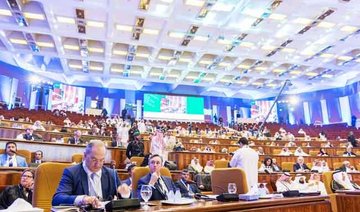
RIYADH: President of the Shoura Council Abdullah Al-Asheikh is leading the Kingdom’s delegation participating in the 138th Assembly of the Inter-Parliamentary Union (IPU). The assembly, which began on Saturday in Geneva, will be on the theme of “Strengthening the global regime for migrants and refugees: The need for evidence-based policy solutions.”
In a news conference, Al-Asheikh announced that Saudi Arabia feels the suffering of all people in distress and in need around the world and seeks to assist them and support them. The Kingdom has achieved an advanced place among the top 10 countries in providing aid for migrants, refugees, victims of natural disasters and other people in need, he added.
He said the King Salman Center for Relief and Humanitarian Aid (KSRelief) is an international portal to deliver humanitarian, relief and charitable aid.
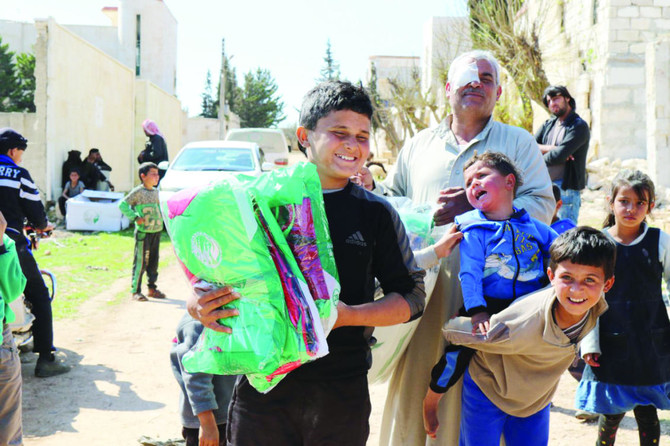
Al-Asheikh stressed the Kingdom’s efforts to ensure the care of Syrian refugees. It has received more than a million-and-a-half Syrian citizens and made sure not to deal with them as refugees nor to place them in refugee camps. The Kingdom has also granted them full freedom of movement and offered legal residence for the thousands who wished to stay and treated them as the rest of the residents, giving them free medical care and education. Saudi Arabia is also supporting millions of Syrian refugees in neighboring countries, including Jordan, Lebanon, and Turkey. Its efforts also covered financial and in-kind humanitarian assistance in coordination with hosting governments of other countries and International humanitarian relief organizations.
He said the Kingdom is dealing with Yemeni residents as visitors as they now have nothing to do with their legitimate government. The KSA has granted many concessions to more than half a million Yemenis, exempting them from fines and other penalties. The Kingdom is also assisting Yemeni refugees in Yemen, Djibouti and Somalia.
Al-Asheikh also said the Kingdom will continue exerting humanitarian efforts to preserve humans’ dignity, without any political motivations but in line with the instructions of King Salman, one of the world’s pioneers in the field of humanitarian and charitable work.

Saudi Arabia will maintain leading role in giving humanitarian aid
Why we feel full soon after breaking fast
- Slower digestion and hormonal changes are likely what is happening after fasting, says expert
RIYADH: Many people experience fullness almost immediately after some soup, dates and coffee at iftar, which is likely due to slow digestion and hormonal changes, according to a local nutritionist.
Malak Kandiel, also a chef who designs iftar menus, told Arab News recently: “The stomach digestion process has slowed down due to the long hours of fasting, which causes feeling fuller after eating small amounts of food and takes more time to digest it.”
She elaborated on the broader benefits of fasting: “I always say if you can control your eating habits and portions you can control anything and achieve anything you want.
“Think about it, food is one of the strongest human instincts. Once you are able to gain control over it, you’ll unlock the ability to strengthen self-control in other areas of life.
“It’s not just practicing fasting, you’re also practicing patience, discipline, emotional control, and the feeling of desire but you choose not to act on it. That’s power.”
She emphasized that fasting affects body hormones more than the stomach itself. “I believe it doesn’t shrink your stomach. After long hours of fasting, the process of digesting the food slows down. Imagine if you’re eating your meal at a slower pace instead of just chucking the food quickly.”
Oils and fried foods, she added, can irritate the stomach and colon, while eating too quickly leads to the swallowing of air and bloating.
Her advice for a gentler approach is practical: break the fast with a glass of water and one to two dates, take at least 10 minutes to pause, complete Maghrib prayer, and sit with family.
She also recommended starting iftar with soup, eggs, or chicken, avoiding heavy carbs and oily foods, followed by fruits for a vitamin boost. After a couple of hours, sahoor should mirror iftar options, with the addition of a banana to help reduce thirst and dehydration.
When it comes to an iftar menu, chef Gokhan Kekec from Rixos Obhur Jeddah shared his perspective.
“Designing an iftar menu is always about respecting both the spirit of Ramadan and the physiology of the guest. After long hours of fasting, the body needs gentle re-activation rather than overload.
“My goal is to honor traditional flavors while guiding the guest through a comfortable culinary journey. This means focusing on hydration, natural sugars, light broths, and a gradual flavor progression before introducing richer dishes.”
He intentionally structures the menu in stages to prevent sudden fullness. “Absolutely. I strongly believe iftar should be experienced in stages,” he said.
The meal begins with rehydration and gentle energy through dates, water, laban and fresh juices, followed by warm, light options such as soups and simple mezze.
Balanced main courses come next, featuring grilled proteins, rice and vegetables, before concluding with desserts and traditional Ramadan sweets.
This gradual approach helps prevent the heavy feeling of overeating and allows guests to fully enjoy the dining experience. This is better than having dates, fried appetizers, soups and juices arrive simultaneously, he says.
Kekec noted: “From a culinary and wellness perspective, spacing dishes is far better. When everything arrives at once, guests tend to eat quickly after fasting, which can cause discomfort.
“Ideally, we encourage a short pause after breaking the fast before introducing soups and hot starters. Even a natural 10 to 15-minute flow improves digestion and guest comfort significantly while still respecting tradition.”
He also observed that diners’ preferences have evolved over time: “Guests today are much more health-conscious and balanced in their choices.
“We see increasing demand for lighter soups, grilled proteins instead of heavy stews, more salads and plant-forward options, and reduced sugar desserts with fresh fruit selections.
“Modern iftar is evolving into a balance of tradition, wellness and experience, and as chefs it is our role to guide that evolution while keeping the emotional connection to Ramadan alive.”
Rixos, as a Turkish hospitality brand, emphasizes the nation’s cuisine at iftar. “Our buffet features a wide selection of Turkish mezze, traditional hot dishes, and a dedicated grill section that plays a key role in the menu.”
The experience is further enhanced with multiple live cooking stations, including freshly prepared pide and gozleme, doner and kebab varieties, and pasta.
“These interactive elements allow guests to enjoy freshly prepared, hot, and personalized dishes, transforming iftar into a complete gastronomic experience,” he added.