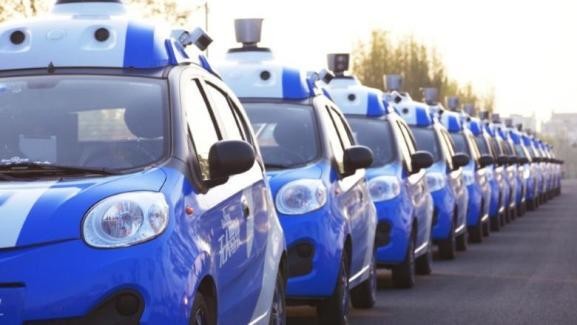
SHANGHAI: China’s capital city has given the green light to tech giant Baidu Inc. to test self-driving cars on its streets, indicating strong support for the budding sector even as the industry reels from a fatal accident in the US.
Beijing’s move is an important step as China looks to bolster its position in the global race for autonomous vehicles, where regulatory concerns have come into the spotlight since the crash earlier this month.
The accident in Tempe, Arizona, involving an Uber self-driving car, was the first death attributed to a self-driving car operating in autonomous mode, and has ramped up pressure on the industry to prove its software and sensors are safe.
Beijing has given Baidu, best known as China’s version of search engine Google, a permit to test its autonomous vehicles on 33 roads spanning around 105 kilometers (65 miles) in the city’s less-populated suburbs, the firm said in a statement.
Baidu is leading China’s push in driverless technology, with Beijing keen to keep up with global rivals such as Waymo, the self-driving arm of Google parent Alphabet, and Tesla. It has a major self-driving project called Apollo.
“With supportive policies, we believe that Beijing will become a rising hub for the autonomous driving industry,” Baidu Vice President Zhao Cheng said.
Two people close to DiDi Chuxing, China’s dominant ride-hailing company which is also working on self-driving, said
earlier this week firms developing autonomous vehicles were not likely to slow down plans for testing and developing.
“I am quite positive on the potential of the technology because autonomous technology makes vehicles far less prone to accidents than human drivers,” one of the people said. Didi declined to comment.
Earlier this month, China issued licenses to car makers allowing self-driving vehicles to be road tested in Shanghai, which included Shanghai-based SAIC Motor Corp. and electric
vehicle start-up NIO.
However, regulations in the sector are struggling to keep pace with rapid growth and the growing numbers of firms wanting to carry out tests on public roads.
Baidu CEO Robin Li tested his firm’s driverless car on Beijing’s roads last July, causing controversy as there were no rules for such a test at the time. The firm hopes to get self-driving cars on to the roads in China by 2019.
Baidu said that before conducting tests on public roads, autonomous vehicles using its Apollo system would go through simulation tests as well as trials on closed courses.


![]()
Baidu gets green light to test driverless cars on Beijing streets
Baidu gets green light to test driverless cars on Beijing streets


Latest updates


© 2026 SAUDI RESEARCH & PUBLISHING COMPANY, All Rights Reserved And subject to Terms of Use Agreement.