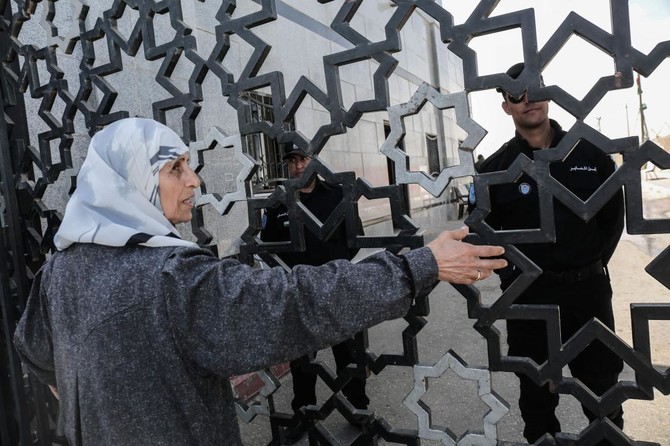
GAZA CITY: Egypt opened its largely sealed border with the Gaza Strip on Friday for two days, Palestinian authorities said.
In just the third such opening this year, the crossing between the Palestinian enclave and Egypt’s Sinai region will be open Friday and Saturday for humanitarian cases, the Palestinian embassy in Cairo said.
The Rafah crossing is the only exit for Gaza residents except into Israel, but Egypt has largely sealed it in recent years, citing security threats.
Egyptian authorities have a poor relationship with Gaza’s Islamist rulers Hamas, whom they have accused of supporting attacks inside Egypt.
Both of the two previous border openings this year were cut short due to the security situation in Sinai.
The Egyptian army and police forces are engaged in a fierce conflict with armed Islamists, especially in the North Sinai governorate where an Egyptian affiliate of the Islamic State is active.
Hundreds have been killed on both sides.
For more than a decade, Israel has imposed a crippling blockade on Gaza that critics say amounts to collective punishment of the coastal territory’s two million Palestinian residents.
Israel says the blockade is necessary to isolate Hamas, with which it has fought three wars since 2008.
Egypt has also kept the Rafah crossing largely closed for several years.
In October, Egypt brokered a reconciliation agreement between Hamas and Fatah, the party of Palestinian president Mahmud Abbas, that was supposed to see the Islamists give up power in Gaza.
But the deal has collapsed, with the two Palestinian groups trading blame.

Egypt opens Gaza border for two days
Jordan begins implementing Royal directives to modernize Arab Army
- On Saturday, it was reported that King Abdullah had announced the strategy
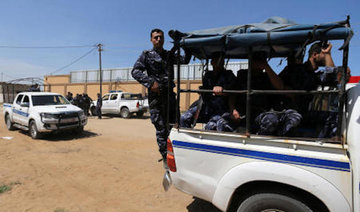
AMMAN: Jordan’s Armed Forces have begun implementing royal directives from King Abdullah II aimed at restructuring and modernizing the Arab Army to strengthen its operational readiness and ability to meet evolving security challenges, it was announced on Sunday.
The overhaul is designed to sharpen combat capabilities and establish a streamlined, flexible force equipped to operate across varied environments, while adapting to the demands of modern and unconventional warfare, the Jordan News Agency reported.
The directives called for closer alignment between organizational structures and operational needs, alongside upgrades to command, control and communications systems.
They also urged stronger integration across military branches and units, as well as expanded use of advanced technologies, including unmanned systems and cyber capabilities.
Plans also include reinforcing reserve forces, improving logistics to ensure reliable supply chains, and supporting Jordan’s defense industries to enhance self-sufficiency and efficiency.
In a statement, the Jordanian Armed Forces said they were fully committed to carrying out the royal directives as part of a broader strategic vision to raise professionalism and preparedness.
On Saturday, it was reported that King Abdullah had announced a strategy “to achieve a structural transformation in the armed forces over the course of the next three years,” Petra said.
In a letter to the Chairman of the Joint Chiefs of Staff, the King wrote: “Our Arab Army is a national institution that every Jordanian is proud of.”
“We must examine the requirements for modernizing and developing our Armed Forces, while restructuring them to keep pace with combat demands within various environments of operation,” the king wrote.
The king also said the army must have sufficient reserve forces reinforced with the necessary capabilities.
“Our Armed Forces must have sufficient reserve forces, equipped with the various needed capabilities to execute their operations efficiently.”