DUBAI: Education is the main driving forces for Saudi women’s empowerment and that has been the case since the 1960s, renowned Saudi historian, academic and writer Hatoon Al-Fassi has said.
Speaking to Arab News in Dubai recently, Hatoon said that there are more women graduates and qualified women in Saudi Arabia than men.
“We hope that this will translate into empowerment. It all depends on how many of these women join the workforce, how many of them make it to decision making positions. We are not talking about numbers only, we are looking for the representation of these into positions of power,” she said.
Hatoon said that stereotyping of Arab women in international forums is a problem. “It is not just the (Arab) women’s image, but the mixing between Arab and Islamic images and the blurring of lines between them is also obvious in international literature,” said Hatoon, who has a specialization in women’s history.
She said that Saudi women are very strong but the depiction of their strength and confidence is not as common as in Western cultures.
“Not every woman appearing on TV or media are like me. Maybe I am one of those who wouldn’t mind appearing in the media and I have been doing this for a long time but there are many who are very active,” she said.
According to her, there are influential women who do not appear on TV or in the media and some of them have broken the stereotype. “So that has made my face a bit more familiar and some people may think that I am one of the unique ones but it is not true,” she said.
Hatoon said she feels proud of the social reforms taking shape in the country. “We are very glad that at last the state is taking women’s issues seriously,” said Hatoon.
“I think we are in a phase where we are very proud and happy. I am very hopeful and optimistic that it will lead us to more openings, advantages and more gains that will reflect positively on the future of Saudi Arabia.”
Hatoon said that the problem with the Western media is that they take only one side of the story and generalize it. “It is the problem of orientalist schools in general. This is how they look at our part of the world. It is easier for them to generalize and brand us,” Hatoon said adding that Saudi Arabia is very much a multicultural society.
She also emphasized that Saudi Arabia is a very big and diverse country in more ways than one.
“Ethnically we are diverse, geographically diverse, and historically and culturally diverse. (Unfortunately) we have not given enough space to media outlets to show our diversities,” she said.
She also said that times have changed and the realization has set in about how important it is to share the country’s diversity with the world. “Promotion of tourism will bring so many economic opportunities in the country.”
Hatoon highlighted that the promotion of tourism, which promotes every diversity and attraction in the country, could feed into this new economic opportunity.


![]()
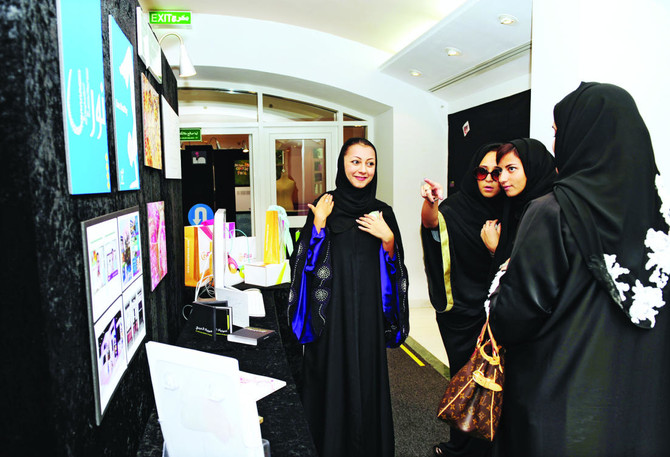
Education is key to Saudi women’s empowerment: Academic
Education is key to Saudi women’s empowerment: Academic


Latest updates



© 2026 SAUDI RESEARCH & PUBLISHING COMPANY, All Rights Reserved And subject to Terms of Use Agreement.