

Flour power: Saudi women bakers take Instagram by storm

1 / 6
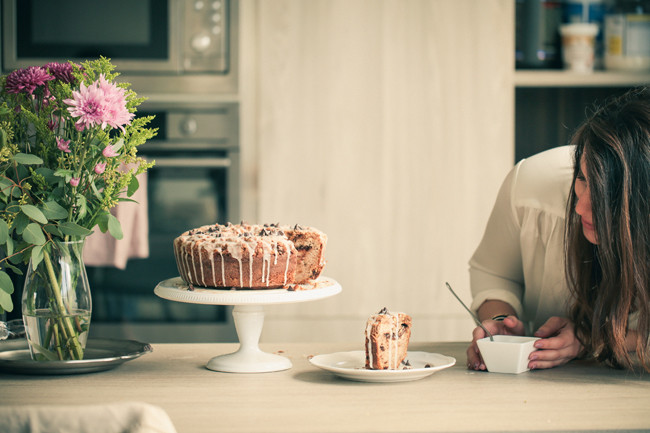
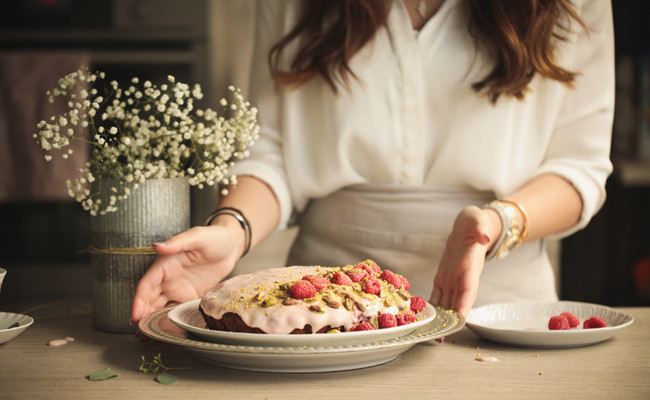
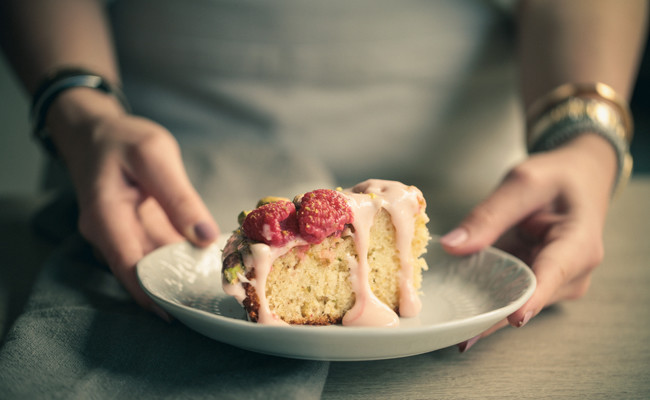
Saudi baker Dareen Shakir, who runs the account @dees_cakesnbakes, fuses Middle Eastern-style sweets with Western ones and has 23,000 followers. (Photo courtesy: Omaima Al-Shareef @omi_photography)
2 / 6
Saudi baker Dareen Shakir, who runs the account @dees_cakesnbakes, fuses Middle Eastern-style sweets with Western ones and has 23,000 followers. (Photo courtesy: Omaima Al-Shareef @omi_photography)
3 / 6
Saudi baker Dareen Shakir, who runs the account @dees_cakesnbakes, fuses Middle Eastern-style sweets with Western ones and has 23,000 followers. (Photo courtesy: Omaima Al-Shareef @omi_photography)
4 / 6
Saudi baker Dareen Shakir, who runs the account @dees_cakesnbakes, fuses Middle Eastern-style sweets with Western ones and has 23,000 followers. (Photo courtesy: Omaima Al-Shareef @omi_photography)
5 / 6
Saudi baker Dareen Shakir, who runs the account @dees_cakesnbakes, fuses Middle Eastern-style sweets with Western ones and has 23,000 followers. (Photo courtesy: Omaima Al-Shareef @omi_photography)
6 / 6
Saudi entrepreneurs are carving out a niche in the food business with the help of Instagram. (Instagram photo)
Updated 12 March 2018
Follow

Flour power: Saudi women bakers take Instagram by storm

JEDDAH: There had been a dramatic increase in the number of entrepreneurs in the food business section on Instagram in the past five to six years.
The social media application was always famous for the pictures people took of their meals and uploaded to their accounts. This paved the way for the many talented bakers who had the potential to sell their goods.
They would upload the pictures and interested users of the application would order their required delicacy. The account owners usually take the responsibility of delivering it to their addresses.
These foods are unique, have a better variety and a reasonable pricing scheme. Also, these are perfect for people looking for “the taste of home.”
There are all sorts of varieties from savory to sweets. From having an account dedicated to just one item to an account with a range of products.
As time passes there are more and more accounts appearing, each one introducing a newer, more innovative idea.
There are thousands of such accounts based in Jeddah only, and those accounts have tens of thousands of followers.
@biscotti_ksa, who makes all the varieties of cookies and brownies, makes her own creations and has a following of 93,400, whereas Dareen Shakir, a 29-year-old Saudi with an American mother, who runs the account @dees_cakesnbakes, started five years ago in 2013. She fuses Middle Eastern-style sweets with Western ones and has 23,000 followers.

View our photo gallery

“I like doing this because I have freedom, I don’t have to stick to work hours, I can take off whenever I want, and I can travel whenever I want,” Dareen said.
“The competition is high, so I can’t linger on just one type of product for too long. I have to keep renewing my products.”
Walaa Al-Sharif, 23, the Saudi girl behind the account @passionbakety.sa, has 10,200 followers. She has also collaborated with Manuel supermarkets and has a permanent spot on the supermarket’s shelves.
“I started in 2014. At that time there weren’t so many bakers, specializing in cookies,” she said.
“When I started it took me five to eight months to have clients. Also I was a student, so I took many days off, but now I am focusing on this and I hope to have a shop soon.”
The hardest part of starting the business is surely the beginning, to convince people about your product. This was properly defined by Jeddah-based Pakistani Hamna Khan, who specializes in cinnamon rolls. She is just starting out on Instagram with the name @thesugarloop.
She said: “The most difficult part is conveying the quality of my products to the people, especially because it is food. It’s not something I can write features about.
“I strongly believe that baking for people should be done with love and commitment, and I am looking forward to whatever the future holds.”

Mini op-ed: Recognising a shift in how people relate to wellness, self-care

Updated 05 March 2026
Follow

Mini op-ed: Recognising a shift in how people relate to wellness, self-care

DUBAI: I have spent nearly a decade working in the beauty industry in Saudi Arabia and the UAE, and Ramadan always has a way of prompting change; in habits, in priorities, and in the routines people have been carrying without question. Speaking from my own corner of the industry, one of these habits is often hair removal.

Saudi Arabia’s beauty and personal care market was valued at about $7.56 billion in 2025 and is set to grow to an estimated $8.03 billion in 2026. Within that growth, personal care encompassing the daily (sometimes unglamorous) routines hold the largest share. But market size alone does not tell the full story. A study conducted at King Abdulaziz University Hospital, Jeddah, found that three quarters of Saudi women experienced complications from temporary hair removal methods, including skin irritation, in-grown hairs and hyperpigmentation. A separate 2025 study published in the Majmaah Journal of Health Sciences found that laser hair removal was both the most considered and most commonly undergone cosmetic procedure among Saudi respondents, yet dissatisfaction with cosmetic procedure outcomes was reported by nearly half of all participants. The numbers point to a gap not in demand, but in results. 

When I launched a specialized electrolysis practice in the UAE in 2016, it was with a clear gap in mind; safe, regulated, permanent hair removal for the region’s specific needs. The range of hair types here and the prevalence of conditions such as polycystic ovary syndrome, or PCOS, demanded a method that works across all of them.  Electrolysis is the only method recognized by the US Food and Drug Administration and American Marketing Association as achieving true permanent results, regardless of hair color or type. 

Despite this, awareness in Saudi Arabia remains limited. Part of this is familiarity, laser has dominated the conversation for years, and electrolysis, which requires more sessions and a licensed electrologist’s precision, has struggled to break through. Part of it is education. Many clients who come to us have never heard of electrolysis; they come because they have exhausted everything else. 

Right now, Saudi Arabia is in the middle of a genuine transformation in how people relate to wellness and self-care. The beauty market is maturing, consumers are asking harder questions of the brands they choose and Vision 2030 has not just shaped the economy, it has shaped how Saudis are showing up in their own lives. In that context, the idea of choosing permanence over repetition lands differently.
 
Mariela Marcantetti is a beauty industry entrepreneur based between Saudi Arabia and the UAE.