Egypt’s censors lift ban on play ‘Before The Revolution’

1 / 2
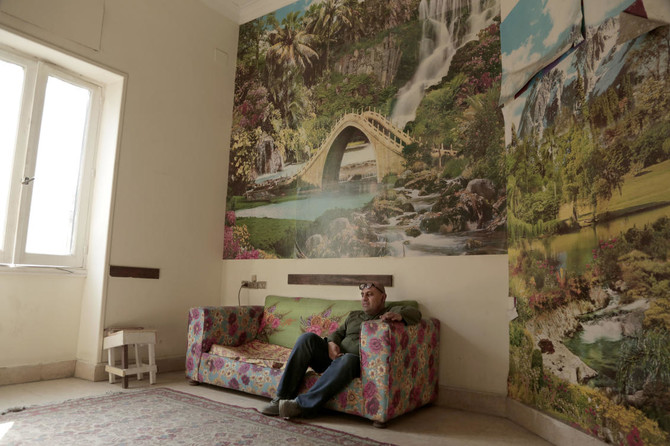
In this Wednesday, March 14, 2018 photo, Egyptian director Ahmed El Attar, sits in a room at his office in Cairo, Egypt. (AP/Nariman El-Mofty)
2 / 2
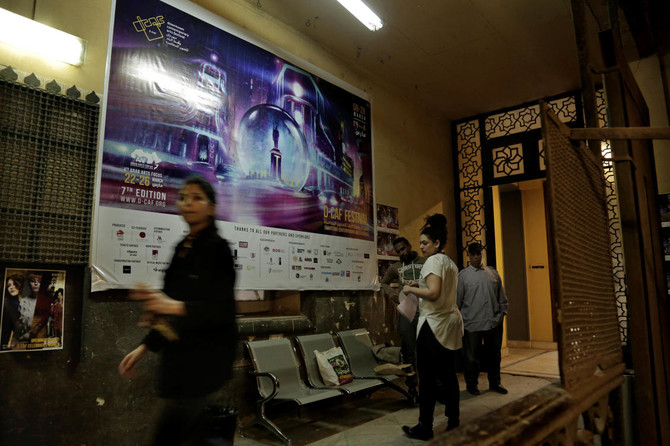
In this Wednesday, March 14, 2018 photo, staff working for the Downtown Contemporary Arts Festival walk outside their office in Cairo. (AP/Nariman El-Mofty)
Updated 20 March 2018
Follow

Egypt’s censors lift ban on play ‘Before The Revolution’

CAIRO: Egypt’s state censors have allowed the performance of a socially critical play they had prohibited on the day of its Cairo premiere.
Director Ahmed El-Attar had earlier canceled the showing of “Before the Revolution,” a two-actor piece that depicts oppression and stagnation in Egypt before its 2011 popular uprising. He said the removal of five scenes as demanded by the censors heavily distorted it.
In a statement late Monday, organizers thanked the censors for reversing their decision on appeal and permitting it to run “without the disruption of its dramatic construction.”
The play will now run for three nights as opposed to its originally scheduled six in a 100-seat theater, as part of Cairo’s annual Downtown Contemporary Arts Festival. El Attar is also the general manager of the festival.


Berlinale responds to backlash over Gaza-related comments

Updated 16 February 2026
Follow

Berlinale responds to backlash over Gaza-related comments

The Berlin International Film Festival has issued a statement after what organisers described as a growing “media storm” linked to comments about the war in Gaza and the broader role of politics in cinema.

Festival director Tricia Tuttle released a lengthy note late Saturday following criticism directed at several high-profile guests. The controversy began during the opening day press conference when jury president Wim Wenders was asked about the conflict in Gaza. He responded: “We have to stay out of politics because if we make movies that are dedicatedly political, we enter the field of politics,” a remark that sparked swift backlash online.

Indian author Arundhati Roy later withdrew from the festival, reportedly angered by the remarks.

Other prominent figures, including Michelle Yeoh and Neil Patrick Harris, also faced online criticism after responding cautiously to questions about politics. Harris stated that he was interested in “doing things that were ‘apolitical,’” a comment that further fuelled debate.

In her statement, Tuttle defended the festival and its participants, stressing the importance of artistic freedom. “People have called for free speech at the Berlinale. Free speech is happening at the Berlinale. But increasingly, filmmakers are expected to answer any question put to them. They are criticised if they do not answer. They are criticised if they answer and we do not like what they say. They are criticised if they cannot compress complex thoughts into a brief sound bite when a microphone is placed in front of them when they thought they were speaking about something else,” she said.

She added: “It is hard to see the Berlinale and so many hundreds of filmmakers and people who work on this festival distilled into something we do not always recognise in the online and media discourse… It is a large, complex festival.”

“Artists are free to exercise their right of free speech in whatever way they choose… nor should they be expected to speak on every political issue raised to them unless they want to,” Tuttle said.