DUBAI: Saudi Arabia’s Crown Prince Mohammed Bin Salman arrived in Washington on Tuesday morning to start his first official visit to the country as heir to the throne, Saudi state-news channel Al-Ekhbariya reported.
The Crown Prince was received by Saudi Arabia’s Ambassador to the US, Prince Khalid bin Salman and the US State Department's Ambassador to the US, Sean Oler, as well as several other high-level delegates.
The trip follows visits to both Egypt and the UK earlier this month, which led to a string of political and economic agreements signed between the kingdom and two of its key allies.
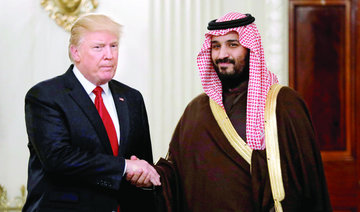
But the visit to the US aims to build on what is possibly Saudi Arabia’s most important relationship, one which has been strengthened with the arrival of Donald Trump in the White House.
The Royal Court said the crown prince had left Saudi Arabia and that during the visit he will meet Trump and a number of officials “to discuss bilateral relations and issues of common interest,” Saudi Press Agency reported.
The meeing with the US president will take place on Tuesday for talks, the White House, said.
Christopher Henzel, the Charge d’Affaires at the US embassy in Riyadh said he was confident Trump and the crown prince would “enjoy open and candid discussions on a variety of issues.”
High on the agenda is Iran, and how to rein in its influence in the Middle East - something both men believe is one of the biggest threats to the region.
Trump has threatened to scrap the 2015 deal between Iran and international powers intended to curb its nuclear program in exchange for sanctions relief.
“The United States is focused on neutralizing Iran’s destabilizing influence and constraining its aggression,” Henzel added, in an opinion article in Monday’s Arab news.
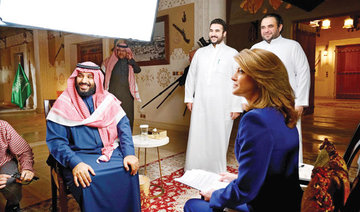
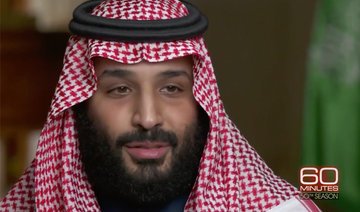
The Crown Prince warned in an interview with CBS’s 60 Minutes program aired on Sunday that if Iran was able to develop a nuclear weapon, Saudi Arabia would “follow suit”.
Norah O’Donnell, who conducted the interview, the first by the crown prince with an American broadcaster, told Arab News that no subjects were off topic - perhaps a precursor to the frank conversations that will take place between the Saudi delegation and US leaders and business people in the coming days.
“It seemed to me that there was a desire to show the American public what he believes, to show that Saudi Arabia is changing. The crown prince wants the US audience to understand him,” O’Donnell said.
The crown prince’s sweeping social and economic reform program has been met with a groundswell of optimism in Washington. Many in the foreign policy establishment are keen to find out more about the heir to the throne and details about his domestic and foreign agenda.
“Mohammad bin Salman has started a hugely positive cultural reform program in Saudi Arabia, particularly the theological struggle to return the Kingdom to its roots in moderate Islam,” Jim Smith, who served as the US ambassador to Saudi Arabia between 2009 and 2013, told Arab News.
“Winning that war of ideas, and succeeding in the other major policy challenges, depends not only on the crown prince’s leadership but also on how good the team that he has assembled around him is, and how strong the institutions they build together are.”


![]()

Saudi Arabia’s Crown Prince arrives in Washington on official visit
Saudi Arabia’s Crown Prince arrives in Washington on official visit
Related
Update
Latest updates


Recommended


© 2026 SAUDI RESEARCH & PUBLISHING COMPANY, All Rights Reserved And subject to Terms of Use Agreement.