GAZA CITY: The assassination attempt on Palestinian Prime Minister Rami Hamdallah earlier this week has left Gazans fearful that political differences between Hamas and Fatah will erupt again into violence.
Hamdallah was traveling through the Gaza Strip on Tuesday when his motorcade was targeted by a roadside bomb. Six of his security guards were slightly wounded in the attack, which sent debris hurtling into the air and left a large crater.
Hamas was quick to condemn the incident, but people here fear it may jeopardize a fragile reconciliation deal struck between the hard-line movement and the Palestinian Authority last year.
“We are the prisoners of siege, poverty and unemployment. Now to add to this we have an assassination attempt on the prime minister in Gaza,” Alaa Mutair, a 27-year-old designer, told Arab News.
“The incident is very dangerous. I do not know who is behind it, but whoever stands behind it certainly does not have any interest in the Palestinian people and their future.”
Hamdallah is prime minister of the Palestinian Authority, which is dominated by Fatah and controls the West Bank. Fatah has been in dispute with Hamas since 2006, when the movement won legislative elections in the Occupied Territories by a landslide.
Tensions erupted in Gaza a year later, with both sides carrying out public executions of rival fighters. Hamas emerged victorious and has controlled the strip ever since.
While the two factions signed a reconciliation deal last October, ill-feeling persists. Hamas spokesman Fawzi Barhoum wrote on Facebook that Fatah had used the assassination attempt to launch a media campaign “steeped in hatred and exclusion of Hamas.”
Hany El-Masary, 36, told Arab News that customers at his hairdressing salon had been feverishly discussing the attempt on Hamdallah’s life.
“We seriously fear the dispute between Fatah and Hamas will continue for a long time and reconciliation will become impossible. We are lost between the two rivals,” he said
Israel has imposed a land, sea and air blockade on Gaza since Hamas came to power in 2007. The siege has crippled the economy and caused the UN to warn that the strip faces “full collapse.”
Reflecting on this week’s assassination attempt, Abeer Lubbad, a 54-year-old housewife, said: “The fear today is that we will return to having a chaotic security situation, just like we have a chaotic economic situation.”


![]()
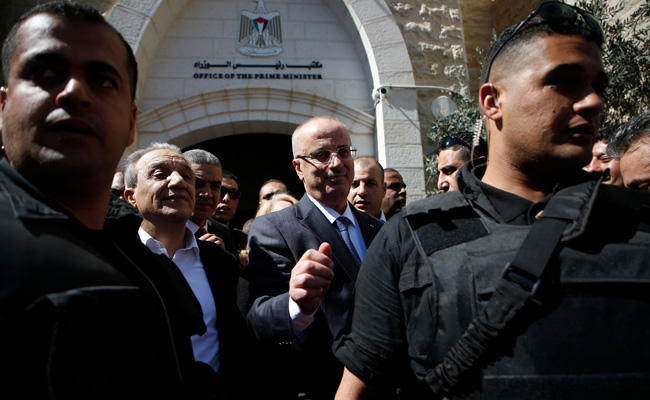
Gazans fear new bloodshed as Hamas, Fatah clash over assassination attempt
Gazans fear new bloodshed as Hamas, Fatah clash over assassination attempt


Latest updates


© 2026 SAUDI RESEARCH & PUBLISHING COMPANY, All Rights Reserved And subject to Terms of Use Agreement.