SINGAPORE: The eye-watering cost of owning a car in space-starved Singapore means the city state is the world’s most expensive place to live, for the fifth year in a row, a survey said Thursday.
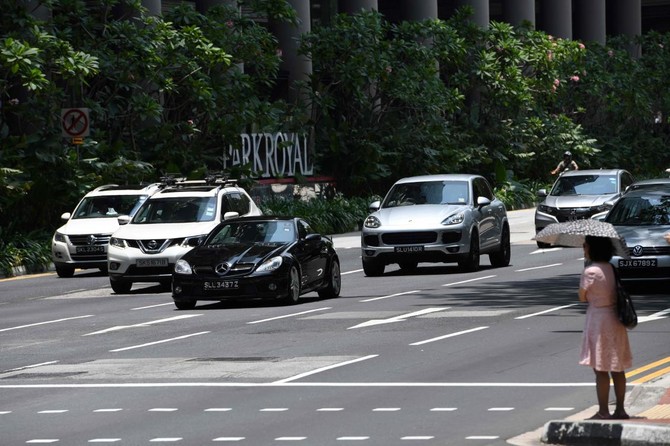
The Asian financial hub — where owning a no-frills sedan can set you back $76,000 — beat global capitals to the dubious title, despite stiff competition from resurgent European cities.
Pricey perennials Tokyo and New York did not even make the top 10 in the annual list by the Economist Intelligence Unit (EIU), beaten out by Paris, Zurich (joint second) Hong Kong (fourth) and Oslo (fifth).
Seoul and Geneva shared sixth place, while Copenhagen, Tel Aviv and Sydney rounded out the rankings
Despite some perks to domestic life in Singapore — home help is cheap — the former British colony “remains the most expensive place in the world to buy and run a car,” EIU said.
Singapore has avoided Asia’s massive traffic jams by controling vehicle ownership through a quota system under which a buyer must pay for a Certificate of Entitlement — currently nearly S$40,000 ($30,500) — on top of the vehicle’s actual price.
That means a basic sedan comes with a S$100,000 price tag.
Asian cities tend to be most expensive for grocery shopping, while Europe comes out tops in household, personal care, recreation and entertainment, the survey said.
Currency fluctuations remain a major cause for the changes in the rankings, with the weaker US dollar keeping American cities out of the top 10.
War-wracked Damascus, the troubled Venezuelan capital Caracas, Lagos in Nigeria and the Pakistani city of Karachi are among the world’s cheapest cities, the survey showed.
“Put simply, cheaper cities also tend to be less liveable,” it said.


Car costs make Singapore world’s priciest city. Again.
Car costs make Singapore world’s priciest city. Again.


Fans bid farewell to Japan’s only pandas
TOKYO: Panda lovers in Tokyo said goodbye on Sunday to a hugely popular pair of the bears that are set to return to China, leaving Japan without the beloved animals for the first time in half a century.
Loaned out as part of China’s “panda diplomacy” program, the distinctive black-and-white animals have symbolized friendship between Beijing and Tokyo since the normalization of diplomatic ties in 1972.
Some visitors at Ueno Zoological Gardens were left teary-eyed as they watched Japan’s only two pandas Lei Lei and Xiao Xiao munch on bamboo.
The animals are expected to leave for China on Tuesday following a souring of relations between Asia’s two largest economies.
“I feel like seeing pandas can help create a connection with China too, so in that sense I really would like pandas to come back to Japan again,” said Gen Takahashi, 39, a Tokyo resident who visited the zoo with his wife and their two-year-old daughter.
“Kids love pandas as well, so if we could see them with our own eyes in Japan, I’d definitely want to go.”
The pandas’ abrupt return was announced last month after Japan’s conservative premier Sanae Takaichi hinted Tokyo could intervene militarily in the event of any attack on Taiwan.
Her comment provoked the ire of Beijing, which regards the island as its own territory.
The 4,400 lucky winners of an online lottery took turns viewing the four-year-old twins at Ueno zoo while others gathered nearby, many sporting panda-themed shirts, bags and dolls to celebrate the moment.
Mayuko Sumida traveled several hours from the central Aichi region in the hope of seeing them despite not winning the lottery.
“Even though it’s so big, its movements are really funny-sometimes it even acts kind of like a person,” she said, adding that she was “totally hooked.”
“Japan’s going to be left with zero pandas. It feels kind of sad,” she said.
Their departure might not be politically motivated, but if pandas return to Japan in the future it would symbolize warming relations, said Masaki Ienaga, a professor at Tokyo Woman’s Christian University and expert in East Asian international relations.
“In the future...if there are intentions of improving bilateral ties on both sides, it’s possible that (the return of) pandas will be on the table,” he told AFP.


