RIYADH: Russia will face consequences for its "violation" — the nerve gas-attack on the former Russian double agent Sergei Skripal and his daughter — a flagrant breach of international law that should serve as a warning to the international community, UK Ambassador Simon Collis said in a news conference at his home in Riyadh on March 14.
It also emerged today that Britain is to expel 23 Russian diplomats allegedly operating as undeclared intelligence officers after Moscow ignored a midnight deadline to explain how its nerve weapon was used in the attempted assassination on UK soil.
Discussing the attack which took place in Salisbury, England, on March 4, Collis said: “Theresa May (the UK prime minister) headed a meeting at a national security council regarding the incident.
“It was clear that Mr. Skripal and his daughter were poisoned with a nerve agent, and this is a special type of Russian product, called Novichok.
“During her speech in parliament, she said the British government had concluded that it was highly likely Russia is responsible for the poisoning of Mr. Skripal and his daughter, based on an analysis from the defense science and technology laboratory," Collis said. "We know that Russia has previously made this gas, and still produces it. Russia is known to have conducted these state-sponsored assassinations. Our assessments are that Russia considers some Russian defectors as a legal target for assassinations.”
Collis continued: “In addition, today in Geneva, at the (United Nations) human rights council, another statement was made, that the UK cares about the humanitarian situation in Syria, Egypt, and China. However, the recent developments demand us to focus today on one country only. The council and the general public of the UN have condemned Russia’s transgression and previous violations of the international law.
“In Syria, we know of the repeated violations caused by Russia, or by others supported by Russia."
These operations have caused the deaths of thousands, and Russia has been blamed for killing many civilians at large, the ambassador said. Collis went on to mention Russian operations against Georgia’s sovereignty, which were against the UN Security Council’s resolutions.
“We have seen Russia’s disrespect to the sovereignty of other countries, as well as its criminal operations via cyberspace, and this has affected many countries,” Collis said.
The humanitarian situation in Russia is also a reason for concern, with "severe repressions and persecution.”
“In the end, it was mentioned that this gas was used in the streets of the UK in an effort to kill Skripal and his daughter," the envoy said. “We expect Russia, as usual, to either deny these allegations or try to remove them away from them.
“We admit that in the UK, we face challenges in human rights, just like any other country. However, as opposed to Russia, we in the UK consider the UN and the rules-based system as a pillar for security in the world. We know that the violation of one country is considered a violation against all.
“This violation (the poisoning) has changed many things, many things. You will see in the upcoming weeks and months the results of this action, and we will coordinate with our friends about this, and there will be consequences.”


![]()
![]()
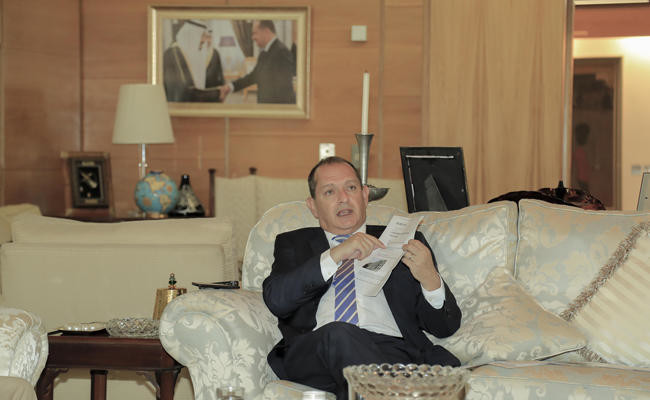
Russia will face consequences for nerve gas attack, UK envoy tells Saudi media
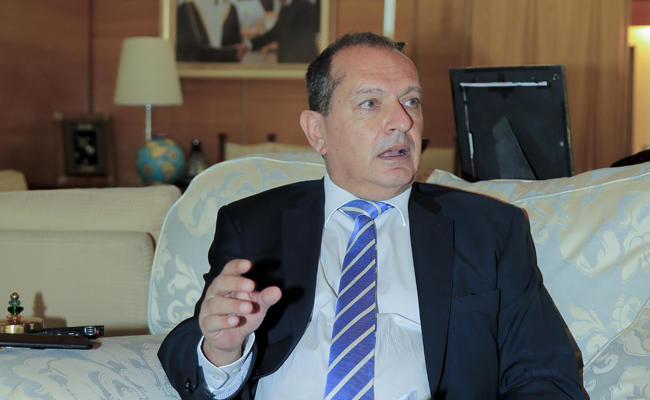
Russia will face consequences for nerve gas attack, UK envoy tells Saudi media

Latest updates





© 2026 SAUDI RESEARCH & PUBLISHING COMPANY, All Rights Reserved And subject to Terms of Use Agreement.