JEDDAH: The Saudi government has approved its national nuclear program policy as tabled by Khaled Al-Faleh, energy minister and chairman of the King Abdullah City for Atomic and Renewable Energy (KACARE).
The government reviewed the policy in its cabinet session on Tuesday and published new guidelines to ensure that nuclear development for peaceful use must comply with all legislation, conventions and international agreements.
The government called on all involved to uphold transparency in organizational and operational matters and to comply with nuclear safety and security processes through an independent monitoring system.
It also called for compliance with the international standards for nuclear waste disposal — and to insure the continuity of the program through developing national capability in nuclear energy to maintain and improve the sector in the Kingdom.
Al-Faleh said in October that the nuclear program would start by building two reactors, each producing between 1.2 and 1.6 gigawatts of electricity.
The Saudi cabinet says its nuclear program will be in “full compliance with the principle of transparency” and meet nuclear safety standards “in accordance with an independent regulatory and supervisory framework.”
Energy consumption in Saudi Arabia has been rising at more than five percent per year although growth slowed in 2017 after the government cut subsidies and hiked prices.
Electricity consumption is expected to double over the next 15 years, reaching 120 gigawatts by 2032, said Abdullah Al-Shehri, governor of Saudi Arabia’s Electricity and Co-generation Regulatory Authority.
The Kingdom draws on oil and natural gas to both generate power and desalinate its water so turning to other sources of power, including solar, would free up crude for exportation.
By 2040, 55 percent of the country’s power supply will come from solar, wind, geothermal and nuclear energy combined, according to KACARE.
The projects will cost the Kingdom around $67 billion over the next five years, according to energy minister Faleh.


![]()
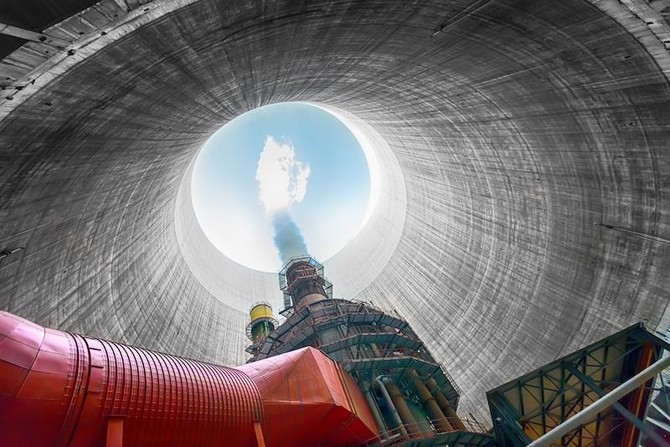
Saudi government has approved its national nuclear policy
Saudi government has approved its national nuclear policy


Latest updates


© 2026 SAUDI RESEARCH & PUBLISHING COMPANY, All Rights Reserved And subject to Terms of Use Agreement.