DUBAI: Abu Dhabi National Oil Company (ADNOC) said on Sunday it had signed 40-year agreements with Eni , awarding the Italian company a 10 percent stake in its Umm Shaif and Nasr offshore oil concession and a 5 percent stake in Lower Zakum.
Eni has contributed a participation fee of 2.1 billion dirhams ($575 million) for the Umm Shaif and Nasr offshore concession and a fee of 1.1 billion dirhams for the Lower Zakum oil concession, ADNOC said in a statement.
The signing ceremony in Abu Dhabi was attended by Abu Dhabi Crown Prince Sheikh Mohammed bin Zayed Al-Nahyan and Italian premier Paolo Gentiloni.
“The awards mark the first time an Italian energy company has been given concession rights in Abu Dhabi’s oil and gas sector,” ADNOC said in the statement.
The agreements with Eni have a term of 40 years and are backdated to March 9, 2018, ADNOC said.
“Our partnership with Eni, and other concession partners, will enable us to accelerate our growth, increase revenue and improve integration across the upstream value chain,” ADNOC Chief Executive Sultan Al-Jaber said in the statement.
Last month, a consortium led by India’s Oil and Natural Gas Corp. (ONGC), Japan’s INPEX and Spain’s Cepsa were all awarded stakes in different areas of the offshore concession.
“This is the first award by ADNOC to a major (in the offshore renewal), and shows it is looking to find a balance in its strategic partners between companies from major buyers, such as Japan and India, and IOCs (international oil companies) with technology and project delivery expertise,” said Tom Quinn, senior research analyst, Middle East Upstream, Wood Mackenzie.
The ADNOC deal also provides low-risk, long-term supply to Eni, and lays the foundation for the Italian company’s Middle East portfolio, Quinn said.
ADNOC said on Sunday it was still finalizing opportunities with potential partners for the remaining 15 percent in the Lower Zakum concession and for the remaining 30 percent stake in the Umm Shaif and Nasr concession. ADNOC will keep a 60 percent share in both concessions.
In August, ADNOC said it would split its ADMA-OPCO offshore concession into three areas — Lower Zakum, Umm Shaif and Nasr, and Sateh Al Razboot and Umm Lulu — with new terms to unlock greater value and increase opportunities for partnerships.
The existing ADMA-OPCO concession, which expired on March 8 produces around 700,000 barrels per day (bpd) of oil and is projected to have a capacity of about 1.0 million bpd by 2021.
The original shareholders in the ADMA-OPCO included BP , and Total SA.


![]()
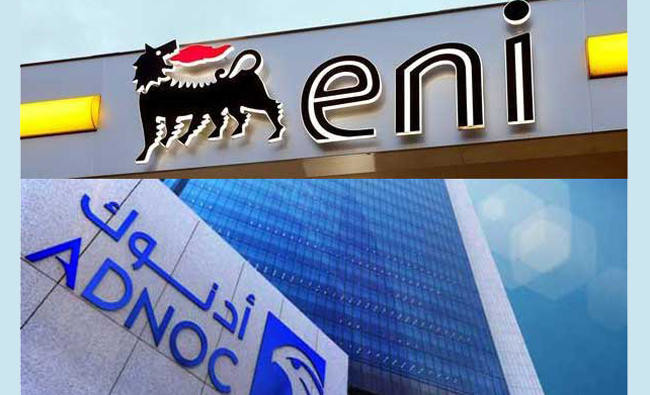
UAE’s ADNOC says awards Italy’s Eni stakes in new oil concessions
UAE’s ADNOC says awards Italy’s Eni stakes in new oil concessions
Latest updates



© 2026 SAUDI RESEARCH & PUBLISHING COMPANY, All Rights Reserved And subject to Terms of Use Agreement.