JEDDAH: The first tablet in the Kingdom with the Saudi hardware “KTAB” is soon to appear after seven years of research. It is made in blue and produced by King Abdul Aziz City for Science and Technology (KACST).
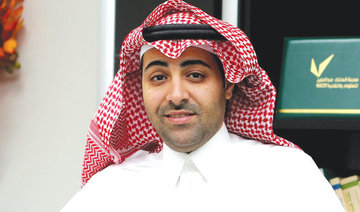
KTAB was produced in partnership between KACST and Mesbah Saudi Technology Company, a large team of engineers and developers. The team who helped to make this innovation a success is headed by Yasser Al-Usaifir, CEO of Mesbah Tech.
The specifications and details of the first Saudi tablet “KTAB” (Kitab is Arabic for “book”) were revealed to Arab News in a special interview with Al-Usaifir.
The idea behind KTAB arose from the passion of creating a platform for smart devices in the Kingdom to be a research and development base for future technology projects.
First, many analyses and surveys were carried out regarding students’ problems and needs regarding carrying heavy devices that did not support all educational aids.
The product also aims to reduce the consumption of paper used in printing. “KTAB is an educational channel, not a substitute for the teacher or the books, but a complementary and supportive educational tool, especially for young students as it aims to encourage them to use technology in a useful way,” said Al-Usaifir.
KTAB includes all the tools that the student needs before, during and after class, at home and at school, including assignments, tests, e-books, daily lessons, visual and audio libraries. It includes applications for parents to follow up their children’s activities both inside and outside the school.
It includes an educational encyclopedia, educational browser and contains dozens of educational sites and application videos with tutorials and explanations. “Note that these applications and their content can be customized according to the needs of the user,” Al-Usaifir said.
“It is a Saudi tablet, but there are partnerships with foreign international companies to build the tablets in a suitable way until the technology is properly settled and localized.”
KTAB supports 4G and quad-core processor, 2G RAM, 16 GB internal storage capacity, 128 GB capacity, 6000mAh battery, 10x 1920x1080 high-resolution display, 8MP front camera and 2GB front end.
“Currently, it is sold to government and private agencies and is not available to the public,” Al-Usaifir said.
The technology is wide and can be re-used as needed. The device can be re-allocated for use in many areas, including civil defense, traffic, passports and many government departments. “We are ready to work and develop any hardware or software specialized in a particular area with high security and quality,” said Al-Usaifir.


![]()
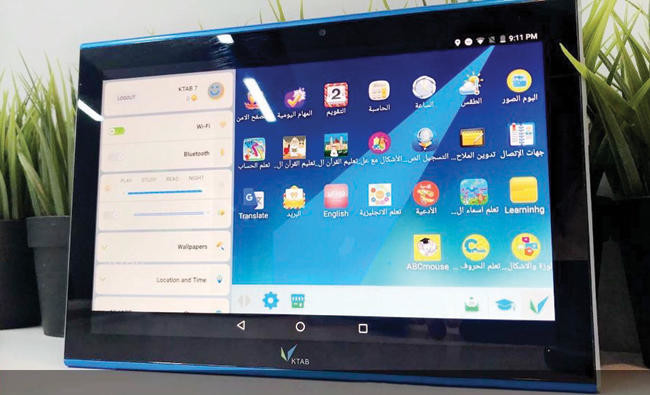
First Saudi tablet with 100% local OS to be launched soon
First Saudi tablet with 100% local OS to be launched soon


Latest updates


© 2026 SAUDI RESEARCH & PUBLISHING COMPANY, All Rights Reserved And subject to Terms of Use Agreement.