LONDON: Gulf countries will not be able to fully escape the impact of any global trade wars that could break out following US President Donald Trump move to impose tariffs on steel and aluminum imports, said analysts.
Despite the region’s oil wealth and unlikelihood that any tariffs would be imposed on energy imports from the Gulf, the GCC remains vulnerable to any widespread economic downturn, said Monica de Bolle, senior fellow at the Peterson Institute for International Economics based in Washington DC.
“Because of oil, things are somewhat protected, at least a little more than rest of world. But that is not to say the region would escape from the basic harm done to global economy as a whole,” she told Arab News, referring to the potentially damaging effects of a rise in protectionism.
Beyond oil, the region is an important location for the trans-shipment of goods, with millions of tons of freight passing through ports such as Jebel Ali in Dubai and Jeddah in Saudi Arabia.
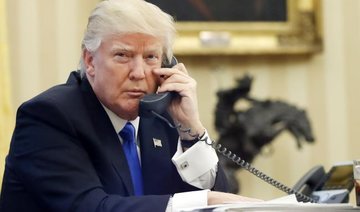
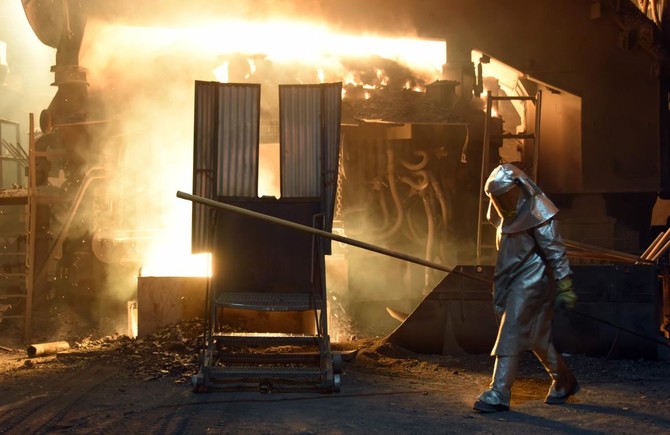
Trump announced on March 1 that he would impose tariffs of 25 percent on imports of steel and 10 percent on aluminum imports. The president said that the tariffs would counter the cheaper metals coming into the US which he said were destroying the country’s domestic steel and aluminum industries. He later tweeted that “trade wars are good, and easy to win.”
The move has triggered fears of a global trade war with policymakers from Brussels to Beijing planning their response.
The EU has considered placing tariffs on the import of US goods, such as Harley-Davidson motorbikes or Levi’s jeans.
The tariffs have been strongly criticized by the International Monetary Fund (IMF) and the director-general of World Trade Organization (WTO), Roberto Azevedo, has warned that it could even plunge the world into a “deep recession.”
An official from China has said that it would take action if the tariffs started to hurt Chinese interests. Canada’s Prime Minister Justin Trudeau has spoken to Trump to express his “serious concern” about the tariffs, saying the move would “not be helpful” to concluding a deal on the North American Free Trade Agreement (NAFTA).
In the Gulf, countries that export a lot of aluminum, such as Bahrain, could be the most vulnerable to Trump’s tariffs, said Jason Tuvey, Middle East economist at Capital Economics.
But he told Arab News that the Gulf’s ‘strategic importance’ to the US could limit the impact.
“It’s quite easy to imagine a scenario where the Gulf countries manage to persuade the Trump administration to provide them with exemptions. In terms of a broader trade war, unless tariffs are extended to oil (which seems highly unlikely), there will not be a major impact on the Gulf economies,” he said.
De Bolle warns that despite the US’s strategic interests in the Gulf, it is hard to predict what the Trump administration will do next.
“There really isn’t any reason for the US to go after energy products … but who knows,” she said.
“This administration is clearly on a war path in terms of what they want to do with the trade deficit. They really want to see a reduction in the deficit.”
“Obviously this is making many people around the world nervous. I don’t think we can rule out a trade war, and then we have an unhinging of the global economy which affects everybody,” she said.