DHAKA: “We cannot sleep at night, fearing a wild elephant attack,” said Mohammad Ali Johar, 47, a refugee living in Bangladesh’s Kutupalong Rohingya refugee camp with his six-member family.
“I have seen several elephant attacks in the past five months,” he told Arab News.
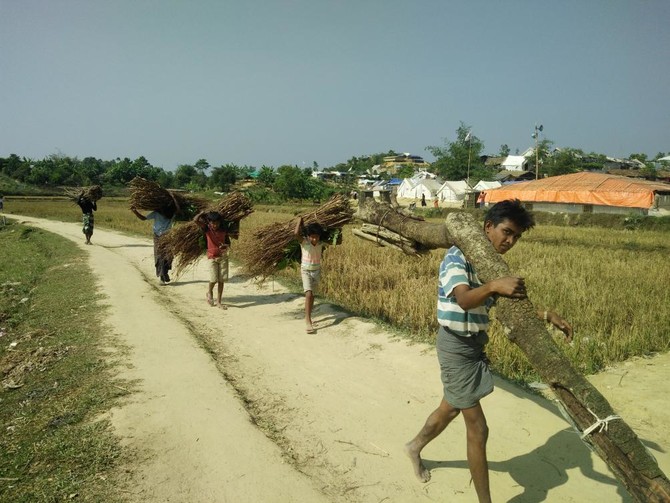
The Asian elephants of this region have been declared as critically endangered species, a situation made worse when their habitat was occupied by a refugee influx that began in September last year. The elephants’ natural movement corridor was disrupted by makeshift houses and the forests were chopped down for firewood, resulting in clashes between man and animal as the elephants left the forest in search of food.
The UN High Commissioner for Refugees and the International Union for Conservation of Nature (IUCN) are collaborating to save human lives as well as the elephants.
Elephant attacks forced the IUCN to carry out field research in 70 square kilometers of hill country in January. About 45 elephants were found to be active in the area.
“We have already formed 17 elephant response teams and will increase this number to 25 in the next two weeks,” IUCN Country Manager Rakibul Amin said.
“In the past 10 days, we have managed to control two elephant attacks without any casualties. The team members call us if an elephant is sighted near the camp area and we take instant measures to address the situation.”
The IUCN is consulting with elephant experts to create an elephant corridor so that the animals can travel safely on their migratory routes and avoid people living nearby.
In addition, the IUCN will build watchtowers near the camps to monitor elephant movement around the refugee areas.
“This Rohingya refugee settlement area stands on the main migratory route of the elephants between Bangladesh and Myanmar. These elephants have been using this same route for generations. If the animals find their corridor blocked, it makes them hostile. It is only at this time that the elephant becomes aggressive enough to uproot the obstacles,” said Ali Kabir, the divisional forest officer of Cox’s Bazar district in southeast Bangladesh.
Elephants need around 200 kg of food a day. Damage to forests by refugee settlements has resulted in food scarcity, forcing the animals to leave the jungle and encounter human beings.
“This partnership with IUCN is not only important to save the elephants but also for the refugees, some of whom have lost their lives in attacks,” said Kevin Allen, UNHCR’s head of emergency response at Cox’s Bazar.
The UNHCR and IUCN plan to educate refugees and host communities about the importance of environmental resources.
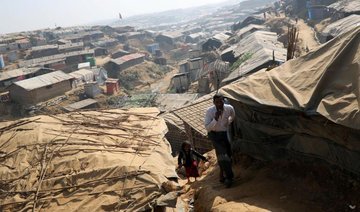
At least 10 Rohingya refugees have died in elephant attacks in the past six months and more have been severely injured. The crowded refugee camp areas of Balukhali and Kutupalong are now home to 560,000 Rohingyas.


![]()
![]()
![]()

Elephant attacks in Bangladesh leave Rohingya refugees fearing for their lives

Elephant attacks in Bangladesh leave Rohingya refugees fearing for their lives
Latest updates


© 2026 SAUDI RESEARCH & PUBLISHING COMPANY, All Rights Reserved And subject to Terms of Use Agreement.