COX'S BAZAR: A Rohingya man was shot dead Thursday as local gangs fired at each other in a crowded refugee camp in southern Bangladesh, police said.
Police said 32-year-old Hossain Ali was killed as he took part in a suspected turf war over drugs at Nayapara camp near Teknaf, an enormous settlement that is home to thousands of displaced Muslims from the persecuted minority.
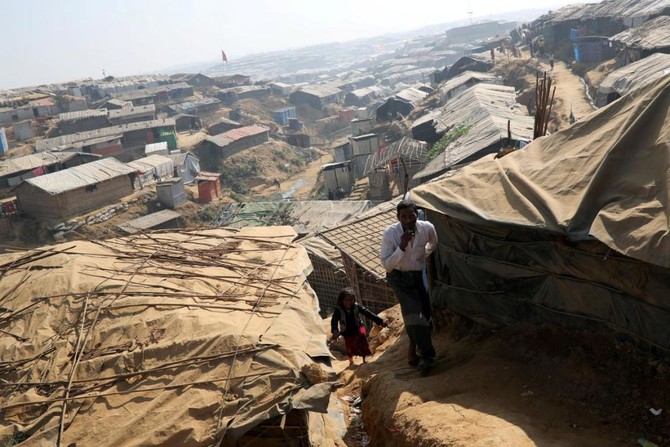
Bangladesh says more than one million Rohingya refugees live in squalid camps in the region, having fled successive waves of violence in Myanmar's Rakhine district.
Another man, wanted by police since being released from prison last year, was also shot but managed to escape, officials said.
Refugees at the camp told AFP at least 10 gunshots were heard in the early morning.
Local police did not recover any weapons but Teknaf police chief Ranjit Kumar Barua confirmed Ali was "struck in the gun battle and died".
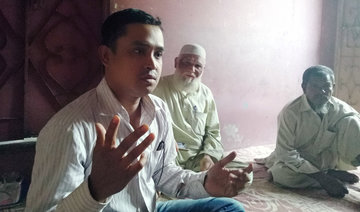
A Rohingya community leader, Mirza Ghalib, said it was believed the skirmish was over "yaba", the local name for the methamphetamine pills popular in Bangladesh.
Police say most of the drugs enter Bangladesh from Myanmar via Rohingya traffickers, sometimes hidden in false bottoms on fishing boats.
In recent weeks, police have arrested half a dozen Rohingya in possession of large quantities of the addictive stimulant.
Nurul Alam, a known criminal with alleged ties to Rohingya militants, was also shot "but fled after being struck by bullets", Barua said.
Myanmar blames Rohingya militants for an August 25 strike on security posts in Rakhine state that triggered a fierce army crackdown.
The UN and the US have said the retaliatory response by Myanmar security forces amounted to "ethnic cleansing". Nearly 700,000 Rohingya have fled Rakhine since August.
Police allege Alam organised a raid on a Bangladeshi security post near Nayapara in 2016, in which a commander was killed and 11 guns stolen. He was arrested and later released on bail in December pending a trial but quickly returned to crime, police said.
Local community leaders believe Alam has ties to Rohingya militants but Ruhul Amin, local commander of the elite Rapid Action Battalion police unit, told AFP it was not clear if this was the case.
Alam allegedly appeared in a video holding assault rifles that was distributed by the Arakan Rohingya Salvation Army.
Myanmar last week bolstered security and artillery installations near along its border, saying it believed Rohingya militants were hiding in nearby camps.

Rohingya shot dead in gang fight in Bangladesh camp
Iran war unsettles India’s packaged water makers as bottles, caps get pricey
- Higher polymer prices hurt bottled water industry
- Industry worth $5 billion has big multinational players like Pepsi, Coca-Cola
NEW DELHI: The Iran war is rattling India’s $5 billion packaged water market just ahead of the sweltering summer season.
One of the world’s fastest growing bottled water markets is seeing some manufacturers hike prices for distributors, as supply disruptions linked to the war fuel higher costs in everything from plastic bottles to caps, labels and cardboard boxes.
Though retail prices are yet to feel the heat and bigger companies are absorbing the pain, about 2,000 smaller bottled water makers have increased rates for their resellers by around 1 rupee per bottle, a 5 percent hike, which will rise by a further 10 percent in coming days, according to the Federation of All India Packaged Drinking Water Manufacturers’ Association.
Consumers usually pay less than 20 rupees, or around 20 US cents, for a one-liter bottle.
“There is chaos and within the next 4-5 days, this will start impacting customer prices,” said Apurva Doshi, the federation’s secretary general.
Rising oil prices have increased the cost of polymer, which is made from crude oil and is a key material for the industry’s plastic bottles. The cost of material used in making plastic bottles has risen by 50 percent to 170 rupees per kilogram, while the price of the caps has more than doubled to 0.45 rupees apiece. Even corrugated boxes, labels and adhesive tape are costing much more, industry letters showed.
Clean water is a privilege in the country of 1.4 billion people where researchers say 70 percent of the groundwater is contaminated, leaving people reliant on bottled water. Companies including Bisleri, Coca-Cola’s Kinley, Pepsi’s Aquafina, billionaire Mukesh Ambani’s Reliance and Tata all compete for a share of the $5 billion market. The companies did not respond to Reuters request for comment.
PREMIUM WATER FACES HEAT TOO
Within the broad bottled water market, natural mineral water is a $400 million business in India and a new, fast-growing wellness product for India’s wealthy.
The premium water segment accounted for 8 percent of the bottled water market last year in India, compared to just 1 percent in 2021, Euromonitor says.
Aava, which sells mineral water sourced from the foothills of the Aravalli mountains, has increased prices of its water bottles by 18 percent for resellers, Shiroy Mehta, CEO of the company, told Reuters.
“Most manufacturers are absorbing 40-50 percent of the cost to ensure that they don’t lose clients. It’s a poor situation for the beverage industry ahead of the summer season,” he said.
The mass market, however, is dominated by companies that produce “drinking water” to be sold in 1-liter bottles to customers. Clear Premium Water, a brand of India’s Energy Beverages, said in a notice to its distributors there had been an “unprecedented and continuous surge” in prices of key raw materials used in packaging and production.
“It is no longer possible for us to absorb the escalating costs while maintaining existing product prices,” the notice said.