KARACHI: Life for 42-year-old Noor Alam, a Rohingya Muslim living in Baldia Town, was never smooth.
Alam, a father of four, caught polio which made him partially disabled.
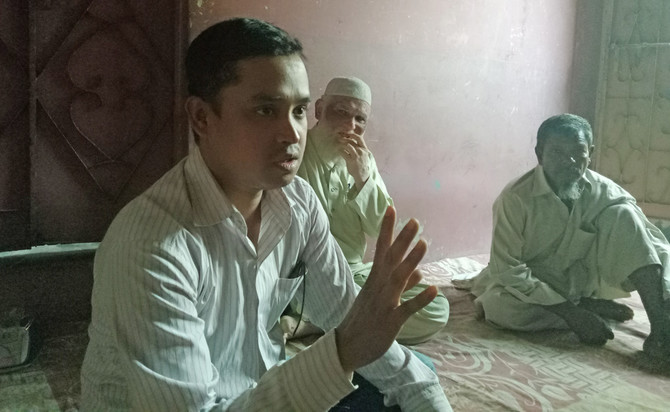
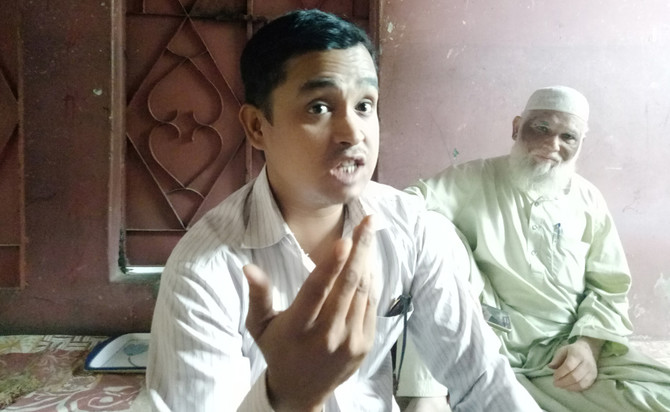
His problems increased as his children grew up, Syed Muhammad Yousuf, Alam’s friend and a Rohingya activist, told Arab News.
Alam, who drives an autorickshaw to earn for his family, was born in 1965 in Karachi where his parents came from, in what was then East Pakistan – it’s now Bangladesh.
In 2014, two of his four children – a daughter and a son – were promoted to Grade Nine, for which they required a computerized B-Form.
B-Form, a certificate mandatory for enrolling in secondary education, had not been needed before.
“When he applied for a B-Form for his two children, the local officials of NADRA (National Data Base Registration Authority) sent his case for verification,” Yousuf explained, but three years later verification has not been completed.
His elder son and daughter have not been able to acquire secondary education and Alam is also worried about his two other children.
The identity cards of his entire family are now blocked.
It is not only Alam’s story, Yousuf said. “This is the story almost every second of over 800,000 Rohingya families living in the commercial capital of Pakistan.”
All those able to get higher education did so before 2014 when the B-form wasn’t declared mandatory for enrolment.
The Rohingya community in Pakistan is living in a state of uncertainty and “the issue of education of their children tops its list of problems,” said Shaheedullah, a Rohingya youth.
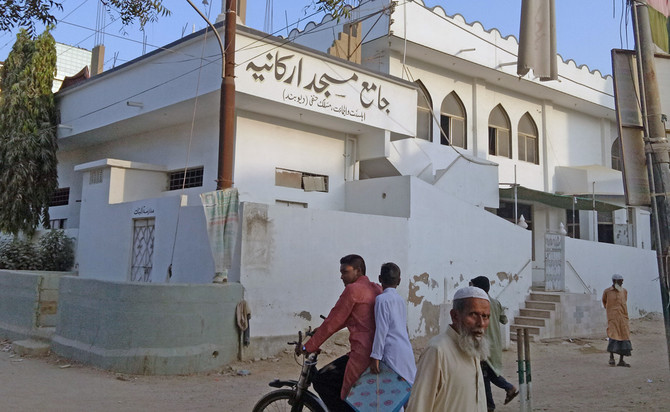
Zabihullah Arakani, President of the Pak Rohingya Welfare Organization, told Arab News that the Rohingya community lived in more than 60 slums in Karachi.
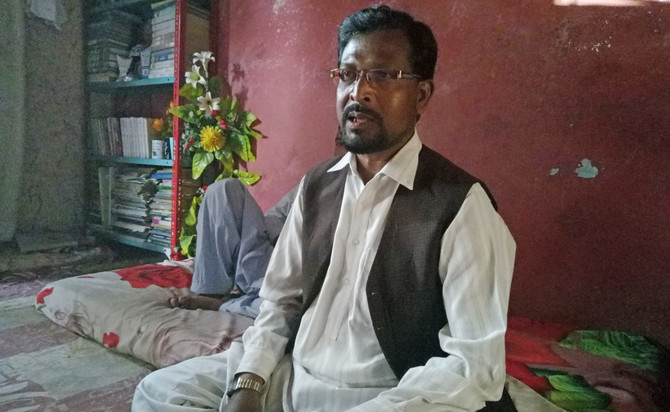
The last influx of Rohingya came to Pakistan in the early 1990s, said 64-year-old Muhammad Saleem, who still remembers his horrifying journey from Myanmar to East Pakistan in 1969.
His family came to Karachi after spending a few years in East Pakistan. He complained that despite having lived in the country for decades, the Rohingyas are denied a Pakistani identity.
Back in Myanmar, he said, oppression of Rohingyas started in 1942, even before Burma’s independence.
“We came here in 1969, after which life in Burma became difficult for the Rohingyas,” Saleem added.
Here in Pakistan, community members say they want nothing but an identity and education for their kids.
Reports suggest that the Rohingya exodus to Pakistan began soon after Pakistani President Ayub Khan – who had served in Burma from 1942 to 1945 – offered during his visit to the country in 1965 to settle them on Pakistani soil.
Those who reached Karachi praise Zulfikar Ali Bhutto, former prime minister, and General Zia-ul-Haq, a former president, who allowed them to leave their refugee camps and live in the city like Pakistani nationals; but Rohingya are not happy with Bhutto’s party.
In September a senator from Bhutto’s Pakistan People’s Party, on an adjournment motion in Pakistan’s upper house, called for giving Rohingya Pakistani nationality. But he invited the ire of men of his own party, which is dominated by Sindhi-speaking people.
In November 2017, when he was Minister of State for Interior, Talal Chaudhry presented a plan to amend the Pakistan Citizenship Act of 1951 to give Pakistani nationality to Bengalis and Burmese living in Sindh. Aijaz Dhamra, Sindh Information Secretary of the Pakistan People’s Party, said that the people and the government of Sindh would not let it happen.
This opposition to awarding nationality to Rohingya, along with the interior ministry’s recent measures for more checks, has increased the miseries of the community in Pakistan.
Without computerized national identity cards, Rohingya are struggling to find jobs.
In Arkanabad in the Korangi town of Karachi, the community is associated with the fishing industry.
“Despite sharing most of the burden, I am paid less than my Pakistani fellows just because I have no identity here,” said Abul Salam, a fisherman.
“We want an identity but if even that’s denied to us, our children have the universal right to education.”
“If a way out wasn’t suggested amid these strict rules of NADRA, the coming Rohingya generation in Pakistan would be completely illiterate,” said Yousuf.


![]()
![]()
![]()
![]()
![]()
![]()

Rohingya in Karachi are ‘denied a Pakistani identity’

Rohingya in Karachi are ‘denied a Pakistani identity’
Latest updates


© 2026 SAUDI RESEARCH & PUBLISHING COMPANY, All Rights Reserved And subject to Terms of Use Agreement.