SALISBURY, England: British investigators will update an emergency response committee of senior ministers on Wednesday about the mystery illness that struck down a former Russian double agent and his daughter.
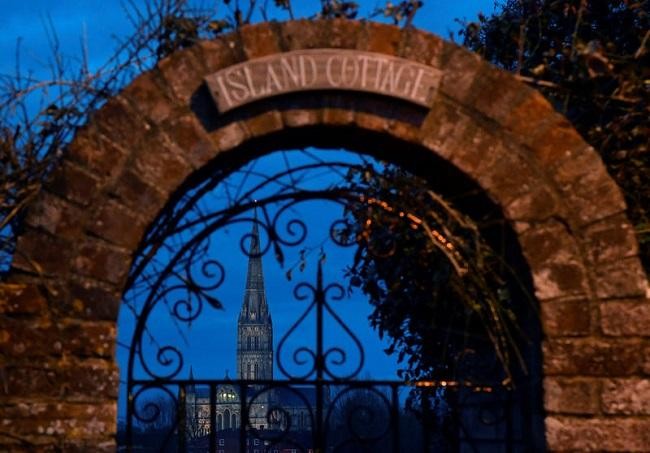
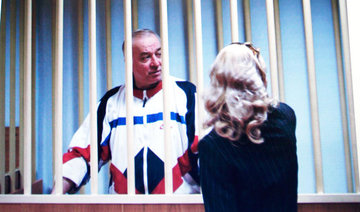
Sergei Skripal, once a colonel in Russia’s GRU military intelligence service, and his 33-year-old daughter, Yulia, were found slumped unconscious on a bench outside a shopping center in the southern English city of Salisbury on Sunday afternoon.
Police said they had been exposed to an unknown substance. More than two days later, both are critically ill in intensive care.
Counter-terrorism police are now leading the investigation and Britain’s military research laboratory at Porton Down is trying to identify the substance which caused Skripal, 66, and his daughter to fall ill.
Home Secretary Amber Rudd will chair the emergency response meeting.
Britain has cautioned Russia that if the Kremlin was behind any poisoning then there will be grave consequences and British ministers have drawn parallels with the 2006 murder of ex-KGB agent Alexander Litvinenko who was killed with radioactive polonium-210 in London.
A previous British inquiry said President Vladimir Putin probably approved the murder Litvinenko who died after drinking green tea laced with the rare and very potent radioactive isotope at London’s Millennium Hotel.
Russia, which denied any involvement in the death of Litvinenko, has dismissed claims that it may have had a hand in the poisoning of Skripal.
Moscow says anti-Russian hysteria is being whipped up without any evidence to show its involvement in the Skripal case. Russia holds a presidential election on March 18, which polls show Vladimir Putin should comfortably win.
Skripal, who passed the identity of dozens of spies to the MI6 foreign intelligence agency, was given refuge in Britain after being exchanged in 2010 for Russian spies caught in the West as part of a Cold War-style spy swap at Vienna airport.
Russia’s Federal Security Service (FSB) arrested Skripal in 2004 on suspicion of betraying dozens of Russian agents to British intelligence. He was sentenced to 13 years in prison in 2006 after a secret trial.

Britain’s top ministers to meet on mysterious illness of Russian double agent
How a Syrian refugee chef met Britain’s King Charles
- Alarnab, 48, said he had asked the king to come to the popular eatery when he met him at Buckingham Palace
LONDON: Pots clanged and oil sizzled inside the London kitchen of Syrian chef Imad Alarnab, as the former refugee who fled his country’s civil war recalled hosting King Charles III.
When the chef left his war-torn homeland in 2015, he never imagined that one day he would watch as cameras flashed and wide-eyed crowds greeted the monarch arriving at his Soho restaurant last year.
Alarnab, 48, said he had asked the king to come to the popular eatery when he met him at Buckingham Palace before an event honoring humanitarian work in 2023.
“I told him ‘I would love for you to visit our restaurant one day’ and he said: ‘I would love to’... I was over the Moon to be honest.”
The chef has come a long way since he arrived in London after an arduous journey from Damascus with virtually no money in his pocket.
Fearing for his life, he had escaped Syria after his family was uprooted again and again by fighting.
His culinary empire — restaurants, cafes, and juice bars peppered across the Syrian capital — had been destroyed by bombing in just six days in 2013.
Alarnab spent three months crisscrossing Europe in the back of lorries, aboard trains, on foot and even on a bicycle before he reached the UK.
“When I left, I left with nothing,” he told AFP, as waiters whirled past carrying steaming plates of traditional Syrian fare.
Starving and exhausted, he spent the last of his money on a train ticket to Doncaster where his sister lived.
“Love letter from Syria”
To make a living, Alarnab initially picked up any odd jobs, such as washing and selling cars, saving enough to bring his wife and three daughters over after seven months.
His love of cooking never left him though. In France, while he was sleeping on the steps of a church, Alarnab had often cooked for hundreds of other refugees.
“I always dreamed of going back to cooking,” he said.
So it wasn’t long before he found himself back in the kitchen, cooking up a storm across London with his sold-out supper clubs, bustling pop-up cafes, and crowded lunchtime falafel bars.
Alarnab’s friends gave him the initial boost for his first pop-up in 2017, and profits from his new catering business then covered the costs of later events.
He now runs two restaurants in the city — one in Soho’s buzzing Kingly Court and another nestled in a corner of the vibrant Somerset House arts center.
“I was looking for a city to love when I found London,” Alarnab said, adding it had offered him “space to innovate” and add his own modern twist to classic Syrian dishes.
Far from home, Alarnab said his word-of-mouth success had grown into a “love letter from Syria to the world” that needs no translation.
“You don’t really need to speak Arabic or Syrian to know that this is the best falafel ever,” he said, pointing to a row of colorful plates.
“There is hope”
For Alarnab, spices frying, dough rising and cheese melting inside a kitchen offered an unlikely escape from the real world.
“All my problems, I leave them outside the kitchen and walk in fresh.”
When he fled Syria, Alarnab thought going back to Damascus was forever off the table.
Yet he returned for the first time in October, almost a year to the day after longtime leader Bashar Assad was toppled in a lightning rebel offensive — ending almost 14 years of brutal civil war.
He walked the familiar streets of his old home, where his late mother taught him to cook many years ago.
“To return to Damascus and for her not to be there, that was extremely difficult.”
Torn between the two cities, Alarnab said he longed to one day rebuild his home in Damascus.
“I wish I could go back and live there. But at the same time, I feel like London is now a part of me. I don’t know if I could ever go back and just be in Syria,” he said.
Although Syrians still bear the scars of war, Alarnab said he had seen “hope in people’s eyes which was missing when I left in 2015.”
“The road ahead is still very long, and yes this is only the beginning — but there is hope.”