DUBAI: The Philippines may have been named the top investment destination for 2018, but the government must provide more impetus particularly for foreign investors and encourage them to pour capital into the country, an economist said.
Foreign companies, with their huge financial assets, could further contribute in the current administration’s efforts – especially on infrastructure – if only there was a more encouraging environment.
“We still have a lot of problems, the focus is for local companies but for foreign companies there are limited options,” Alvin P. Ang, who is also director of Ateneo Center for Economic Research and Development, told Arab News. “We are moving along that line, but that cannot be achieved in a year’s time.”
Despite this, government is confident that critical reforms it wants in place are right on track.
“Our efforts to create a more business- and investor-friendly environment are gaining traction in the past year and a half and the world is already seeing it,” Socioeconomic Secretary Ernesto M. Pernia said.
The US News & World Report on Monday said that the Philippines was the best country to invest in for 2018, beating more developed economics such as Singapore, Australia, the United Kingdom and France.
The rankings were based primarily from 6,000 business decision makers scoring countries on eight equally weighted country attributes: entrepreneurship, economic stability, favorable tax environment, innovation, skilled labor, technological expertise, dynamism and corruption.
“In contrast to declining inflows of foreign direct investment, or FDI, to Southeast Asia as a whole, the Philippines continued to perform well, according to United Nations data. In years to come, the country is expected to receive more FDI from within the region from powerhouses like China that are looking to utilize labor in developing nations,” US News & World Report said.
And one of the investment areas where the Philippines needs foreign capital is infrastructure, Ang said. “We need extra money [on infrastructure], as local companies have maxed out.”
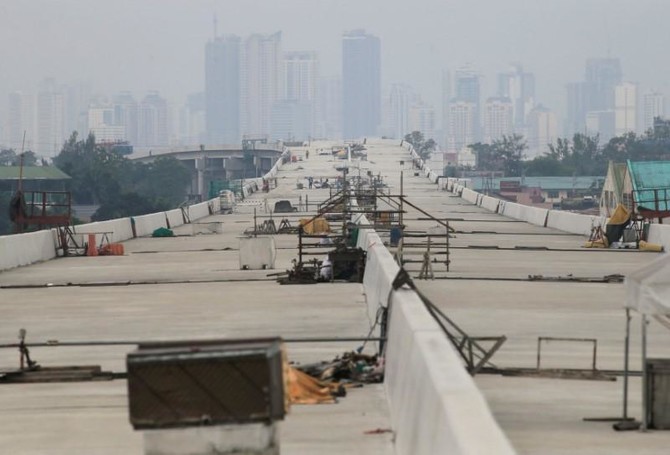
President Rodrigo Duterte’s administration last year announced a multibillion-dollar “Build, Build, Build” initiative promising to usher in a “golden age of infrastructure” in the next five years. Infrastructure spending would be raised to around 7 percent by 2022 from nearly 4 percent of GDP in 2017.
The $180 billion program includes major projects such as new bridges and roads, a new terminal for Clark International airport, rail projects and the country’s first subway. Thus far, 24 infrastructure flagship projects have been approved, amounting to P1.126 trillion ($21.71 billion).
With most of the flagship projects completed or nearly so by 2022, our infrastructure would be at par with our Asean neighbors,” Pernia said.
Presidential spokesperson Harry Roque meanwhile attributed the Philippines’ top ranking on government’s “fiscal discipline, stable monetary policy, achievable infrastructure program and improved revenue collection,” among others.
Roque likewise assured investors that the government would to continue to implement sound economic policies to improve ease of doing business in the country.
“In pursuance to this, we have recently enacted the anti-red tape law, giving fixed periods for local governments to act on pending applications lodged with them,” he said in a press briefing on Tuesday.


![]()
Philippines may be top investment destination for 2018, but more needs to be done, economist says
Philippines may be top investment destination for 2018, but more needs to be done, economist says
Latest updates


© 2026 SAUDI RESEARCH & PUBLISHING COMPANY, All Rights Reserved And subject to Terms of Use Agreement.