MANILA: Desperately needed airports and trains are part of Philippine President Rodrigo Duterte’s envisioned “golden age of infrastructure,” but graft, red tape and other perennial problems threaten the $170-billion plan.
Unprecedented influxes of money from China and Japan are key planks of the hoped-for building frenzy, which aims to rectify decades of underspending that has been one of the main anchors of the Philippine economy.
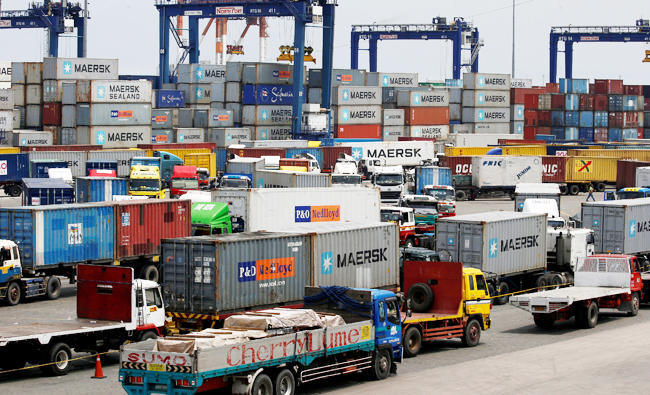
Decrepit light rail lines in the capital of Manila, which snake above ever-worsening traffic that has come to be known as “Carmageddon,” are among the most obvious symbols of the infrastructure problems.
“The city is really suffering now from lack of mobility, not only in terms of mobility, it is really the total absence of infrastructure,” Duterte said last week as he described Manila as “decaying.”
Duterte and his aides have repeatedly said the six years of his administration will be the “golden age of infrastructure,” with a record $168 billion to be spent on 5,000 projects across the nation.
If the plans come to fruition, infrastructure spending would reach 7.2 percent of the gross domestic product (GDP)by 2022, when Duterte is due to step down — a huge increase from 1.8 percent in 2011.
The Philippines ranks 95th out of 138 countries for quality of infrastructure, and behind most of its Southeast Asian neighbors, Japan-based financial services group Nomura said in a recent report.
It said the lack of infrastructure was a huge drag on economic development, citing a Japan International Cooperation Agency (JICA) estimate of traffic costs in Manila alone as equivalent to 4 percent of GDP.
Infrastructure spending started to rise during the administration of Benigno Aquino, who stepped down last year, but his much more ambitious plans were curtailed by many problems that will also confront Duterte.
“Financing is the least of the problems,” transport and infrastructure consultant Rene Santiago told AFP, pointing to an abundance of government funds plus cashed-up local businesses and eager foreign investors.
“The biggest obstacle is the implementation capacity of the government infrastructure agencies.”
Santiago, chief executive of Manila-based business consultancy Bellweather Group, said the government did not have enough personnel with the capabilities or experience to oversee such a massive spending plan.
Another major issue is corruption.
Aquino was heavily criticized in some quarters for not spending more on infrastructure, but he said he had to slow down the contract-awarding process in an effort to increase transparency and minimize graft.
About 10 to 30 percent of an infrastructure project’s cost is typically lost to corruption, according to Vincent Lazatin, executive director of the Transparency and Accountability Network (TAN) in Manila.
Lazatin said this rose to 50 percent when congressmen were directly involved in allocating national funds in a system known as “pork barrel.”
In a massive corruption scandal unearthed during the Aquino administration, 200 lawmakers were implicated in such scams. But, as part of an infamous “culture of impunity,” few have been brought to justice.
Lazatin warned that infrastructure projects financed by foreign partners would also be vulnerable to corruption. “It is in the negotiation process (between the Philippines and the donor nation) that deals can be made that are off the books,” Lazatin said.
Duterte has made China one of his top targets for loans and investments. He visited Beijing last year and said he returned with commitments for $15 billion worth of projects.
Chinese contracts for a $593 million railway project in 2003 and a $300 million national broadband network in 2007 negotiated under then-President Gloria Arroyo had to be canceled because of corruption scandals.
In a speech at an economic forum last month, Chinese Ambassador Zhao Jianhua acknowledged graft would again be a concern.
“We will try to make sure these projects are going to be corruption-free,” Zhao said.

Manila eyes ‘golden age of infrastructure’
Global brands shut Middle East stores as conflict causes chaos
- Luxury brands and retailers close stores in Middle East
- Conflict threatens the region that has been luxury’s fastest growing
- Mass-market retailers monitor situation, adjust operations in region
PARIS: In Dubai and other major Middle Eastern shopping hubs, many stores are closed or operating with a skeleton staff as the escalating conflict in the region causes chaos for businesses and travel.
The US-Israeli air war against Iran expanded on Monday with no end in sight, with Tehran firing missiles and drones at Gulf states as it retaliates for a weekend of bombing that killed Iran’s supreme leader and reportedly killed scores of Iranian civilians, including a strike on a girls’ primary school.
Chalhoub Group, which runs 900 stores for brands from Versace and Jimmy Choo to Sephora across the region, said its stores in Bahrain were closed, while other markets, including the UAE, Saudi Arabia, and Jordan remained open though staff attendance was “voluntary.”
“We operate with a lean team formed of members who volunteered and feel comfortable to come to the store,” Chalhoub’s Vice President of Communications Lynn al Khatib told Reuters, adding that the company’s leadership team personally visited Dubai Mall and Mall of the Emirates on Monday morning to check in with workers.
E-commerce giant Amazon closed its fulfillment center operations in Abu Dhabi, suspended deliveries across the region and instructed its employees in Saudi Arabia and Jordan to remain indoors, Business Insider reported on Monday, citing an internal memo.
Gucci-owner Kering said its stores were temporarily closed in the UAE, Kuwait, Bahrain and Qatar and it has suspended travel to the Middle East.
Luxury growth engine under threat
Shares in luxury groups LVMH, Hermes, and Cartier-owner Richemont were down 4 percent to 5.7 percent on Monday afternoon as investors digested the knock-on impacts of the conflict.
The Middle East still accounts for a small share of global spending on luxury — between 5 percent and 10 percent, according to RBC analyst Piral Dadhania. But the region was “luxury’s brightest performer” last year, according to consultancy Bain, while sales of expensive handbags have stalled in the rest of the world.
Now, shuttered airports have put an abrupt stop to tourism flows into the region and missile strikes — including one that damaged Dubai’s five-star Fairmont Palm hotel — are likely to dissuade travelers, particularly if the conflict drags on.
“If you assume that it’s a $5 billion to $6 billion (travel retail) market and let’s say it’s going to be shut down for a month, we are talking about hundreds of millions of dollars that are definitely at risk,” said Victor Dijon, senior partner at consultancy Kearney.
If Middle Eastern shoppers cannot travel to Paris or Milan, that could also hurt luxury sales in Europe, he added.
Luxury brands have been investing in lavish new stores and exclusive events across the region. Cartier unveiled a “high-jewelry” exhibition in Dubai’s Keturah Park just days before the conflict started.
Cartier and Richemont did not reply to requests for comment.
Luxury conglomerate LVMH has also bet big on the region. Last month, its flagship brand Louis Vuitton staged an exhibition at the Jumeirah Marsa Al Arab hotel, and beauty retailer Sephora launched its first Saudi beauty brand.
LVMH does not report specific figures for the region, but in January Chief Financial Officer Cecile Cabanis said the Middle East has been “displaying significant growth.” LVMH did not reply to a request for comment on how its business may be impacted by the conflict.
The Middle East has also attracted new investment from mass-market players. Budget fashion retailer Primark said in January that it plans to open three stores in Dubai in March, April and May, followed by stores in Bahrain and Qatar by the end of the year.
“Primark is set to open its first store in Dubai at the end of March but clearly this is a fast-moving situation which we are monitoring closely,” a spokesperson for Primark-owner Associated British Foods said.
Apple stores in Dubai will remain closed until Thursday morning, the company’s website showed, while Swedish fast-fashion retailer H&M said its stores in Bahrain and Israel are closed.
Consumer goods group Reckitt has told all employees in the Middle East to work from home, temporarily closed its Bahrain manufacturing site and suspended all business travel to the region until further notice.