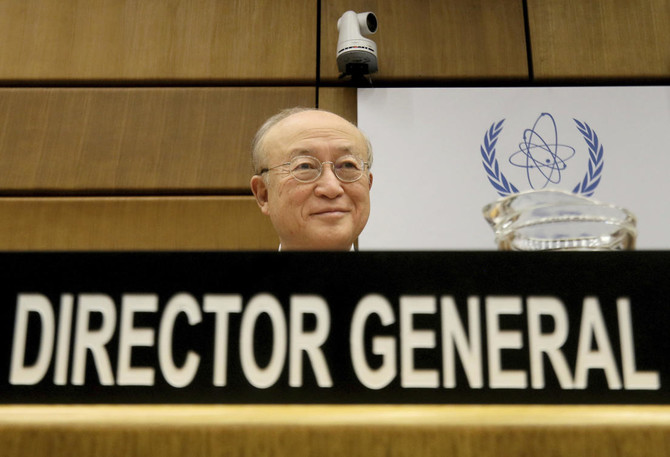
VIENNA: The failure of the 2015 accord between Iran and world powers to restrict Tehran’s nuclear program would be a “great loss,” the head of the UN’s atomic watchdog said Monday.
International Atomic Energy Agency director general Yukiya Amano said Iran was, as of today, “implementing its nuclear-related commitments” under the deal.
US President Donald Trump has been a harsh critic of what he calls the agreement’s “disastrous flaws.”
In January, he set a 120-day deadline for US lawmakers and European allies to “fix” the agreement or face a US withdrawal.
In a speech opening a meeting of the IAEA’s board of governors, Amano said the deal “represents a significant gain for verification” and that if it “were to fail, it would be a great loss for nuclear verification and for multilateralism.”
Last month an IAEA report showed that Iran was continuing to abide by the deal’s key measures.
Amano said inspectors had had “access to all the sites and locations which we needed to visit.”
He added that the agency had requested “further clarifications” over notification Iran gave the agency in January that it intended to construct “naval nuclear propulsion” at some point in the future.
Trump is concerned that parts of the deal start to expire from 2026 and that it fails to address Iran’s missile program, its regional activities or its human rights abuses.
A US exit could kill the deal, which the Islamic republic has refused to renegotiate.
While Iran has reaped massive economic benefits from the accord, notably by being able to resume oil exports, it is still constrained by US sanctions in other areas.


![]()
Iran nuclear accord failure would be ‘great loss’, IAEA chief says
Iran nuclear accord failure would be ‘great loss’, IAEA chief says
Latest updates






© 2026 SAUDI RESEARCH & PUBLISHING COMPANY, All Rights Reserved And subject to Terms of Use Agreement.