DUBAI: They say that the seeds of success are sown during childhood. That would definitely apply to Maram Kokandi, who credits a warm and open-minded home environment during her growing-up years for making her the ambitious go-getter she is today.
“I was exposed to many cultures, both in Saudi Arabia and during our summer vacations, when I traveled with my family, of which I have very positive memories,” she says. “I remember both my parents always encouraged me to explore my potential and discover the world around me.”
Perhaps it was a debt she subconsciously owed to travel, that she ended up in the hospitality industry, which was more by chance than design for this biology graduate.
“I got this opportunity to work as a health club coordinator as my first job, and I loved the interaction with people,” she explains. “I moved into cosmetics sales after that, but heart was always in hospitality. Seeing this, my then boss actually helped me get a job as a sales manager at the Rosewood hotel, which was also a first – I was the first female hotel sales manager in Saudi Arabia.”
The rest, as they say, is history.
Hospitality also runs in her blood, Kokandi believes. “This is our culture, especially here in this region (Jeddah and Makkah). We have always been welcoming people here, for religious tourism”, she says. “Plus, I had this potential to be and do something different by joining this industry.”
She has certainly made a difference, as now there are more and more women in Saudi Arabia starting to work in the hospitality industry. For example, Accor Hotels included females in its management training program in 2016, and in 2015, the “Young Hotelier of the Year” award at the well-respected Hotelier Middle East awards ceremony went to a Saudi Arabian woman. Closer to home, Kokandi has seen an impact in her youngest sister opting to get a degree in hotel management, as she wanted to follow in her pioneering sister’s footsteps.
There are some industry-specific challenges that women in hospitality have to overcome, however, which Maram navigated through the course of her career.
“When I first began working in hospitality there were even fewer women in the industry than now, and there were times when it was difficult,” she reveals. “For example, doing night shifts as a duty manager was a big challenge. It was a battle not only with society’s perceptions, but also an internal battle that I had to fight, of whether this was appropriate.”
The spectrum of challenges ranged from deeper issues such as moral code, to the practical – such as wearing her hijab at work, where the norm in the industry is uniforms. But she overcame them with creative solutions such as designing her own abaya! “I got a very modern abaya made, to make it easier for me to do my work and stay true to my culture,” she says.
But the biggest challenge that she had to face as a woman in a leadership role is probably a universal one.
“I had to work even harder to prove myself as a capable leader. And while many male colleagues have been incredibly supportive, there have been periods where I had to convince others of my competencies as a female leader,” she says. “Previously, there were barriers — including a lack of mentoring for women and use of differing methods when it comes to evaluating the performances of men and women in the workplace — which have prevented women from career progression, but it is good that these are being gradually overturned.”
Such challenges notwithstanding, Kokandi is emphatic about the fact that she wouldn’t be where she was without the support of her organization, and the government.
“It was the Balanced Leadership program at Carlson Rezidor [renamed Radisson Hotel Group as of 5th March 2018] and its drive toward improving diversity and inclusion within the business that led me to successfully applying for the General Manager position,” Kokandi says. “They have a leadership program STEPS, which is focused solely on high potential women, encouraging and empowering them to progress.”
Support at a governmental level, in the form of Saudi Vision 2030, which she elegantly describes as “a golden hand leading women to help achieve their dreams” has also played a big role in her success.
“One of the reasons Saudi women are more successful than ever is because of the King Abdullah Scholarship Program [which she directly benefited from, to get a hotel management degree]. This program opened the door for young Saudis in general, and women in particular, to have a better standard of professional education,” she says. “Part of the emphasis of Vision 2030 is also to develop tourism in Saudi Arabia, which necessities a hospitality sector able to accommodate different needs and expectations. Vision 2030 also emphasizes the significance of Saudi women and their role in leading the development of the Kingdom.”
Given the importance of female participation in the nation’s growth, Kokandi has only this to say to other women aspiring to succeed in the business world:
“I would like to ask all Saudi women to step out of their comfort zones and challenge themselves. It is not a choice anymore!”


![]()
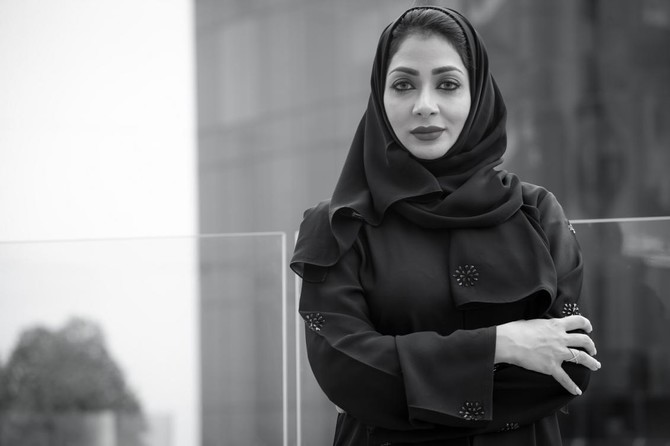
Saudi Arabia’s first female hotel GM lives a life less ordinary
Saudi Arabia’s first female hotel GM lives a life less ordinary



Latest updates


© 2026 SAUDI RESEARCH & PUBLISHING COMPANY, All Rights Reserved And subject to Terms of Use Agreement.