ISTANBUL: Turkey suffered heavy losses on Thursday during its offensive against a Kurdish militia in northwest Syria, with the military announcing that eight soldiers were killed and 13 more wounded.
The death toll, released by the Turkish military staff in two separate statements, makes Thursday one of the deadliest days for Ankara since launching its cross-border operation against the People’s Protection Units (YPG) in Syria’s Afrin region on 20 January.
“As part of the operations in Afrin, five of our heroic comrades fell as martyrs and seven were wounded” on Thursday, said the staff in a first statement.
Shortly after, it issued a second statement in which it announced that three more soldiers had been killed as well as six wounded, without giving details of the circumstances.
“May God grant peace to our martyred soldiers in Afrin, all my condolences to their loved ones,” spokesman for the Turkish presidency Ibrahim Kalin said on Twitter.
The day’s toll brings the number of Turkish soldiers killed since the launch of operation “Olive Branch” to at least 40.
The private Dogan news agency reported that intense fighting had broken out in the afternoon between Turkish special forces units recently deployed in Afrin and YPG members, who mounted an ambush with the help of tunnels.
According to the report a Turkish helicopter sent to rescue the wounded had to turn back after being hit, while the area was shelled to allow an evacuation.
Turkish President Recep Tayyip Erdogan was informed of the incident during a visit to Senegal.
Ankara considers the YPG a “terrorist” organization closely linked to the Kurdistan Workers’ Party (PKK), a group that has been leading a bloody guerrilla war on Turkish soil since 1984.
However, the YPG is supported by the United States and has been spearheading the international coalition fight against the Islamic State (IS) group in Syria.
The situation was complicated further 10 days ago following the deployment of pro-regime elements in the enclave of Afrin, with observers warning of an increased risk of collision between the forces of Ankara and Damascus.
On Monday, Turkey deployed some 600 members of the police and gendarmerie special forces in the Afrin region, indicating it was preparing for urban fighting.
The Turkish authorities have rejected a call by the United States this week to implement the humanitarian truce, called for by the UN Security Council in Syria, with Ankara saying the UN resolution did not concern its operation.
The International Committee of the Red Cross said a humanitarian aid convoy entered the Afrin region on Thursday for the first time since the start of the Turkish offensive, which has had a severe impact on civilians.
According to the Syrian Observatory for Human Rights (OSDH), 141 civilians, including 27 children, have died since the beginning of the Turkish military campaign, a claim which Ankara denies.


![]()
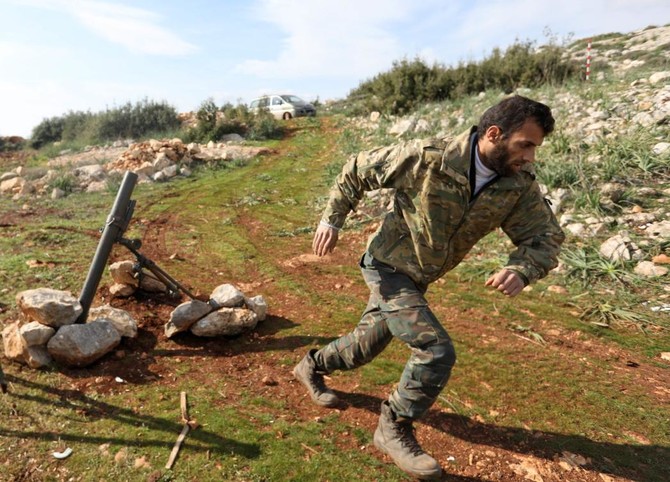
Eight Turkish soldiers killed in Syria, 13 wounded: army
Eight Turkish soldiers killed in Syria, 13 wounded: army
Latest updates



Recommended


© 2026 SAUDI RESEARCH & PUBLISHING COMPANY, All Rights Reserved And subject to Terms of Use Agreement.