ALKHOBAR: A historic neighborhood has turned its aging streets and houses into a living art exhibition with the help of graffiti artists from around Saudi Arabia.
The “Alfan Sharqy” (“Art is Eastern”) exhibit in Bayoonya opened on Monday and is believed to be the first street graffiti project in the Kingdom.
Saudi artist Madawi Albaz, founder of the Dawi gallery, organized the exhibition under the sponsorship of Princess Abeer bint Faisal Al-Saud.
Albaz said she “had a dream of spreading beautiful art around the Kingdom, starting with Alkhobar, and thank God the dream has come true.”
More than 20 Saudi graffiti artists worked for 10 days to complete the project, painting six houses and transforming an entire neighborhood on Alkhobar’s southern side.
Albaz said: “I wanted to give Saudi artists the opportunity to show their talents, and decorate the neglected houses. This is a different experience, with a big challenge that included a large population and old streets.
“The initiative goes hand in hand with Vision 2030, offering talented youth the chance to spread art and beauty.”
Planning for the project took six months, she said. The exhibition was approved by the Alkhobar municipality.
The exhibition had been welcomed by neighborhood residents. “People are coming from everywhere to see it. Everyone is happy,” she said. “There is a lot of excitement, and other neighborhoods have expressed interest in similar projects.
“This is just the start,” Albaz said. “We plan to go to different cities and neighborhoods with new visions and big ambitions.”
CLICK HERE TO VIEW OUR PHOTO GALLERY


Streets come to life in Saudi Arabia’s first graffiti project
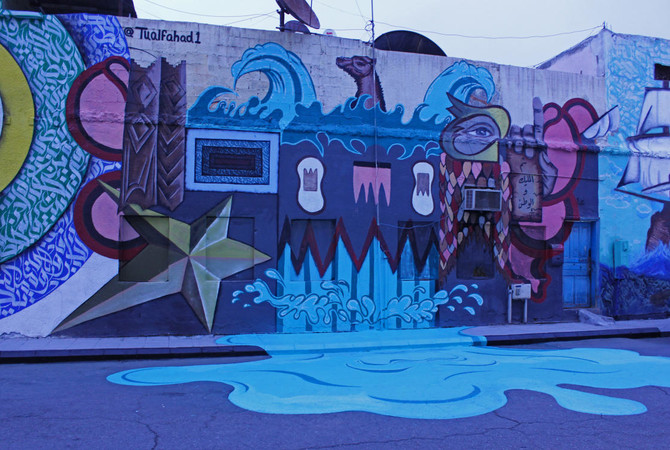

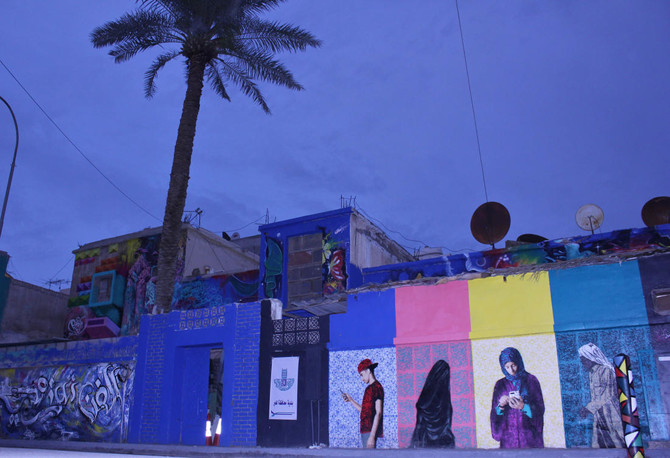


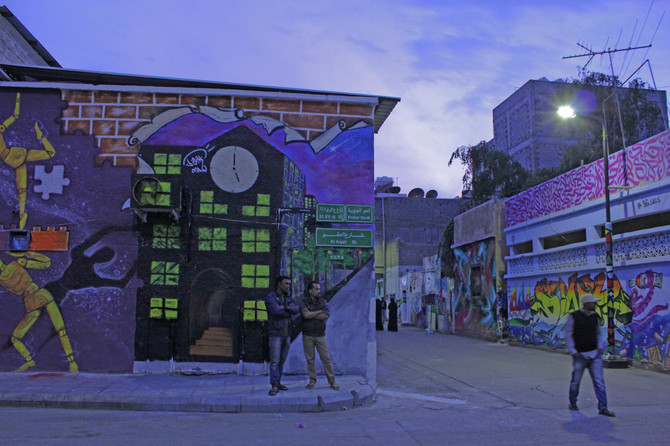

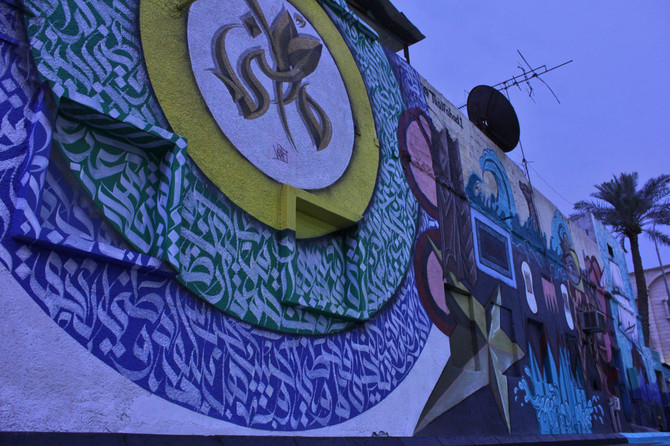
Streets come to life in Saudi Arabia’s first graffiti project



Saudi Arabia highlights agricultural innovation, food security at Qatar expo
- Date varieties, honey, coffee attract global investors at AgriteQ exhibition in Doha
RIYADH: The National Center for Palms and Dates highlighted Saudi Arabia’s leadership in the global date sector at the 13th Qatar International Agricultural Exhibition, AgriteQ.
The Kingdom is participating as a guest of honor at the exhibition, held at Katara Cultural Village in Doha until Feb. 16, the Saudi Press Agency reported on Saturday.
Several Saudi companies specializing in date production and processing are showcasing their products and competitive advantages in domestic and international markets.
With total annual date production in the Kingdom exceeding 1.9 million tonnes, the center’s pavilion demonstrated how date-processing industries contribute to food security and the agricultural sector’s share of the national economy.
The showcase featured Saudi date varieties alongside innovative value-added products, attracting strong interest from international investors and companies seeking technology partnerships.
The Sustainable Agricultural Rural Development Program, known as Saudi Reef, is also taking part in the event to strengthen the presence of Saudi agricultural products and showcase initiatives supporting smallholder farmers and rural families.
The Saudi Reef pavilion highlights the program’s key achievements in empowering beneficiaries and enhancing sustainable agricultural production, the SPA reported.
A range of products on display, including honey, coffee, and dates, reflects the diversity and quality of local production, while introducing the support mechanisms and services offered to beneficiaries.
Saudi Reef spokesperson Majed Al-Buraikan said the participation aims to boost the presence of national products in regional and international markets and highlight the quality of goods produced by smallholder farmers and rural families.
He said the program’s support for initiatives that develop agricultural value chains, open new markets, foster cooperation and knowledge exchange in sustainable agriculture, and expand partnerships across GCC states to grow the sector locally and regionally.
Minister of Environment, Water and Agriculture Abdulrahman Al-Fadhli also attended the opening day on Feb. 12, touring several pavilions with Qatar’s Minister of Municipality Abdullah Al-Attiya and other officials and ambassadors.
The Saudi delegation highlighted the Kingdom’s efforts to strengthen the agricultural sector and promote private-sector engagement in sustainable agriculture. They also emphasized the role of food-processing industries in enhancing food security locally and regionally.
The Kingdom has achieved notable progress in self-sufficiency: 118 percent for dates, 101 percent for eggs, 78 percent for vegetables, 69 percent for poultry, and 61.5 percent for fish — demonstrating growth in domestic production and reduced reliance on imports, the SPA said.
Saudi Arabia also presented incentives to encourage investment in modern agricultural technologies and innovation, including allocation of investment land, financing through the Agricultural Development Fund, streamlined licensing procedures, and technical and advisory support for investors.
To enhance the quality and safety of national products, the Ministry of Environment, Water and Agriculture has launched four quality labels for Saudi food products: Organic, SAMAQ, Saudi Dates Mark, and Saudi G.A.P.
The labels aim to increase product market value, support farmers and investors in marketing and exporting, expand access to local and global markets, and provide a trusted standard for quality, safety, and classification.