Historic origins of Saudi Arabia’s diverse population

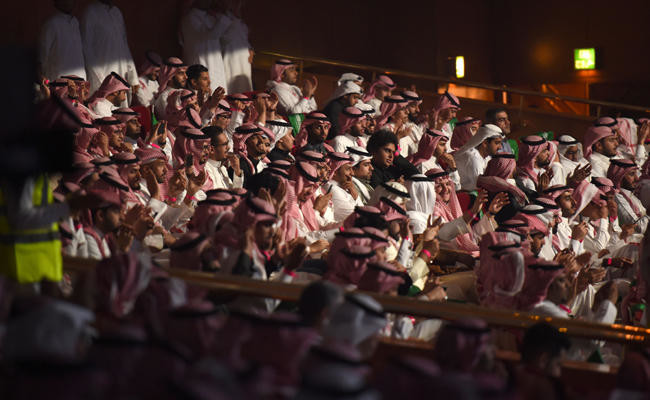
Saudi men are seen at a music concert in Riyadh on March 10, 2017. A large proportion of Saudis of non-Arab origin are from South Asia, particularly India, Pakistan and Bangladesh, according to a study. (AFP file photo)
Updated 01 March 2018
Follow

Historic origins of Saudi Arabia’s diverse population

JEDDAH: Saudi Arabia’s population is more diverse than many people think.
Since the Arabian Peninsula was home to the first Arabs, it is natural that the vast majority of Saudis are Arab and belong to Arab tribes. However, many Saudi citizens are also ethnic Persians, Turks, Uzbeks and Indians.
A recent study by the Department of Genetics & Genome Biology at the University of Leicester in the UK examined the geographical and social structure in the paternal lineages of Saudi Arabia. It compared the five geographical divisions of the country and tested the DNA of 597 Saudis.
The study found that there was low diversity in the north and center, but high diversity in both east and west reflecting the proximity of the sea to the Kingdom’s Eastern and Western Regions, and consequent historical immigration.
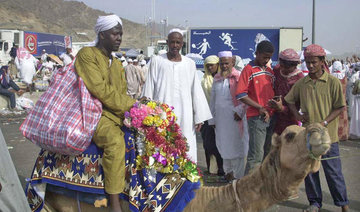
A large proportion of Saudis of non-Arab origin are from South Asia, particularly India, Pakistan and Bangladesh. Many are descendants of wealthy merchants and Muslim scholars who stayed in Makkah and Madinah after they performed the Hajj.
For example, the family of Abdel Ghani Nour Wali, traveled to Hijaz for trade. They decided to bring their families from India and settled in Jeddah before the Kingdom of Saudi Arabia was united.
Many Saudis also have Turkish ancestry from the time of the Ottoman empire. There were also immigrants from Central Asia, known to the people of the Hijaz as Bukharis, many of them arrived after the Soviet occupation of their countries. Then there are the “Jawa,” from Indonesia and elsewhere in southeast Asian. And finally Afghans, the smallest minority.
These arrivals in Saudi society have given the Western Region, Makkah and Madinah in particular, a rich and diverse culture unmatched elsewhere in Saudi. The languages, identities and cultural practices were integrated to produce a unique Hijazi culture.


Foreign ministers chair Saudi-Omani coordination council meeting in Muscat

Updated 23 December 2025
Follow

Foreign ministers chair Saudi-Omani coordination council meeting in Muscat

MUSCAT: Saudi Foreign Minister Prince Faisal bin Farhan met with Oman’s Foreign Minister Sayyid Badr bin Hamad Al-Busaidi on Monday.

They reviewed bilateral relations between their nations and ways to enhance and develop them across various fields. Additionally, they discussed regional and international developments.

The ministers co-chaired the third meeting of the Saudi-Omani Coordination Council in the Omani capital, Muscat, with the participation of the heads of the Council’s subsidiary committees and the two heads of the Council’s General Secretariat teams.

The meeting comes as an affirmation of the keenness of Saudi and Omani leaders to strengthen ties and advance them toward greater prosperity for both nations.

In his remarks during the meeting, Prince Faisal affirmed that gathering builds on the previous council meeting, held last year in AlUla, and on its positive and fruitful outcomes within the framework of the approved recommendations and initiatives. 

He stressed the importance of continuing the work of the council’s subsidiary committees to complete the necessary procedures to implement the remaining initiatives, and of the General Secretariat’s role in follow-up and in addressing any challenges that may hinder implementation.

He also underscored the importance of developing and enhancing trade relations, stimulating investment, and strengthening cooperation between the public and private sectors.

He also praised the ongoing work to establish and launch the Coordination Council’s electronic platform, which aims to connect all committee work and initiatives to facilitate follow-up on the Council’s progress. 

Al-Busaidi affirmed in his remarks the qualitative progress in relations between the two countries and the notable development witnessed across numerous sectors toward achieving economic integration and enhancing intra-trade and joint investments. 

The Omani foreign minister also highlighted deeper cooperation in the security and judicial fields, as well as the cultural and tourism sectors, noting the advanced and continuous political cooperation, consultation, and coordination on regional and international issues.