ANKARA/BAGHDAD: Turkey has increased diplomatic efforts to release citizens held in Iraq after 16 Turkish women linked to Daesh were sentenced to death.
Iraq is holding a series of trials of foreign fighters linked to Daesh, including women who joined the group after it launched a devastating takeover of the north of the country in 2014. About 300 Turkish women affiliated with Daesh are held in Iraqi prisons, AFP reported.
Ankara says that the detentions have no legal basis. Officials have requested the return of children and adults who have not committed any crimes, the Turkish newspaper Daily Sabah reported on Tuesday. Ankara is in contact with Iraqi authorities for their safe release, the officials said, adding that four children have returned to Turkey.
Reports say that the women, of various nationalities, currently on trial in Iraq are wives or widows of Daesh members or implicated in attacks by the group by providing its members with logistics assistance.
In court in Baghdad on Sunday, the women were sentenced to death by hanging. Four of the women were accompanied by young children. A judicial official told AFP they had all confessed to the charges and admitted entering Iraq illegally to join their Daesh militant husbands.
A source at the Iraqi Supreme Judiciary Council told Arab News that the women have the right to appeal before the federal court.
“These women have confessed that they committed terrorist crimes on Iraqi soil and were tried according to Iraqi laws,” the source said. “No Iraqi or non-Iraqi authority has the right to interfere in the work of the judiciary.”
Jamal Assadi, a senior government legal adviser, told Arab News that every state has full freedom to try any foreigner who commits an offense on its territory. “Iraq is no exception to this principle,” he said.
He said many Iraqis were tried and sentenced in Turkey and Iraq “had not expressed any objection.”
The number of Daesh fighters’ relatives held in Iraq has flooded the country’s legal system. More than 1,300 women and children surrendered to the Iraqi authorities in August alone after Daesh was forced into retreat.
The speed of the trials and death sentences in a country still raw from the suffering brought by the extremists has raised concerns from human rights groups. Iraq has one of the highest execution rates in the world.
Last month, a German woman of Moroccan origin was also sentenced to death for being a member of Daesh.
Human Rights Watch denounced the rulings as “unfair.”
However, Iraq also extradited to Russia four women and 27 children allegedly linked to the group, claiming that they were “trapped” into joining it.
The sentencing of Turks risks upsetting a delicate, but improving, relationship between Ankara and Baghdad.
Last month, Turkish Prime Minister Binali Yildirim and his Iraqi counterpart Haider Al-Abadi agreed to increase their cooperation against Daesh.
On Feb. 17, Turkish authorities extradited a top Daesh leader to Iraq after he had fled to Turkey’s northwestern province of Sakarya. Authorities said his capture was the result of intense cooperation between Baghdad, Washington and Ankara.
Turkey recently pledged $5 billion (SR18.75 billion) to help reconstruction efforts in Iraq after the devastation of Daesh.
“In light of the recent positive developments between Iraq and Turkey, it is unlikely that this case would develop into a diplomatic crisis,” Dr. Muhanad Seloom, associate lecturer in international relations at the University of Exeter, told Arab News.
“Cross-border criminal cases are inherently complex because of states’ sovereign powers, types of legal systems, and different governance systems,” he added.
In order to secure the release and extradition of its citizens, Seloom said the Turkish government should provide legal representation to its citizens incarcerated in Iraq and initiate talks with the Iraqi government.


![]()
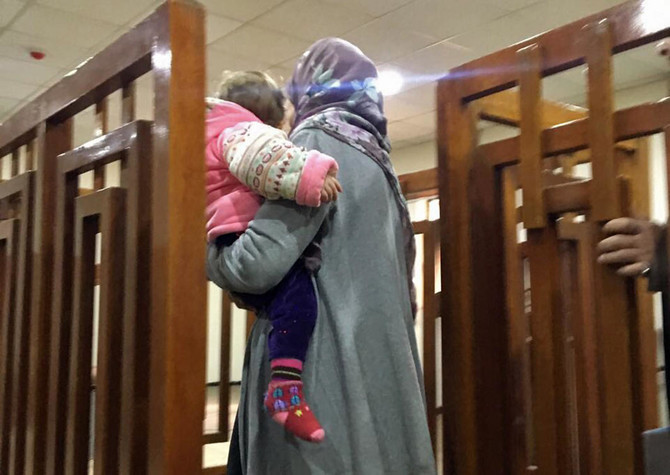
Daesh widows pile pressure on Iraqi justice system
Daesh widows pile pressure on Iraqi justice system



Latest updates


© 2026 SAUDI RESEARCH & PUBLISHING COMPANY, All Rights Reserved And subject to Terms of Use Agreement.