PRAGUE: The Czech Foreign Ministry rejected accusations the country supported terrorism, following statements from Turkish government officials critical of a Czech court’s decision to release a Syrian Kurdish leader.
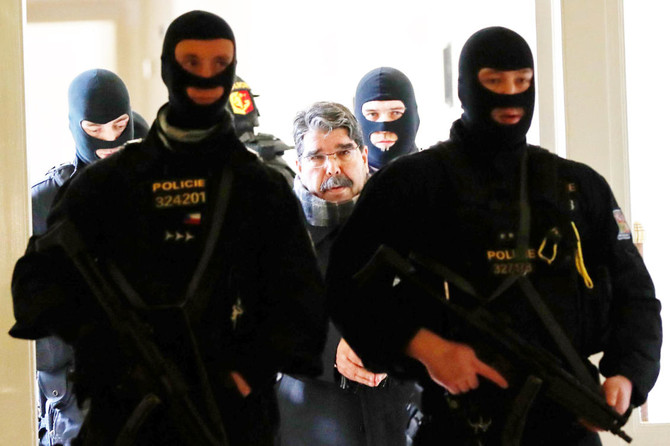
Saleh Muslim was detained over the weekend in the Czech capital at the request of Turkey, which accuses him of disrupting the state and aggravated murder. Turkey’s government said his release was political and “a clear support for terror.”
“The Czech Republic strongly rejects any accusation of support of international terrorism,” the ministry said, adding extradition proceedings have not been concluded by the court decision.
A Czech court on Tuesday ordered the release of the former PYD leader.
Muslim formerly headed the PYD, the major component of a coalition that governs Kurdish-held autonomous areas of northern Syria, and deemed a terrorist organization by Turkey.
“The court ruled Mr. Muslim will be released,” said Marketa Puci, a spokeswoman for the Prague Municipal Court. She added that the court ruling had taken legal effect as both the state attorney and the defense gave up their rights to appeal.
Muslim pledged to the Czech court to remain on EU territory for the time period given for Turkey to file a formal extradition request, which itself could take months to decide given the likelihood of appeals.
Muslim said allegations against him were false and that he was surprised by his detention, given he had previously traveled to Belgium, Germany and France uneventfully.
“Nobody was taking it (the charges by Turkey) seriously, I didn’t know that they will take it seriously here,” Muslim said. “First of all, I am a citizen of Syria, I am not a citizen of Turkey, second thing, I am a politician.”
Turkish Justice Minister Abdulhamit Gul said Ankara expected Czech authorities to compensate for the “mistake” of releasing Muslim and would pursue its legal rights on the matter.
Turkey’s Ambassador to Prague Ahmet Necati Bigali told Reuters Turkey was “saddened” by the decision and that it could have political effects. “This is not befitting our friendship with the Czech Republic,” he said by telephone. “This decision has surely cast a shadow over our relations.”
Turkey launched a military offensive last month in Syria’s Afrin region against the Kurdish YPG militia, the PYD’s armed affiliate, which it deems a menace along its border.
Ankara sees the PYD and YPG as extensions of the outlawed Kurdish PKK movement, which has waged a decades-long insurgency on Turkish soil.
Muslim is on a “wanted terrorists” list on the Turkish Interior Ministry’s website. He is accused of links to two deadly bombings in Ankara that killed dozens of people.
Turkey’s Foreign Ministry said the Czech court’s decision showed Prague “did not care about innocent civilians losing their lives in terrorist attacks or the pain of their families.”
Muslim said he had not yet decided where he would go next, but added he had permission for residency in EU member Finland.
Turkish Foreign Minister Mevlut Cavusoglu later said the court’s decision did not mean “everything was over” and that Ankara would pursue Muslim “wherever he goes.”


![]()
Czechs reject Turkish criticism after releasing Syrian Kurdish leader
Czechs reject Turkish criticism after releasing Syrian Kurdish leader


Latest updates


© 2026 SAUDI RESEARCH & PUBLISHING COMPANY, All Rights Reserved And subject to Terms of Use Agreement.