AMMAN: The US decision to open its embassy in Jerusalem earlier than expected has been met with a deliberately muted response by a Palestinian leadership eager to show it is no longer rattled by Washington’s close relationship with Israel.
Under an agreement announced by the US State Department last Friday, the American Embassy will relocate from Tel Aviv to Jerusalem on May 14, the 70th anniversary of Israel’s independence and the day before millions of Palestinians commemorate the loss of their homeland, or Al-Nakba, meaning “the catastrophe” in Arabic.
The move accelerates a highly controversial plan that was not originally due to be implemented until 2019 or 2020. But instead of reacting with anger, Ramallah appears to be gambling that the best response to this latest setback is to barely acknowledge it.
Analysts told Arab News the Palestinian leadership hopes it will appear to be calmly focused on securing a long-term peace deal that protects the rights of its people, rather than being unnerved by the whims of an increasingly erratic US administration.
With Israeli Prime Minister Benjamin Netanyahu embroiled in a domestic corruption scandal and the FBI investigating Russian meddling in the 2016 US presidential election, the Palestinian Authority (PA) appears to believe it is in a strong position to find powerful new international allies before any future peace talks.
This high-stakes strategy has been met with a mixed reaction by experienced Palestinian watchers, with some convinced the approach will boost support for the beleaguered PA on the Arab street and others fearing that it will leave Ramallah’s weak government even more isolated and exposed.
Nasser Lahham, editor-in-chief of the Palestinian Ma’an News Agency and a staunch supporter of Palestinian President Mahmoud Abbas, said the decision to move the US Embassy in May was designed to cause panic in the PA’s ranks. A muted response was, therefore, the best way forward.
“The Palestinian message should be that our goal is to support the steadfastness of our people in Jerusalem and not to jump at every provocative decision coming out of Washington,” he told Arab News.
Even as a presidential candidate in 2016, Trump vowed to move the Israeli Embassy from Tel Aviv to Jerusalem and recognize the city as Israel’s rightful capital. In Dec. 2017, he formally announced the move would take place, heralding it as the “beginning of a new approach” to finding peace in the region.
US Secretary of State Rex Tillerson subsequently declared the move was unlikely to happen before 2020, while US Vice President Mike Pence said it would occur before the end of 2019. The UN General Assembly overwhelmingly backed a resolution condemning the plan.
In clear defiance of international opinion, however, the US announced last week that the embassy will be relocated to its consulate in West Jerusalem in May, before a newly expanded premises is later opened at a cost of around $500 million.
Palestinians regard the status of Jerusalem as one of the final issues to be decided by a lasting peace agreement and PA officials have already broken off contact with their US counterparts in protest at last December’s announcement. But they have been reluctant to speak out in response to the new timetable, regarding it is a blatant attempt to force them into engaging with American negotiators.
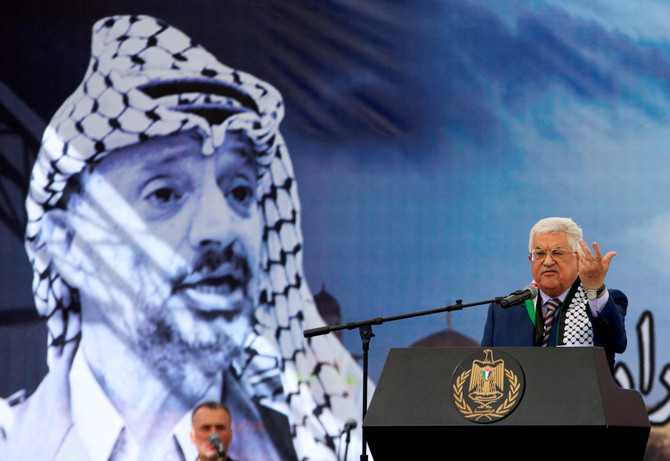
Ofer Zalzberg, a senior analyst at the International Crisis Group, said Abbas had a made a conscious decision to focus on plotting a detailed response to any comprehensive new US strategy for the region.
“Instead of reacting to every sound coming from (Washington), the Palestinian leadership in Ramallah is focusing on preparing their strategy for the US plan, which may be published imminently,” he said.
Abbas recently met with Russian President Vladimir Putin and Indian Prime Minister Narendra Modi in an attempt to counter the close US relationship with Israel.
In an address to the UN Security Council last week, he called for a “multilateral international mechanism” to help broker a lasting peace deal and criticized Washington for breaking international law by unilaterally recognizing Jerusalem as Israel’s capital.
But not everyone is convinced he is right to ignore the US. Writing in Al-Quds, the largest Palestinian daily newspaper, Ziad Abuzayyad, a former minister in the PA, called for renewed contacts with the US.
“Over the years I have come to learn that you accomplish more by being on the inside than by fighting from the outside,” he wrote. “We lose more by boycotting (the Americans) than by engaging them.”


Palestinians’ ‘silent’ protest at new Jerusalem embassy timetable
Palestinians’ ‘silent’ protest at new Jerusalem embassy timetable



Bahrain arrests four for spying for Iran’s IRGC as Gulf attacks intensify
- Investigators said the suspects were found to have sent pictures and coordinates of vital locations in Bahrain to the IRGC via encrypted software
MANAMA: Bahrain has detained four citizens suspected of spying for Iran’s Islamic Revolutionary Guard Corps (IRGC), as Tehran’s retaliatory strikes on Gulf states show no signs of letting up.
Bahrain’s General Directorate of Criminal Investigation and Forensic Science identified the four detainees as Murtadha Hussain Awal, 25; Ahmed Isa Al Haiki, 34; Sarah Abdulnabi Marhoon, 36; and Elias Salman Mirza, 22. A fifth suspect, Ali Mohammed Hassan Al Shaikh, 25, remains at large abroad.
Investigators said Murtadha Hussain and his cohorts, acting on IRGC instructions, used high-resolution equipment to photograph and record coordinates of vital locations in Bahrain, transmitting the data to the IRGC via encrypted software.
The arrests come as Iran escalates attacks across the Gulf. Bahrain’s Interior Ministry issued an advisory urging residents in Hidd, Arad, Qalali and Samaheej to stay indoors and seal windows against smoke from fires sparked by Iranian strikes. Fuel tanks at a facility in Muharraq Governorate, northeast of Manama, were among the targets. Oman’s Port of Salalah also battled blazes at fuel storage tanks following separate Iranian drone strikes.
Elsewhere in the region, two Iranian drones struck near Dubai International Airport, wounding four people, though flights continued uninterrupted. A fire broke out at a luxury apartment tower in Dubai Creek Harbour after another drone hit — extinguished by Thursday morning.
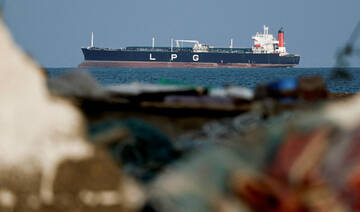
Iran also targeted commercial ships and struck what officials described as the world’s busiest international airport on Wednesday, as US and Israeli strikes continued to pound Tehran.
A war now 12 days old — and costly
The conflict began on February 28, when US and Israeli forces launched coordinated strikes on Iran. Tehran has since retaliated by targeting Gulf states, US and Israeli assets, and critical energy infrastructure.
Iran has declared a blockade on energy shipments through the Strait of Hormuz, a vital chokepoint for global oil and gas flows, sending commodity prices surging and rattling international markets.
The Pentagon told Congress this week that the first week of war cost the United States $11.3 billion — including $5 billion in munitions in the conflict’s opening weekend alone.
The UN Security Council on Wednesday voted to approve a resolution demanding a halt to Iran’s attacks on its Gulf neighbors. Bahrain’s UN Ambassador Jamal Alrowaiei welcomed the move.
“The international community is resolute in rejecting these Iranian attacks against sovereign countries that are threatening the stability of the peoples, especially in a region of strategic importance to global economy, energy security and global trade,” he said.
Despite the resolution, there were no immediate signs the conflict was easing.
(With AP)