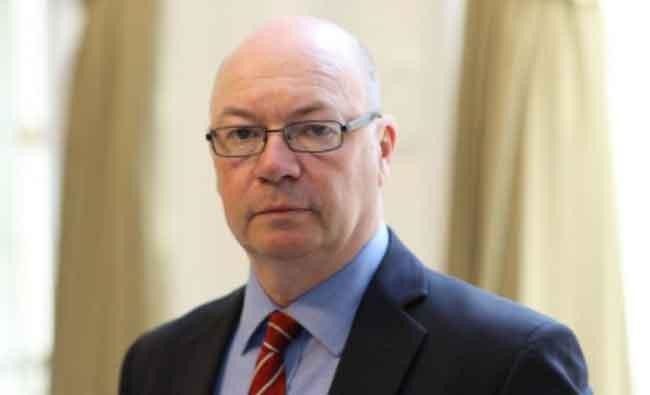
RIYADH: Britain will not follow the US in moving its embassy in Israel from Tel Aviv to Jerusalem, a senior UK government minister told Arab News on Monday.
“The United Kingdom is very clear. This was not a decision that we would have made,” said Alistair Burt, the Minister of State for the Middle East and North Africa.
“If there is a settlement of the issue, I’m sure at that stage it would be possible to move the embassy. At that stage there will be a state of Palestine, and the UK will be very pleased to have an embassy there. So no, we will not be following the United States in this regard.”
US President Donald Trump announced the embassy move late last year, provoking disapproval throughout the Arab world, protests in the occupied West Bank and an overwhelming vote of condemnation at the UN General Assembly in New York. His administration said this week the new embassy would open on May 14.
Burt was speaking to Arab News at an award ceremony in Riyadh for Saudi alumni of British universities.
The minister said Western countries had missed the opportunity to intervene in Syria “probably some years ago” when the Assad regime first used chemical weapons against civilians.
“No one knows what the impact of that intervention would have been,” he said, “but we do know what has happened subsequently, which has been a tragedy.
“The killing and the attacks in Eastern Ghouta must stop. There is no reason for them, there is no excuse for them. The injuries to innocent civilians shock the whole world, but the wider problem is an issue of international order now.
“If the UN Security Council cannot ensure that there is peace and the conflict comes to an end, then there are many big questions for society.”


![]()
Britain rules out embassy move to Jerusalem
Britain rules out embassy move to Jerusalem

Latest updates





© 2026 SAUDI RESEARCH & PUBLISHING COMPANY, All Rights Reserved And subject to Terms of Use Agreement.