LONDON: Saudi Arabia is expected to see a “significant” increase in the number of luxury hotels in the kingdom by 2022, potentially threatening the dominance of the UAE in the high-end market, according to a new report.
The supply of luxury hotels in Saudi Arabia is anticipated to increase annually at 18 percent (compound annual growth rate) from 2018, far exceeding the 10 percent growth rate expected in the UAE, according to research published by real estate advisory firm Colliers International.
Luxury hotel supply in both Oman and Kuwait is due to grow by 11 percent, while Bahrain will see 9 percent growth.
The report also suggests that the luxury sector in Saudi Arabia is also more resilient than the country’s overall hotel market.
Last year, the luxury hotel market in Riyadh saw a 9 percent growth in the revenue per available room measure (RevPar), despite the overall market declining, the report said.
Saudi Arabia recorded a 5.2 percent decline in overall hotel occupancy in 2017, with a 4.4 percent drop in average daily rate (ADR), and a 9.3 percent decline in RevPar compared to the previous year, according to data provider STR Global.
Craig Plumb, head of research, Mena at JLL, told Arab News there were other factors that would also help the growth of Saudi Arabia’s hotel sector, potentially helping it catch up with the UAE.
“Recent announcements of major investment in the tourism sector, along with the relaxation of visa requirements to permit tourist visas for more nationalities, are expected to have a major positive impact on the hotel market within Saudi Arabia,” he said.
“While these changes will have only a partial impact on market conditions in 2018, there is little doubt that the Saudi market will close some of the gap with the UAE over the medium to long term,” he said.
Taimur Khan, senior analyst at Knight Frank, also noted efforts underway to encourage more tourism and hotel visitors.
“In Saudi Arabia there is positive sentiment for the medium to long-term due to various initiatives being put in place as part of Vision 2030 and the NTP which look to present the Kingdom as a more leisure-friendly destination,” he told Arab News, before noting that the country still struggles with only a limited pool of potential visitors.
“In Saudi Arabia the demand pools are limited to business tourism and religious tourism, this is one of the main challenges. However, there are strategies which have been devised to diversify target segments such as easing of visa restrictions,” he said.
The UAE currently leads the GCC luxury hospitality sector, with 73 percent of existing luxury hotel stock in the region and 61 percent of the region’s current luxury pipeline.
Within the UAE, 35 percent of last year’s pipeline for hotels consisted of luxury projects, with most concentrated in Dubai. This compares to luxury developments accounting for only 14 percent of projects in Saudi Arabia, 20 percent in Kuwait, 19 percent in Bahrain and 11 percent in Oman.
There are also signs that the budget to mid-market hotel sector is expanding in the UAE.
“While the market remains dominated by the luxury sector, an increasing number of budget and mid market brands are scheduled to enter the market over the next two years,” said Plumb.
“The addition of more mid-market projects is expected to act as a drag on the average performance of the UAE market, with ADR and RevPar expected to decline from current levels over the next two years,” he said.


![]()
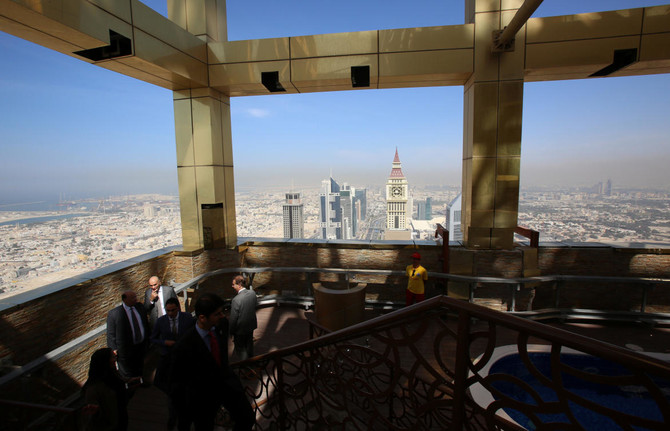
Saudi Arabia to see sharp increase in luxury hotels
Saudi Arabia to see sharp increase in luxury hotels

Latest updates



Recommended


© 2026 SAUDI RESEARCH & PUBLISHING COMPANY, All Rights Reserved And subject to Terms of Use Agreement.