KABUL: Insurgents unleashed a series of new attacks in various parts of Afghanistan, including Kabul, resulting in the loss of nearly 30 lives on Saturday, officials said.
The deadliest attack targeted army soldiers in a camp in Bala Boluk district of western Farah province where, according to sources, all 24 of the security personnel based there were killed in the pre-dawn raid by militants.
Chief Defense Ministry spokesman Dawlat Waziri confirmed the attack to Arab News, but said that 18 of the 24 soldiers were killed, adding: “I do not know about the casualties among the enemy.”
Taliban claimed responsibility for the attack in Farah as well as two separate suicide attacks in southern Helmand province.
A spokesman for the interior ministry in Kabul, Najib Danesh, said militants used vehicles in the two attacks that targeted security forces, in which several lost their lives.
Meanwhile, another suicide attack hit the capital city of Kabul, killing two people and wounding six others, Danesh told Arab News.
The attacker, who was on foot, blew himself up outside an intelligence office near the headquarters of the NATO-led force, other officials said.
Nasrat Rahimi, another spokesman for the Afghan Interior Ministry, said one of the intelligence officers identified the bomber and leapt at him before he could blow up the explosives attached to his body.
“The casualties could have been very high had the officer not held him tight in his arms,” he told reporters.
No group claimed responsibility for the Kabul attack that came weeks after a similar attack in the same area, which was then claimed by Daesh.
Today’s attack in Kabul comes after a series of high-profile strikes by the Taliban and Daesh in January in which nearly 200 lost their lives.
The attacks hit Afghanistan despite a recent surge in both ground and aerial offensives by the US-led and Afghan forces against militants in various parts of the country, as part of Washington’s new war strategy after last year’s gains by the militants.
“We have not announced the end of the war. There is fighting, there is a threat from 20 terrorist groups here. But we have stepped up our efforts. The enemy has suffered, but it has foreign support,” Waziri said.


![]()
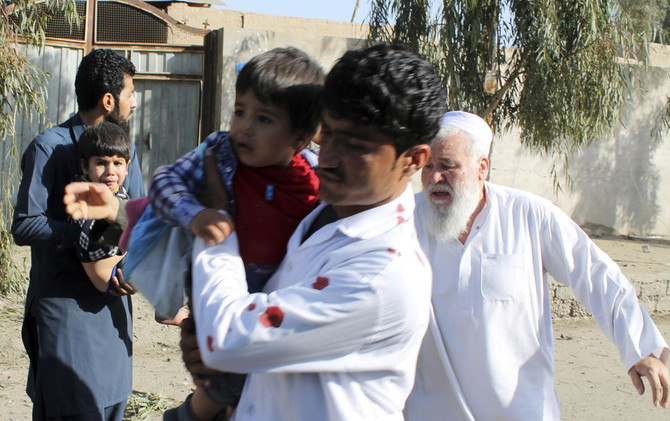
New wave of terror attacks hits Afghanistan, killing 30
New wave of terror attacks hits Afghanistan, killing 30
Latest updates


Recommended


© 2026 SAUDI RESEARCH & PUBLISHING COMPANY, All Rights Reserved And subject to Terms of Use Agreement.