ISLAMABAD: Pakistan and Russia have expressed concerns over the presence of Daesh in Afghanistan.
Following a meeting with his Russian counterpart Sergey Lavrov in Moscow on Tuesday, Pakistan’s Foreign Minister Khawaja Asif, who is on an official four-day visit to Russia, said: “There was unanimity of views that unchecked proliferation of Daesh in Afghanistan, particularly along the borders of neighboring countries, was a threat to peace in the entire region.”
During talks, Lavrov insisted that combating terrorism is a priority area of cooperation between Islamabad and Moscow.
“We are planning to continue giving practical assistance in strengthening the counterterrorism potential of your country,” he told the Pakistani delegation.
The Russian Foreign Minister also appreciated Pakistan’s efforts in the fight against terrorism.
“He conveyed Russia’s continued support for enhancing Pakistan’s counterterrorism capabilities,” a Pakistan Foreign Ministry statement said.
Analyst Qamar Cheema told Arab News that Russia is reportedly negotiating with the Afghan Taliban in order to curb Daesh’s influence in the country.
“Russia believes Islamic movements in Central Asia may get impressed by (Daesh’s) ideology, so it is important to curb and eliminate Daesh infrastructure and cells in Afghanistan,” Cheema said.
“That is the reason Russia is reportedly enhancing ties with the Afghan Taliban, so that they could engage Daesh in the country knowing that the Afghan authorities are not capable of fighting Daesh.”
Asif tweeted on Wednesday that his meeting with Lavrov was “very fruitful” and added that “consensus on regional and international issues, particularly Afghanistan… need for close cooperation on counterterrorism and eliminating drug trafficking, better trade and defense relations were discussed.”
At a delegation level meeting in Moscow, the two sides also discussed the prevailing situation in Afghanistan and its implications for the region. They reiterated that there was no military solution to the Afghan conflict and a negotiated settlement through an Afghan-led peace and reconciliation process was the only viable option for lasting peace in the country.
“They agreed to closely coordinate in all Afghanistan-related processes for a regional solution of the Afghan conflict,” the Pakistan Foreign Ministry said.


![]()
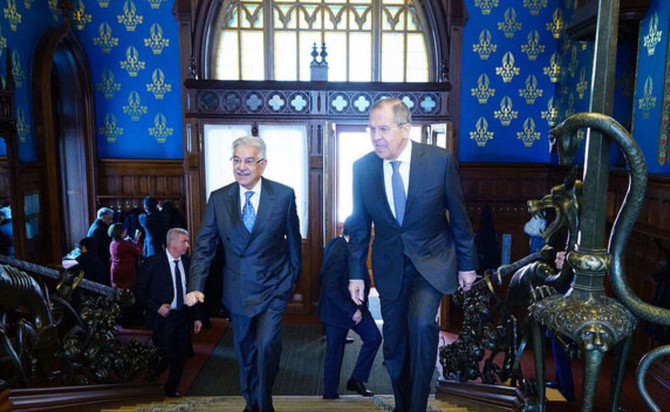
Russia, Pakistan share fears over Daesh in Afghanistan
Russia, Pakistan share fears over Daesh in Afghanistan
Latest updates


© 2026 SAUDI RESEARCH & PUBLISHING COMPANY, All Rights Reserved And subject to Terms of Use Agreement.