BEIRUT: The airstrike hit Syria’s Eastern Ghouta on Wednesday, three days into a massive bombardment. Soon afterward, rescuers pulled four children from the building, but their father was killed and they were now orphans.
A neighbor, Mohammed Abu Anas, helped to dig through the rubble and then ran for medical aid through battered alleyways with one of the children bleeding in his arms.
“There is fear and anguish among people here, there are hundreds of martyrs and injured,” he said.
The little boy dug from the rubble, blood trickling from cuts on his face, survived the attack. His sister, also alive, was slung over the shoulder of a rescue worker, her face and headscarf white from dust. Two other siblings also survived.
Their Santiha family had already been torn apart by bombing. Two years ago, the children’s mother was killed in their home in Jobar, a district where Eastern Ghouta meets Damascus.
Wednesday’s airstrike killed their father, Majid Santiha, and his body was carried away on a stretcher. Their uncle came to the medical center where they and the body of their father were taken. He will now raise them.
Nearly 400,000 people live under siege in Eastern Ghouta according to the UN, the danger from bombs compounded by shortages of food and medicine.
“We’ve barely eaten since yesterday. I ate rotten food. There are no goods left in the shops. We bought two small tins of cheese and we got seven flat rounds of bread today,” said Bilal Issa, 25.
The food is shared with his mother, his wife and his three siblings.
When the rockets started to fall right outside his home, Issa and his neighbors started to dig through the basement of their building to create a shelter.
They lifted the floor tiles to excavate a hole with spades in which grown men can now stand upright, pulling out the earth with buckets.
The airstrikes cause massive plumes of smoke that hang over the neighborhood. The sound of warplanes fills the sky.
“Whoever leaves his house or leaves the shelter can be considered dead,” said Issa.
Death is not always immediate. Omran Madani was injured by a barrel bomb that fell outside the family home in the village of Madira on Tuesday, said his father, who identified himself only as Abu Omran.
Omran died on Wednesday. His small body lay on a hospital bed wrapped neatly in a white shroud from neck to feet and his father cradled the boy’s motionless face in his hands.
He railed against Assad, the rebel groups who control Eastern Ghouta and the leaders of foreign countries involved in the war. “May they find their children dead and taste oppression,” he said. “May God take our revenge.”


![]()
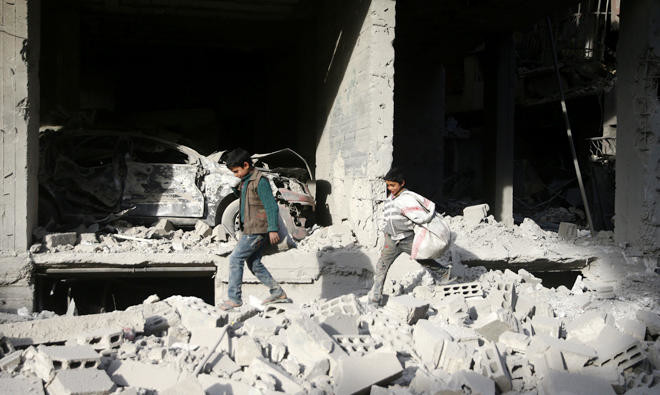
Families broken by the carnage of Ghouta’s bombs
Families broken by the carnage of Ghouta’s bombs
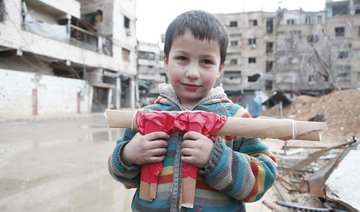

Latest updates






© 2026 SAUDI RESEARCH & PUBLISHING COMPANY, All Rights Reserved And subject to Terms of Use Agreement.