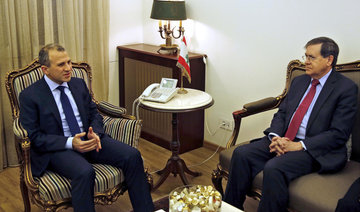
BEIRUT: A senior US diplomat met Lebanon’s foreign minister on Wednesday in Beirut as part of a US shuttle diplomacy effort to resolve tensions between Israel and Lebanon over a border wall and energy drilling in disputed waters.
Disputes over Israeli construction of the border wall, Lebanon’s start of oil and gas exploration at sea and the growing arsenal of Lebanon’s Iran-backed group Hezbollah have caused a spike in tensions between Lebanon and Israel, both friends of the United States that regard each other as enemies.
Lebanon this month signed its first offshore energy exploration and production agreements with a consortium of France’s Total, Italy’s Eni and Russia’s Novatek. One of two blocks given to the consortium, Block 9, contains waters claimed by Israel.
, has been shuttling back and forth between Israel and Lebanon in a bid to resolve the disputes.
He met Foreign Minister Gebran Bassil on Wednesday in Beirut. The two had last met on Friday, after which Parliament Speaker Nabih Berri reiterated Lebanon’s rejection of US proposals to resolve the maritime dispute as “unacceptable.”
This was an apparent reference to a maritime demarcation line proposed by US diplomat Frederic Hof in 2012, which would give Lebanon around two-thirds and Israel around one-third of a disputed triangular area of sea of around 860 sq km (330 square miles).
A senior Lebanese government source said Satterfield did not come with any new plan, and talks still revolve around the Hof line.
A source in the foreign ministry said he discussed the disputed area, how Lebanon can preserve its rights and how to keep exploration and drilling from being affected.
Satterfield left without making any public comments.
The US Embassy in Lebanon said Satterfield “continues to engage” on regional issues and on helping Lebanon develop its resources in agreement with its neighbors.


![]()
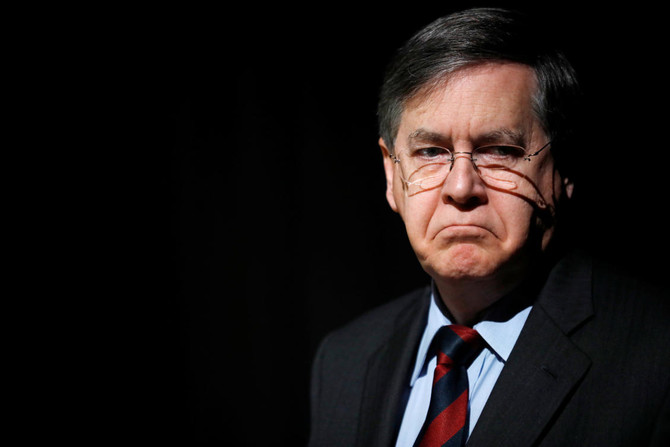
US envoy visits Beirut, mediating in Lebanon-Israel dispute
US envoy visits Beirut, mediating in Lebanon-Israel dispute


Latest updates


© 2026 SAUDI RESEARCH & PUBLISHING COMPANY, All Rights Reserved And subject to Terms of Use Agreement.