Serial child killer appeals death sentence; says trial conducted in haste

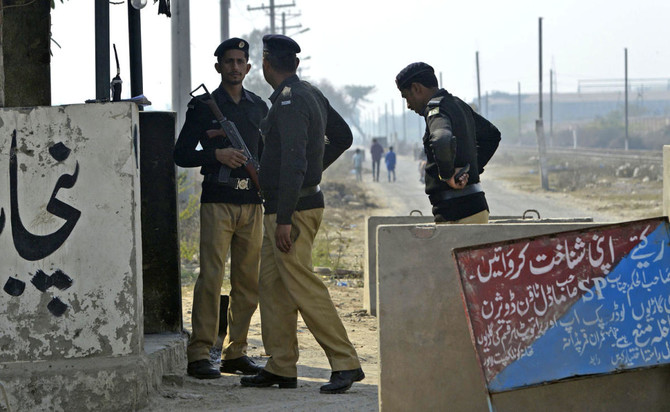
In this file photo, Pakistani policemen stand guard outside the check pint of Kot Lakhpat Jail where Mohammad Imran, the suspect accused of raping and murdering a young girl, shifted in Lahore on Feb. 10, 2018. (AFP)
Updated 20 February 2018
Follow

Serial child killer appeals death sentence; says trial conducted in haste

LAHORE: A Pakistani prosecutor says the serial child killer who was given the death sentence last week for killing eight children in eastern Punjab province has filed an appeal against his conviction and sentence.
Munir Siyal said on Tuesday that Mohammad Imran filed the appeal in Lahore’s High Court, stating that his trial was conducted in haste. Imran had pleaded guilty during the five-day trial conducted at a prison in Lahore.
A court last Saturday sentenced him to death for killing eight children, including a 7-year-old Zainab Ansari whose rape and murder shocked Pakistan.
Imran was arrested in January, two weeks after authorities say he raped and killed Zainab and threw her body into a garbage dump in the city of Kasur.
The case has also triggered street protests in Kasur.


Pakistan urges pilgrims to complete Saudi biometrics as Hajj preparations gain pace

Updated 30 January 2026
Follow

Pakistan urges pilgrims to complete Saudi biometrics as Hajj preparations gain pace

  • Government warns pilgrims biometric verification is required for Hajj visas
  • Step follows tighter oversight after last year’s Hajj travel disruptions

ISLAMABAD: Pakistan’s government on Friday urged aspiring pilgrims to complete mandatory Saudi biometric verification for Hajj visas, as preparations for the 2026 pilgrimage gather pace following stricter oversight of the Hajj process.

The announcement comes only a day after Pakistan’s Religious Affairs Minister Sardar Muhammad Yousuf said regulations for private Hajj operators had been tightened, reducing their quota following widespread complaints last year, when tens of thousands of pilgrims were unable to travel under the private Hajj scheme.

“Saudi biometric verification is mandatory for the issuance of Hajj visas,” the Ministry of Religious Affairs said in a statement, urging pilgrims to complete the process promptly to avoid delays.

“Hajj pilgrims should complete their biometric verification at home using the ‘Saudi Visa Bio’ app as soon as possible,” it added.

The statement said the pilgrims who were unable to complete biometric verification through the mobile application should visit designated Saudi Tasheer centers before Feb. 8, adding that details of the centers were available on Pakistan’s official Hajj mobile application.

Pakistan has been steadily implementing digital and procedural requirements for pilgrims ahead of Hajj 2026, including mandatory training sessions, biometric checks and greater use of mobile applications, as part of efforts to reduce mismanagement.

Saudi Arabia has allocated Pakistan a quota of 179,210 pilgrims for Hajj 2026, with the majority of seats reserved under the government scheme and the remainder allocated to private tour operators.