BAGHDAD: Daesh militants can still launch deadly attacks in northern Iraq, despite the decline of its control over most areas in western and northern parts of the country, Iraqi military commanders told Arab News on Monday.
Iraq in December declared the full liberation of its territories and the end of military operations against the organization that seized vast swathes in the north and west in June 2014.
Since then there have been many vital attacks in western Kirkuk and eastern Salahudeen where most of the militants who fled the fighting in Mosul and Anbar have taken refuge — in areas with difficult terrain such as Hawija, security and local officials said.
Late on Sunday, 21 fighters from the Shiite-dominated paramilitary troops fighting Daesh alongside the government were killed in an ambush set up in Saadounia village, western Hawija, Popular Mobilization Forces (PMF) field commanders told Arab News.
“A force from the 16th brigade of the PMF apparently received information from one of its secret sources in the region that there was a senior Daesh leader there, so they entered the area at 7 p.m. (on Sunday) to arrest the target but were surprised by the ambush,” Sheikh Wassifi Al-A’assi, the commander of Kirkuk PMF, told Arab News.
“The initial information that we had about the incident suggested that the informer had led them to the heart of the area where they were surrounded and killed.
“The bodies of 21 fighters were found this morning (Monday), some burned inside cars and others beheaded. All signs indicate that they were attacked while they were inside their vehicles,” Al-A’assi said.
Several military intelligence sources in the area told Arab News that the ambushed unit was looking to arrest a group of prominent militants, including Manhal Al-Humran who was responsible for oil sales within Daesh.
Daesh claimed responsibility for the attack and said in websites linked to the organization that its fighters had ambushed a “national security force” in western Kirkuk, clashed with the force and killed 30 of them and burned six vehicles.
Hawija town, 300 km north of Baghdad, was liberated from Daesh by Iraqi security forces in October, but the area’s rugged terrain and its large, dense agricultural land turned it into a safe haven for militants who fled the fighting in Mosul and Anbar.
Iraqi forces liberated the area militarily, but have not cleaned or inspected it and many of its villages remain uninhabited.
“We have information that dozens of militants have been gathering there (in Hawija). They have been taking advantage of the nature of the area to freely move from one village to another,” a local intelligence officer told Arab News.
“They (the militants) become experts in this area and have been getting help from the people of the area as most of them (militants) belong to these villages.”
Iraqi federal police backed by the PMF have launched a “limited” military operation to look for a further six missing PMF fighters, military commanders said.
Despite this, the formal statement from PMF commanders said that the forces was on a “routine inspection” mission, but the incident has highlighted the mis-coordination and lack of trust between the multiple troops deployed in the area.
“This force came from Tazza town. They were out of their area and have not informed or coordinated with troops deployed in the region or the joint military operation commandership,” a senior PMF commander told Arab News on condition of anonymity.
“Maybe they were afraid of a leak of information. Even if the goal was important, they had to coordinate with the units deployed in the region. The prior coordination would have secured their movement and they would be alive now.”


![]()
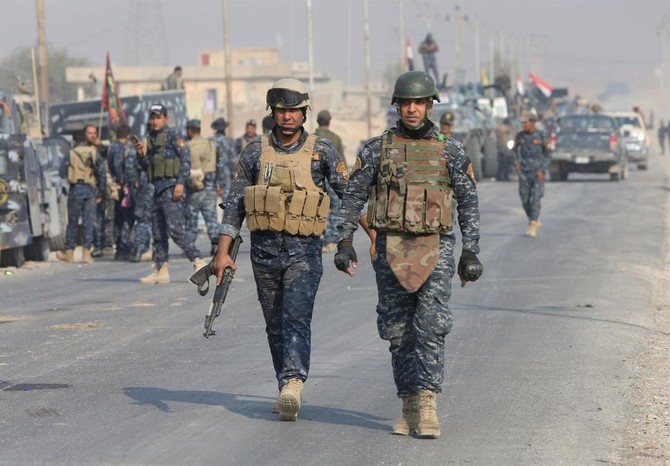
Daesh still capable of launching attacks in northern Iraq, say commanders
Daesh still capable of launching attacks in northern Iraq, say commanders

Latest updates


© 2026 SAUDI RESEARCH & PUBLISHING COMPANY, All Rights Reserved And subject to Terms of Use Agreement.