ANKARA: The capture and extradition of a top Daesh leader from Iraq to Turkey has revealed a new level of intelligence cooperation between Ankara, Baghdad and Washington.
Ismail Alwan Salman Al-Ithawi was the head of what the extremist group described as its Ministry of Religious Edicts. He also oversaw a committee that appointed leaders of cadres within Daesh.
Al-Ithawi fled to Turkey and settled in the northern province of Sakarya after the territorial losses suffered by Daesh in Syria and Iraq last year, an Iraqi interior ministry official told AFP.
He was using his brother’s name to hide his identity, but the intelligence operation managed to capture him following the infiltration into the “highest levels” of Daesh.
He was detained and returned through cooperation between Turkish, Iraqi and US intelligence agencies, the official said.
The US military said the cooperation between the two, who are both partners in the American led anti-Daesh coalition, was “significant.”
“Iraqi intelligence, in coordination with Turkish security forces, arrest ISIS high-value individual Ismail alwan Al-Ithawi. “Global coalition and partners hunting down ISIS leaders every day,” coalition spokesman Col. Ryan Dillon tweeted.
The counter-terrorism cooperation between Turkey and Baghdad is the outcome of the warming in relations with regular meetings between the foreign ministers of the two countries and the recent pledge by Turkey of $5 billion in loans to rebuild the country after the devastation of Daesh.
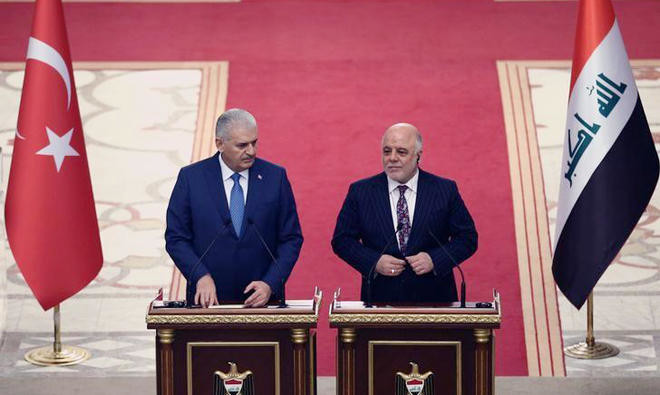
During his address at the Munich Security Conference, Turkish Prime Minister Binali Yıldırım said on Saturday that Turkey’s counter-terror measures against foreign fighters and Daesh carry significant importance for Europe’s security.
“We also banned 56,300 potential foreign fighters affiliated with Daesh from traveling to Turkey. Around 10,000 Daesh members are currently under arrest in Turkey,” he said.
Yildirim met his Iraqi counterpart Haidar Al-Abadi at the conference to discuss cooperation against terrorism.
Ankara has deported more than 5,000 Daesh suspects and 3,290 foreign fighters from 95 countries in recent years.
But the country has also been criticized for not doing enough to stop the flow of extremists in and out of Syria.
Experts think the recent anti-Daesh operation give a symbolic message to the West that Turkey’s counter-terror efforts are not just focussed on Kurdish militants. Turkey last month launched Operation Olive Branch into Syria’s Afrin region against YPG militias, which its says are linked to the Kurdish group waging an insurgency inside Turkey.
“The West criticized Turkey for being distracted from the fight against Daesh and overemphasizing, the YPG threat,” Emel Parlar Dal, associate professor of international relations at Marmara University in Istanbul, said. “And now Ankara disproves this claim.”
Sertac Canalp Korkmaz, a researcher in security studies at ORSAM, a think tank in Ankara, said the capture of high-level Daesh members is also significant as an attempt to prevent the group from regaining ground.
“The number of Daesh members who are jailed in Turkey is stunning and confirms again that the terror group’s terror-generating capacity does not only threaten domestic security but also Europe’s own stability,” he told Arab News.
On Feb. 13, six foreign nationals, including two Iraqis and a Syrian, were detained in central Turkey for suspected links to Daesh. Separately on the same day, during simultaneous raids in the central province of Eskisehir, three more Iraqi nationals were also caught on suspicion of their Daesh links.


![]()
Daesh leader’s capture in Turkey points to new Iraq cooperation
Daesh leader’s capture in Turkey points to new Iraq cooperation

Latest updates


© 2026 SAUDI RESEARCH & PUBLISHING COMPANY, All Rights Reserved And subject to Terms of Use Agreement.