VEVEY, Switzerland: Nestle forecast modest organic sales growth this year and reported its weakest gain on record in 2017 on Thursday, giving fresh fuel to investor Daniel Loeb’s campaign to overhaul strategy at the world’s biggest food group.
Shares in the maker of KitKat chocolate bars and Nescafe coffee hit a 10-month low after it said organic growth, which excludes acquisitions and currency moves, was only 2.4 percent in 2017, missing the lowest estimate of 2.6 percent in a Reuters poll of analysts.
Nestle and its rivals have been buying and selling brands to improve performance as sales slow due to a shift in consumer tastes toward healthier foods and independent labels.
Loeb’s hedge fund Third Point took a $3.5 billion Nestle stake last summer and has been pushing to speed up its transformation into a higher-growth, more efficient health food company.
“Work on costs usually kicks in faster than work on growth,” CEO Mark Schneider said at Nestle’s headquarters in Vevey, Switzerland, in part due to the lag between buying a new brand and it contributing to performance.
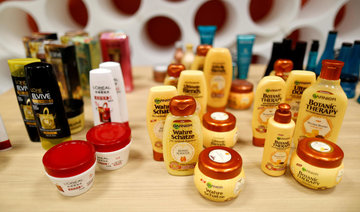
Nestle also said it had decided not to renew a shareholder agreement with L’Oreal beyond March 21 to maintain “all available options,” but had no intention to increase its 23 percent stake and remained committed to the cosmetics company.
That is likely to fuel speculation about Nestle selling its stake, according to a London-based trader. L’Oreal’s CEO last week said the company was ready to buy back the stake, should Nestle decide to sell.
The sale of the L’Oreal stake, worth nearly €23 billion, figured prominently among Loeb’s demands.
Nestle also said it had decided to explore strategic options including selling its Gerber Life insurance business, which had sales of 840 million Swiss francs last year. It will hold on to Gerber baby food.
“We continue to believe that Nestle has a lot of potential for improvement and a mechanism by which that potential will be realized. But in our view these results don’t advance the argument,” said RBC Capital Markets analysts.
Nestle’s organic sales growth slowed to 1.9 percent in the fourth quarter to Dec. 31, well below the 2.85 percent estimate in the Reuters poll, hit by weak performance in North America and Brazil, particularly in waters and nutrition.
“We expect most of these issues to be transitory in nature,” Schneider said, adding that he expected an improvement this year. Still, he gave a wide target for 2018 growth of 2-4 percent, which will be narrowed as the year progresses.
Net profit in the full year dropped 16 percent to 7.2 billion Swiss francs ($7.8 billion), short of the 9.6 billion average poll estimate, hit by a goodwill impairment in its skin health unit that “was taken to reflect the current prospects of the business,” Nestle said in a statement.
Schneider would not comment on whether Nestle was still committed to the unit, but said portfolio management would continue this year with a focus on small to mid-sized deals. “But we do not rule out anything,” he said.


Growth formula eludes under-fire Nestle

Growth formula eludes under-fire Nestle



Oman trade surplus narrows 27% in 2025 as oil exports decline
JEDDAH: Oman’s trade surplus narrowed 27 percent to 6.09 billion Omani rials ($15.8 billion) by the end of 2025, as lower oil and gas export earnings offset gains in non-oil shipments and re-exports.
Preliminary data from the National Centre for Statistics and Information showed the surplus fell from 8.34 billion rials a year earlier, with total merchandise exports declining 7.1 percent to 23.26 billion rials, the Oman News Agency reported.
The weaker trade balance reflects softer hydrocarbon revenues in a year marked by lower global crude prices. Benchmark Brent Crude averaged about $69 a barrel in 2025, down from roughly $80 a barrel in 2024, as global supply outpaced demand and inventories increased.
“Conversely, total registered merchandise imports into Oman rose 2.7 percent to 17.167 billion rials, compared with 16.713 billion rials during the same period in 2024,” the ONA report added.
The agency added that the decline in Oman’s merchandise exports was mainly due to a fall in oil and gas exports, which totaled 14.51 billion rials by the end of 2025, down 15.2 percent from 17.11 billion rials a year earlier.
Non-oil merchandise exports, however, increased 7.5 percent to 6.7 billion rials by the end of December, compared with 6.23 billion rials during the same period of 2024.
Re-exports also rose to nearly 2.06 billion rials by the end of December, recording growth of 20.3 percent compared with around 1.71 billion rials in the same period a year earlier.
The UAE topped non-oil export destinations by the end of December, with shipments valued at more than 1.31 billion rials, up 25.3 percent compared with the same period in 2024. It also led re-export trade from Oman, with re-exports valued at 724 million rials, and remained the leading source of imports into Oman at more than 4.15 billion rials.
Saudi Arabia ranked second in non-oil exports at around 1.07 billion rials, followed by India at 699 million rials.
In re-exports, Iran came second at 365 million rials, followed by the UK at 207 million rials.
On the import side, China ranked second with nearly 1.94 billion rials, followed by India at 1.45 billion rials.


