Lebanon's President Michel Aoun told US Secretary of State Rex Tillerson that Lebanon is sticking to its internationally recognised borders Thursday and rejected Israeli claims over a disputed area in Lebanese waters.
During a brief stopover in Beirut as part of a regional trip, he added that Lebanon was committed to preserving calm on its southern border and urged Washington to play an “effective role” to help resolve Beirut’s land and maritime disputes with Israel.
Aoun also urged the United States to “work on preventing Israel from continuing its assaults on Lebanese sovereignty” by land and sea, a statement from the presidency said.
Israel has recently escalated its threats over Lebanon's invitation for offshore gas exploration bids along the countries' maritime border claiming that Lebanon will be drilling in areas owned by Israel. Lebanese officials deny the Israeli statements, saying the area where the country plans to drill belongs to Lebanon.
The long-standing dispute resurfaced recently as Lebanon signed a deal with an international consortium to start exploratory offshore drilling next year.
Israeli Defense Minister Avigdor Lieberman described the exploration tender as " provocative" and suggested that Lebanon had put out invitations for bids from international groups for a gas field "which is by all accounts ours."
There are over 800 square kilometers (300 square miles) of waters claimed by the two countries. US officials have previously tried to mediate the dispute, including most recently by David Satterfield, the US acting assistance secretary of state who visited the border area in south Lebanon last week, and was accompanying Tillerson on Thursday.


![]()
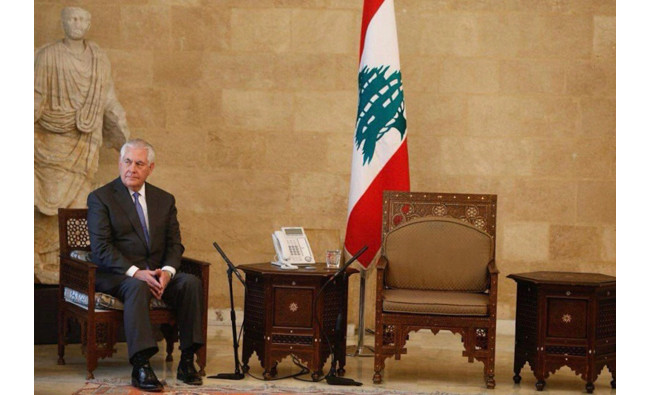
Aoun to Tillerson: Lebanon is sticking to its borders, rejects Israeli claims over disputed area
Aoun to Tillerson: Lebanon is sticking to its borders, rejects Israeli claims over disputed area

Latest updates


© 2026 SAUDI RESEARCH & PUBLISHING COMPANY, All Rights Reserved And subject to Terms of Use Agreement.