RAWALPINDI: The bodies of 11 Pakistanis arrived on Wednesday at Benazir Bhutto International Airport from Libya in a special plane.
Their names were Ikram-ul-Haq, Muhammad Qasim, Waleed Akram, Mirza Ghulam Fareed, Tanzeel-ur-Rehman, Muhammad Aziz, Luqman Ali, Kashif Jamil, Azmat Bibi, Mazhar Hussain and Farhan Ali.
They were among 16 Pakistanis who died on Feb. 2 when a boat sank in the Mediterranean Sea off the coast of Libya.
Weeping relatives of the deceased arrived at the airport with ambulances to take the bodies to their hometowns. They demanded that the government take action against people-smugglers.
Bashir Chaudhry, the cousin of a deceased family, said Ismail Khan drowned along with his wife Azmat Bibi and their two children. Only Bibi’s body was recovered.
“The family was planning to settle in Spain. That’s why they risked their lives,” he told Arab News.
“They were poor, and Ismail couldn’t find a job in Pakistan despite his best efforts for the last two years.”
Khan paid a hefty amount to people-smugglers, Chaudhry said, adding: “People who wish to go to Europe for better jobs should learn a lesson from this incident.”
The bodies were brought from Jeddah via Saudi Arabian Airlines. The deceased are from the Mandi Bahauddin, Gurjat, Sargodha, Faislabad, Sialkot and Rawalpindi districts of Pakistan.
The bodies of two more Pakistanis will be flown later after completion of due process by Libyan authorities.
Ghulam Akbar told Arab News that his brother Mirza Fareed is survived by five children who are now bound to lead a “miserable life.”
Akbar said: “The government should take strict action against people-smugglers.” He urged parents not to send their children abroad via illegal means.
Sajjad Haider Khan, director of the Libyan Crisis Cell of Pakistan’s Foreign Office, said bringing the bodies back was difficult due to a lack of direct flights from Libya.
“Gullible people are an easy target for people-smugglers,” he told Arab News. “People-smugglers have spread their tentacles across the globe, and they’re well organized.”
The Federal Investigation Agency (FIA) has arrested dozens of people-smugglers in recent months, he said.
There is a need to create public awareness about the risks and dangers involved in going to Europe via illegal routes, he added.
“Europe isn’t a paradise,” he said. “People should try to find jobs in Pakistan instead of paying hefty amounts to smugglers and risking their lives.”
Thousands of Pakistanis risk their lives each year to travel to Europe in search of better jobs with the help of people-smugglers. Most end up in jail or dead.
In November last year, 20 people trying to cross the Pakistan-Iran border illegally, with help from smugglers in both countries, were killed by militants in Turbat, Balochistan.
According to an FIA report issued in December last year, 6,767 Pakistanis entered Europe illegally via Iran in 2017 alone, while 27,749 were deported — 18,810 from Iran, 4,401 from Turkey and 4,538 from EU countries.
“Pakistani nationals are among the 10 most-detected nationalities that attempt irregular migration to the European Union and Australia,” the UN Office on Drugs and Crime (UNODC) said in a report published in July 2013.


![]()
![]()
![]()
![]()
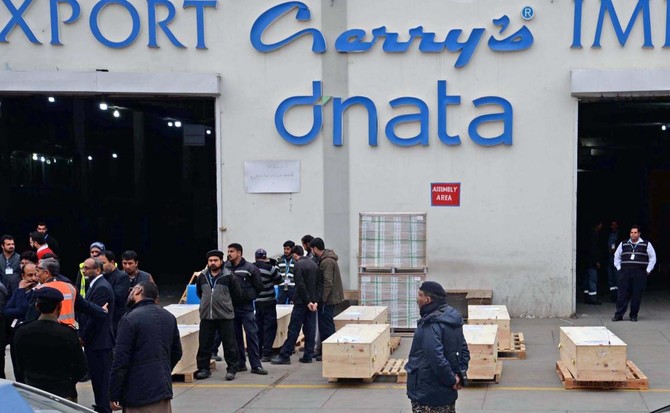
Bodies of 11 Pakistanis arrive from Libya
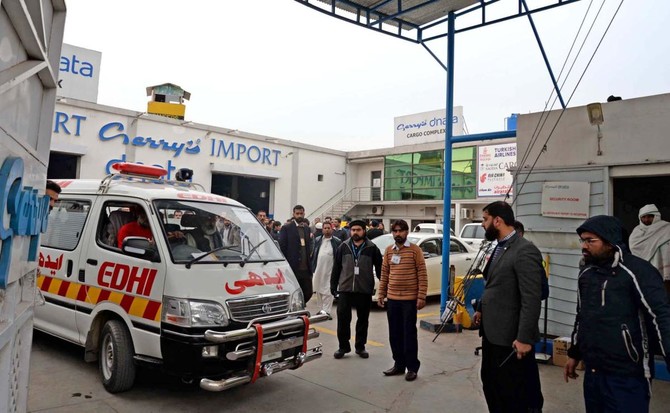
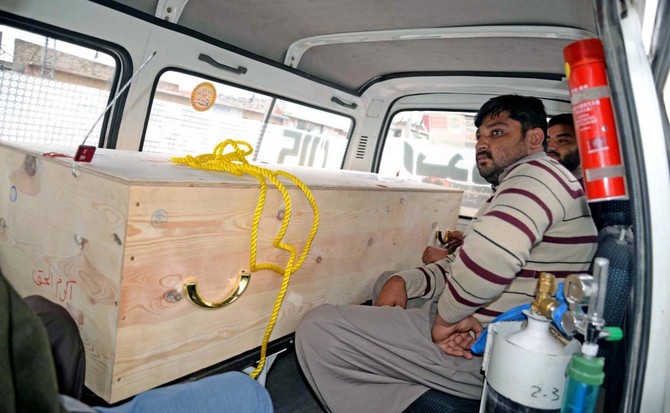
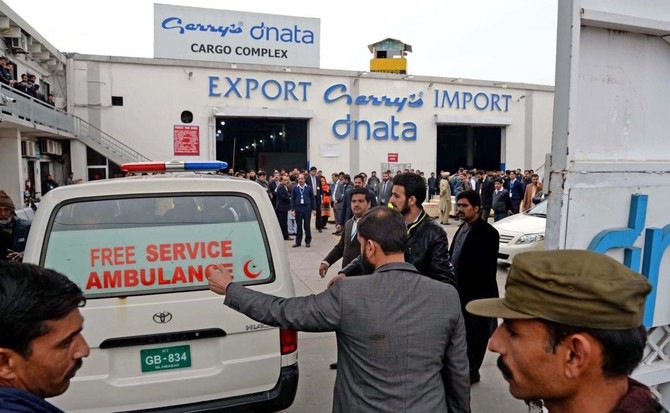
Bodies of 11 Pakistanis arrive from Libya


Latest updates







© 2026 SAUDI RESEARCH & PUBLISHING COMPANY, All Rights Reserved And subject to Terms of Use Agreement.