Al-Ain’s Caio becomes latest UAE league player to receive fine for ‘unethical haircut’

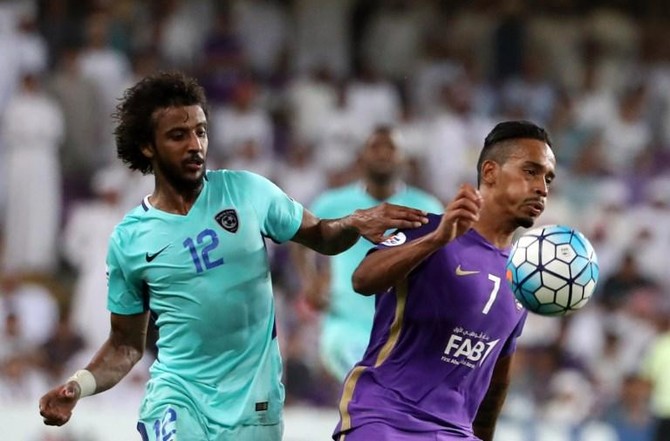
Al-Ain's midfielder Caio (R) has become the latest player to be fined for sporting an ‘unethical haircut’ during a recent game. (AFP)
Updated 14 February 2018
Follow

Al-Ain’s Caio becomes latest UAE league player to receive fine for ‘unethical haircut’

LONDON: Players in the UAE’s Arabian Gulf League might start thinking twice about splashing the cash on fancy hairdos after Al Ain’s Brazilian player Caio was the latest player to be fined for sporting an "unethical haircut" during a recent game.


The Brazilian midfielder, who joined the UAE side in 2016, was fined AED1,000 ($272) by the UAE FA’s disciplinary committee for the haircut.


It comes just a week after the federation punished Moroccan Murad Batna of Al Wahda with a similar fine for exactly the same offense.
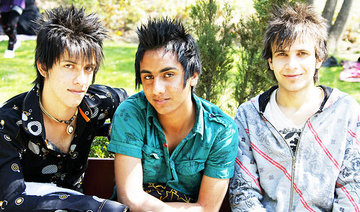
And the duo are not the first players to fall foul of the AGL’s strict rules on haircuts.
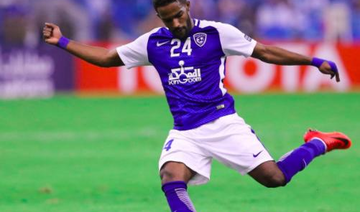
The highest profile case involved Ghana’s former Sunderland forward Asamoah Gyan who was also found guilty of having “unethical hair” under UAE FA guidelines last year.
The 31-year-old Ghanian was one of 46 players found to have breached the rules on inappropriate hairstyles in a league where referees are responsible for deciding whether a player’s hairstyle is in keeping with the “country’s cultural norms.”


Middle East football expert Shuaib Ahmed told Arab News: “These type of cuts with the side of the head shaved are not aligned with the country’s cultural norms. It came up last season and since then, the league committee have started taking it seriously.”
It happens in other Middle East countries too, such as Saudi Arabia. Back in 2012, Waleed Abdullah was told to cut his “un-Islamic” hair by the referee before being allowed on the pitch to play for his side Al Shabab.


‘Quality competition is driving real progress’: DP World ILT20 experts hail league’s growth

Updated 9 sec ago
Follow

‘Quality competition is driving real progress’: DP World ILT20 experts hail league’s growth

  • From tough conditions to global exposure, commentators Ian Bishop, Mohammad Kaif and Nikhil Chopra reveal why the league is winning respect

DUBAI: With every passing season of the DP World ILT20, the league has moved closer to creating a competitive environment where local and associate cricketers learn alongside some of the most experienced names in world cricket.

Season 4 concluded on Jan. 4 with the Desert Vipers winning their maiden title against MI Emirates in front of a packed Dubai International Stadium.

DP World ILT20 commentators and former internationals observing the tournament believe that the league’s true success lies in how visibly players are growing under pressure. For former India batter Mohammad Kaif, the league’s quality stands out because it challenges players.

“This is a top-class league. The pitches are tough, the matches are competitive, and you learn a lot about your batting here. It’s not easy cricket, and that’s why it helps players improve,” Kaif said.

The former India international, who played 125 ODIs and 13 Tests, believes the conditions have added to the league’s credibility. “It hasn’t been a run-fest, and that’s been a good thing. Low-scoring games teach you how to build an innings, how to value singles, and how to make better decisions. That kind of learning stays with you.”

The learning, however, extends far beyond match situations. From the commentary box, West Indies legend Ian Bishop has observed how access to elite professionals accelerates development.

“Each year the league gets stronger. Domestic players and associate players rub shoulders with global superstars, the coaching improves, and you can see the confidence grow,” Bishop said.

That exposure has already changed how certain players are perceived. “We don’t talk about Muhammad Waseem as a prospect anymore because he’s an established player. Then you look at names like Ajay Kumar or Khuzaima Tanveer coming in and making an impact, not just being part of the playing XI. That tells you the tournament is doing something right,” added the former right-arm pacer, who finished his career with 279 international wickets.

Kaif echoed that sentiment, particularly when it comes to dressing-room learning. “When you are sharing space with players like (Kieron) Pollard or (Sunil) Narine, you are learning every day. Even if you are not playing, go to the nets, bowl to them, talk to them, and understand how they think. That’s how we learned growing up — not just by playing matches, but by closely observing seniors.”

For former India spinner Nikhil Chopra (39 ODIs, one Test), the league’s biggest strength lies in how closely it replicates match pressure.

“You’re learning how to bowl in the powerplay, how to manage the middle overs, how to execute slower balls at the death. You even practice with a wet ball. These are match-simulated conditions that really prepare you,” Chopra said.

For local players, the league has become a genuine pathway. “Every season you see UAE players getting better. Names like Ajay Kumar, Khuzaima Tanveer and Muhammad Rohid Khan are improving because they are learning in match situations, not just in the nets,” he added.

Looking ahead, Chopra believes performances in tournaments such as the DP World ILT20 can help change a player’s mindset. “Playing in Sharjah, Abu Dhabi and Dubai presents different challenges. As a player or a coach, you have to think about combinations, conditions and execution. That’s high-level cricket.”