FORT MEADE: Three people who tried to drive onto the campus of the U.S. National Security Agency near Washington, drawing gunfire from guards, were taken into custody on Wednesday in an incident the FBI said had no link to terrorism.
At least three people, including the driver, were injured.
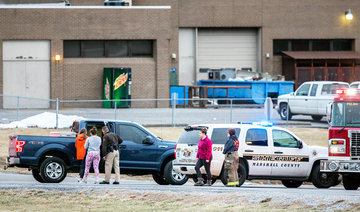
The motorists, who were not identified, drove a black sport utility vehicle to a gate of the secretive government body in Fort Meade, Maryland, shortly before 7 a.m. EST (1200 GMT). Armed guards fired on the vehicle after it violated NSA security rules, officials said.
"There is no indication to think that this is anything more than an isolated incident," said Gordon Johnson, the Federal Bureau of Investigation's special agent in charge for Baltimore, told a press conference. "We have no reason to believe that there is any nexus to terrorism."
The vehicle had what appeared to be bullet holes in its windshield and extensive front-end damage after crashing into a concrete traffic barrier, according to video of the scene.
"It looks like the gunfire was directed onto the vehicle," Johnson said, declining to say if weapons were found in the car. No one appeared to have been shot, he said.
Two of the people arrested were in the NSA's custody while the third, the driver of the vehicle, had been taken to a hospital with undisclosed injuries, Johnson said. An NSA police officer and a civilian bystander also suffered injuries that were not life-threatening, he said.
The NSA, one of the U.S. government's main spy agencies, is headquartered at a U.S. Army facility about 30 miles (48 km) northeast of Washington. The base also is home of the U.S. Cyber Command and Defense Information School.
The National Security Agency/Central Security Service focuses on using technological tools, including the monitoring of internet traffic, to spy on adversaries.
A White House spokeswoman said President Donald Trump had been briefed on the shooting.
Johnson said it was not clear why the three men had driven onto the campus.
Fort Meade is located just off a major Washington-area highway and motorists occasionally unintentionally take the exit that leads them to its gates, which are manned by armed guards.
In March 2015, two people tried to drive through the NSA's heavily guarded gate. Officers shot at the vehicle when they refused to stop, killing one of the occupants. The people in the vehicle may have taken a wrong turn after partying and taking drugs, according to news reports.


![]()

Three in custody after crashing car at US spy agency - FBI
Three in custody after crashing car at US spy agency - FBI
Latest updates


© 2026 SAUDI RESEARCH & PUBLISHING COMPANY, All Rights Reserved And subject to Terms of Use Agreement.