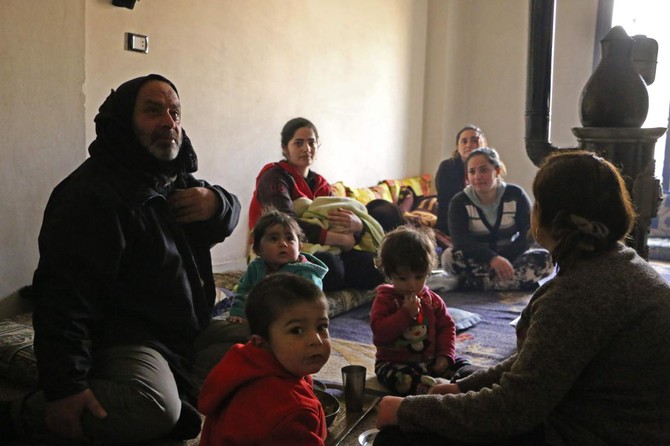

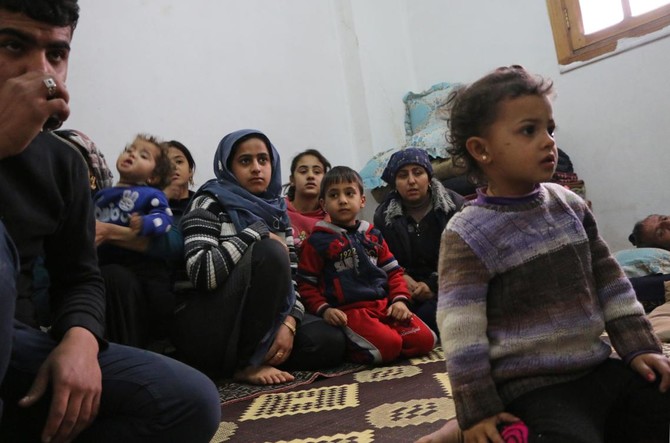
AFRIN, Syria: Day and night, the members of seven displaced families file in and out of the single bathroom and kitchen they share in a cramped apartment in the Syrian town of Afrin.
Dozens of families have flooded the town to escape a three-week assault by Turkey and allied Syrian rebels on towns and villages along the border.
Among them is Amuna Hassan’s family.
“We sleep sitting up. What kind of sleep is that? How are we supposed to fit? Can you imagine anything worse than that?” rants the elderly Hassan, a cigarette in hand.
“Maybe a bomb will go off and we’ll all just die together.”
Hassan, her children, and their families fled Jandairis, a border town southwest of Afrin, as Turkish bombardment of the area ramped up.
“We fled under fire. It was raining, people were crying and screaming. We fled from death,” she says.
They settled in a small apartment with a half-dozen other families. Behind her, women and children in bright, patterned clothes sat on a row of cushions.
A baby wailed uncontrollably as an elderly man lay splayed out on a mattress, unfazed by the chaos.
“The bathroom doesn’t work. We haven’t bathed in 20 days, but we just want food to eat — you think we’re thinking about showers?” says Hassan, her hair covered in a grey scarf with violet polka dots.
“Hungry, thirsty, at least we were at home. Now look where we are — all these people in just three rooms.”
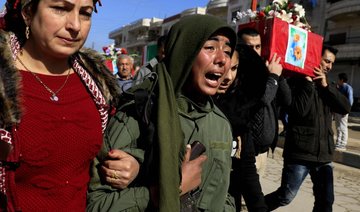
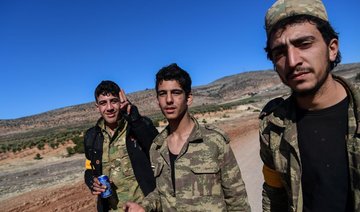
Turkey and allied Syrian rebels launched their offensive on January 20 to fight the Kurdish People’s Protection Units (YPG), which Ankara considers a “terror” group.
The Syrian Observatory for Human Rights war monitor says nearly 70 civilians have died in the assault, but Turkey says it is doing everything in its power to prevent civilian casualties.
Most of the bombardment has hit border towns and villages, forcing residents to flee inland to the town of Afrin and board up with relatives.
The United Nations estimates that between 15,000 and 30,000 have been displaced by the Turkish-led offensive to other parts of Afrin district.
Local authorities have sealed off access routes to other parts of Syria, the UN has said.
Abdel Hajj Ahmad and his 12-member family left everything behind in their native village of Sheikh Mohamed, northwest of Afrin town.
“It was tragic. There were no cars on the road, so we walked with our bags until we found a car willing to drive us,” the 49-year-old recalls.
Once in Afrin, they settled in a relative’s modest apartment — already overflowing with other displaced families.
“We’re nine families. Nearly 40 people sharing one kitchen and one bathroom! Can you imagine?” says Ahmad.
“It’s the first time we understand what displaced life is,” he adds.
Overnight, the number of people in Naziliya Balo’s household tripled.
“My uncle’s family was displaced and they came to stay with us. Three families from Qarnah,” a village north of Afrin, says the 28-year-old.
Her 10-member family is now hosting another 20 guests.
“We’re helping each other out. They can’t give us much,” admits Balo.
“We’re happy that they came to us, but it’s so sad that they had to leave their houses and come here.”
As the Turkish-led offensive heads into its fourth week, Balo says all of Afrin’s residents should mobilize to help those displaced.
“There are a lot of tragedies and I get really sad about them. We’ll open our house to everyone. Whoever’s in need, we’ll help them.”
More than six million people have been displaced internally across Syria since its civil war erupted in 2011, many of them more than once.
Abdin Kashad, 30, fled the border village of Qura Baba with his five family members.
“There was artillery fire so we went to the town of Rajo, then they hit Rajo with air strikes so we came to Afrin,” he explains in an exhausted monotone.
Kashad is happy to be safe in Afrin, but he and dozens of other displaced are packed tight into a single apartment.
Shoes of all sizes are piled up at the door and lines of washing criss-cross the courtyard.
“There’s no bathroom here or anything, no place for the kids to play,” Kashad tells AFP.
“We just want the bombing and air strikes to stop so we can go home.”