SINGAPORE: Two ethnic armed groups in Myanmar signed a ceasefire with the government on Tuesday, as leader Aung San Suu Kyi seeks to revive a stuttering peace process to end decades of conflict.
Ending near-perpetual civil war has been Suu Kyi’s stated top priority, but the Buddhist-majority country has seen the worst fighting with rebels in years since she took office almost two years ago.
The peace process, which has been eclipsed in media coverage by the plight of hundreds of thousands of Muslim Rohingya refugees fleeing to neighboring Bangladesh from violence in the northwest, is key to unlocking the resource-rich country’s potential and guaranteeing development for its more than 50 million people.
New Mon State Party and the Lahu Democratic Union signed the National Ceasefire Agreement (NCA) after meeting Suu Kyi and the military’s commander-in-chief, Senior General Min Aung Hlaing, in the capital Naypyitaw last month.
Speaking at a signing ceremony in Naypyitaw, Suu Kyi said the next step was to cement the ceasefire with groups that have already signed, and bring the remaining armed groups into the agreement through dialogue.
The latest two signatories have not engaged in active fighting with the military in recent years, but analysts said it marks a positive move for negotiations with other armed groups.
At least 10 rebel groups have not joined the NCA, an accord negotiated by the previous quasi-civilian administration. Suu Kyi has opened a new round of talks with some of the groups since last May.
The Nobel Peace Prize winner had been criticized overseas for not standing up for the largely stateless Rohingya in the western state of Rakhine, where an army crackdown forced more than 688,000 to flee to Bangladesh since August 25 last year.
The United Nations described Myanmar’s crackdown as ethnic cleansing of the Rohingya, a charge Myanmar denies.


![]()
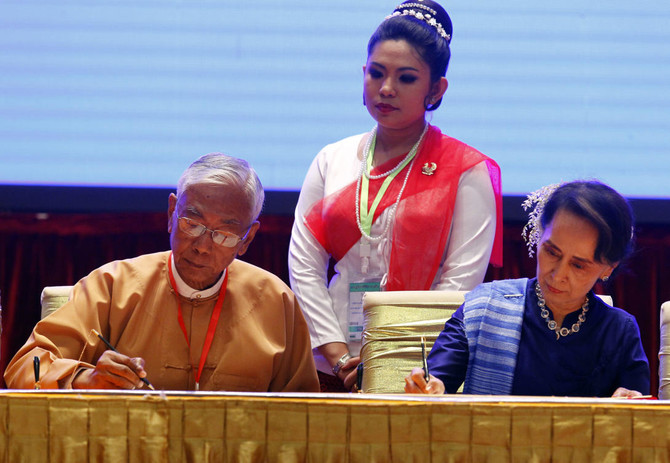
Myanmar signs ceasefire with two rebel groups amid decades of conflict
Myanmar signs ceasefire with two rebel groups amid decades of conflict


Latest updates




© 2026 SAUDI RESEARCH & PUBLISHING COMPANY, All Rights Reserved And subject to Terms of Use Agreement.